Loading...
Analysis will be generated on first visit.
Scores and timeline are available below. The page will refresh automatically when ready.
Catherine the Great vs Qin Shi Huang
Qin Shi Huang leads by 10.4 pts · 2 figures compared
…
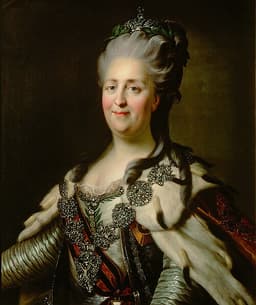
Catherine the Great
Emperor · Modern
73.1Total
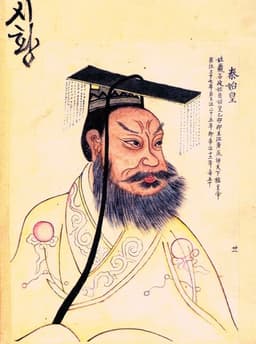
Qin Shi Huang
Emperor · Ancient
83.5Total
Basic Information
Born
1729
-259
Died
1796
-210
Era
Modern
Ancient
Nationality
Russia
China
Occupation
Emperor
Emperor
Civilization
Western
Eastern
Score Comparison
Military (10%)
65.0
80.0
Political (20%)
82.0
88.0
Influence (20%)
70.0
82.0
Legacy (20%)
72.0
85.0
Leadership (15%)
80.0
88.0
Strategy (15%)
65.0
75.0
TOTAL
73.1
83.5
Analysis will be generated on first visit.
Scores and timeline are available below. The page will refresh automatically when ready.
Rankings
🥇
Qin Shi HuangLeader
Mil: 80.0Pol: 88.0Inf: 82.0
83.5
🥈
Catherine the Great
Mil: 65.0Pol: 82.0Inf: 70.0
73.1
+10.4 behind
How This Comparison Works
Algorithm
Each figure is scored on 6 dimensions (0—100 scale) based on structured historical data: Military (10%), Political (20%), Influence (20%), Legacy (20%), Leadership (15%), Strategy (15%). The weighted total produces the final ranking.
Data Sources
Scores are computed from structured sub-indicators in the database. Scale factors adjust for era (Ancient ×0.85, Modern ×1.0) and civilization size (Eastern ×1.05, Other ×0.80) to account for differences in population and military scale.
Maximum 3 Figures
Comparisons are limited to 2—3 figures to ensure readability and statistical meaningfulness.
Error Margins
±5 points per dimension — Sub-scores are derived from historical records with inherent uncertainty. Two figures within 5 points on a dimension should be considered roughly equivalent in that area.
Total Score Accuracy
±3 points overall — The weighted combination of 6 dimensions produces a total score with approximately ±3 points of uncertainty. Differences of less than 3 points are not statistically significant— the figures are effectively tied.
Known Limitations
- Historical records are incomplete and uneven across civilizations
- Figures from oral-tradition societies may be underrepresented
- Occupation labels can misclassify multi-role figures
- Scores measure capability and impact, not moral character
- Quantitative scoring is a comparison tool, not absolute truth
Capability Radar
Military (10%) — Battles & Warfare
Battles
85
85
Win Rate
80
90
Expansion
90
90
Political (20%) — Governance & Reform
Reform
90
95
Diplomacy
85
75
Economy
85
90
Influence (20%) — Cultural & Global Reach
Cultural
85
95
Global
80
85
Legacy (20%) — Historical Impact
Historical
85
95
Longevity
80
95
Leadership (15%) — Power & Stability
Tenure
95
70
Stability
80
65
Strategy (15%) — Tactics & Innovation
Strategy
85
85
Tactics
75
80
Reform
90
95
Catherine the Great — Complete Timeline
1762 AD
Coup d'État of 1762Political Action
Catherine II led a coup d'
CoupAccessionPower
Impact: national
1764 AD
Hermitage Museum FoundedCultural◆ Major
Catherine the Great founded the Hermitage Museum in St. Petersburg by purchasing a large collection of paintings from Berlin. The museum grew into one of the world's largest art collections, reflecting her patronage of Enlightenment culture.
ArtMuseumEnlightenment
Impact: globalconstructive
1768 AD
Russo-Turkish War (1768-1774)War◆ Major
Catherine the Great initiated a war against the Ottoman Empire, resulting in Russian victory. The Treaty of K
WarOttoman EmpireExpansion
Impact: regional
1783 AD
Annexation of CrimeaPolitical Action◆ Major
Catherine the Great formally annexed the Crimean Peninsula from the Ottoman Empire. This strategic acquisition gave Russia a dominant position in the Black Sea and a warm-water port, fulfilling a long-standing imperial ambition.
AnnexationCrimeaBlack Sea
Impact: regional
1785 AD
Charter to the Gentry GrantedReform◆ Major
Catherine the Great issued the Charter to the Gentry, which codified the rights and privileges of the Russian nobility. It exempted nobles from taxation and military service, solidifying their social status and support for her rule.
NobilityReformSocial Structure
Impact: nationalconstructive
Qin Shi Huang — Complete Timeline
246 BC
Construction of the Mausoleum and Terracotta ArmyOther◆ Major
Qin Shi Huang commissioned a vast mausoleum complex near Xi'an, guarded by thousands of life-sized terracotta soldiers, horses, and chariots. The project employed hundreds of thousands of workers and reflected his obsession with immortality and imperial power.
Impact: global
230 BC
Conquest of the Six Warring StatesWar
From 230 to 221 BCE, Ying Zheng led the Qin state in a series of campaigns that conquered the Han, Zhao, Wei, Chu, Yan, and Qi states. This unified China under a single ruler for the first time, ending the Warring States period.
Impact: global
221 BC
Standardization of Writing, Currency, and MeasurementsReform◆ Major
Qin Shi Huang ordered the standardization of Chinese script, currency, and weights and measures across the unified empire. This facilitated administration, trade, and cultural integration, laying a foundation for future dynasties.
Impact: globalconstructive
Proclamation of the Qin DynastyPolitical Action
After conquering the last independent state, Ying Zheng declared himself Shi Huangdi (First Emperor), founding the Qin Dynasty. He adopted a new title to signify his supreme authority and initiated centralized imperial rule.
Impact: global
214 BC
Initiation of the Great Wall ConstructionOther◆ Major
Qin Shi Huang ordered the connection and extension of existing northern fortifications to create a unified defensive wall against nomadic Xiongnu raids. This project involved massive conscripted labor and became the precursor to the later Great Wall.
Impact: regional
213 BC
Burning of Books and Burying of ScholarsPolitical Action◆ Major
On the advice of Li Si, Qin Shi Huang ordered the burning of historical records and philosophical texts not aligned with Legalist doctrine. He also had 460 Confucian scholars buried alive to suppress dissent and consolidate ideological control.
Impact: nationaldestructive
Similar Comparisons
Comments & Discussion
ClassicsProf6/16/2026
As a student of ancient autocracy, I find the scores for Qin Shi Huang a bit inflated but defensible on foundational grounds. Sima Qian's 'Records of the Grand Historian' paints a chilling portrait of a ruler who burned books and buried scholars alive, yet the standardization of script, currency, and axle-widths was a staggering administrative achievement. Catherine, by contrast, read Voltaire and Diderot but expanded serfdom to its harshest extent. The Enlightenment ideals she professed never translated into structural reform. Qin's ruthless, systemic vision created a template for Chinese unification that endured for two millennia; Catherine's legacy is more decorative than foundational. The military score of 65 for Catherine is generous—her wars were opportunistic, not transformative like Qin's conquest of the six states. Both were autocrats, but Qin built a world; Catherine renovated a palace.
DataAnalystCN6/16/2026
我来分析一下这个评分体系。Qin Shi Huang的军事分80,Catherine 65,差15分,但Catherine的领土扩张(包括三次瓜分波兰和俄土战争)实际增加了约46万平方公里领土,而秦朝统一后的疆域约340万平方公里,增长率上看Catherine更惊人。政治分88对82,这个差距太小了——秦始皇废封建、立郡县、书同文、车同轨,这些制度创新延续了两千年;Catherine只是延续了彼得大帝的西方化路线,连农奴制都没废除。影响力分82对70,Catherine把俄罗斯推入欧洲列强体系,但秦始皇塑造了整个东亚文明圈。我个人认为,如果考虑到历史纵深,秦始皇的政治和影响力分应该更高,至少90和85。评分模型似乎对西方扩张更友好。
SinoHistorian6/16/2026
这个对比很有意思,但我觉得西方中心论的视角很明显。Catherine大帝在俄罗斯历史上地位重要,但和秦始皇不在一个量级。秦始皇统一了文字、度量衡、货币,建立了郡县制,这些奠定了中国两千年帝制的基础。Catherine推广了启蒙思想,但俄罗斯直到1861年才废除农奴制,她本人还强化了这个制度。再说军事,秦始皇灭六国是统一战争,Catherine对土耳其和波兰的战争是帝国扩张,性质不同。秦始皇修长城、建驰道、开灵渠,这些基础设施工程规模之大,欧洲18世纪的任何君主都难以想象。评分里秦始皇才88政治分?太低了。按照中国历史学家标准,秦始皇至少95。Catherine的82分倒差不多,她是个优秀的延续者,但不是开创者。
CriticalLens6/16/2026
This comparison reeks of traditional power-worship. Both Qin Shi Huang and Catherine the Great were brutal autocrats whose 'achievements' came at immense human cost. Qin's standardization is celebrated, but the legalist system he imposed was a totalitarian nightmare—forced labor on the Great Wall killed hundreds of thousands, and his tomb complex consumed resources that could have fed regions. Catherine gets points for 'modernizing' Russia, but her reign saw the worst serf exploitation in Russian history, as she handed out state peasants to her lovers. The scores ignore the subaltern experience entirely. And why is 'influence' measured by how much a ruler shaped elite state structures rather than by the suffering they caused? If we're going to compare, let's at least compare honestly—both were tyrants who centralized power through violence. Their scores should reflect that, not just territorial expansion.