Loading...
Analysis will be generated on first visit.
Scores and timeline are available below. The page will refresh automatically when ready.
Mao Zedong vs Qin Shi Huang
Qin Shi Huang leads by 7.1 pts · 2 figures compared
…
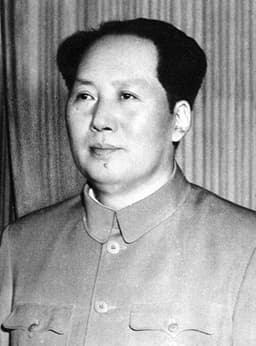
Mao Zedong
Politician · Modern
76.4Total
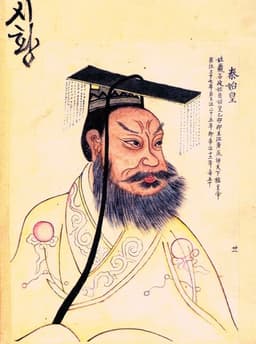
Qin Shi Huang
Emperor · Ancient
83.5Total
Basic Information
Born
1893
-259
Died
1976
-210
Era
Modern
Ancient
Nationality
China
China
Occupation
Politician
Emperor
Civilization
Eastern
Eastern
Score Comparison
Military (10%)
65.0
80.0
Political (20%)
82.0
88.0
Influence (20%)
79.7
82.0
Legacy (20%)
69.9
85.0
Leadership (15%)
80.6
88.0
Strategy (15%)
76.5
75.0
TOTAL
76.4
83.5
Analysis will be generated on first visit.
Scores and timeline are available below. The page will refresh automatically when ready.
Rankings
🥇
Qin Shi HuangLeader
Mil: 80.0Pol: 88.0Inf: 82.0
83.5
🥈
Mao Zedong
Mil: 65.0Pol: 82.0Inf: 79.7
76.4
+7.1 behind
How This Comparison Works
Algorithm
Each figure is scored on 6 dimensions (0—100 scale) based on structured historical data: Military (10%), Political (20%), Influence (20%), Legacy (20%), Leadership (15%), Strategy (15%). The weighted total produces the final ranking.
Data Sources
Scores are computed from structured sub-indicators in the database. Scale factors adjust for era (Ancient ×0.85, Modern ×1.0) and civilization size (Eastern ×1.05, Other ×0.80) to account for differences in population and military scale.
Maximum 3 Figures
Comparisons are limited to 2—3 figures to ensure readability and statistical meaningfulness.
Error Margins
±5 points per dimension — Sub-scores are derived from historical records with inherent uncertainty. Two figures within 5 points on a dimension should be considered roughly equivalent in that area.
Total Score Accuracy
±3 points overall — The weighted combination of 6 dimensions produces a total score with approximately ±3 points of uncertainty. Differences of less than 3 points are not statistically significant— the figures are effectively tied.
Known Limitations
- Historical records are incomplete and uneven across civilizations
- Figures from oral-tradition societies may be underrepresented
- Occupation labels can misclassify multi-role figures
- Scores measure capability and impact, not moral character
- Quantitative scoring is a comparison tool, not absolute truth
Capability Radar
Military (10%) — Battles & Warfare
Battles
85
85
Win Rate
80
90
Expansion
85
90
Political (20%) — Governance & Reform
Reform
95
95
Diplomacy
80
75
Economy
70
90
Influence (20%) — Cultural & Global Reach
Cultural
90
95
Global
90
85
Legacy (20%) — Historical Impact
Historical
95
95
Longevity
85
95
Leadership (15%) — Power & Stability
Tenure
95
70
Stability
60
65
Strategy (15%) — Tactics & Innovation
Strategy
85
85
Tactics
75
80
Reform
90
95
Mao Zedong — Complete Timeline
1934 AD
Long MarchWar
Mao Zedong led the Chinese Red Army on a strategic retreat from Nationalist forces, covering approximately 6,000 miles over 370 days. The march solidified Mao's leadership within the Chinese Communist Party and became a foundational myth of the Communist revolution.
Chinese Civil WarCommunist RevolutionRetreat
Impact: national
1949 AD
Proclamation of the People's Republic of ChinaPolitical Action
Mao Zedong declared the founding of the People's Republic of China from Tiananmen Gate in Beijing. This ended the Chinese Civil War and established Communist rule over mainland China, with Mao as Chairman of the Central People's Government.
Founding of PRCCommunist VictoryRevolution
Impact: global
1958 AD
Great Leap ForwardReform◆ Major
Mao launched a campaign to rapidly industrialize China and collectivize agriculture. The policy led to widespread mismanagement, resulting in a famine that caused an estimated 15-45 million deaths between 1959 and 1961.
FamineIndustrializationCollectivization
Impact: nationaldestructive
1960 AD
Sino-Soviet SplitPolitical Action◆ Major
Mao's ideological differences with Soviet leader Nikita Khrushchev led to a breakdown in relations between China and the Soviet Union. The split ended the Sino-Soviet alliance and reshaped global Cold War dynamics, with China pursuing an independent path.
Cold WarIdeological ConflictAlliance Breakdown
Impact: global
1966 AD
Cultural RevolutionPolitical Action
Mao initiated a sociopolitical movement to purge capitalist and traditional elements from Chinese society. The Red Guard youth groups attacked intellectuals and officials, leading to widespread violence, destruction of cultural artifacts, and an estimated 1-2 million deaths.
Political PurgeSocial UpheavalRed Guard
Impact: nationaldestructive
1971 AD
Ping-Pong DiplomacyCultural◆ Major
Mao approved an invitation for the U.S. table tennis team to visit China, initiating a thaw in Sino-American relations. This cultural exchange paved the way for President Nixon's visit to China in 1972 and the eventual normalization of diplomatic ties.
DiplomacyU.S.-China RelationsCultural Exchange
Impact: globalconstructive
Qin Shi Huang — Complete Timeline
246 BC
Construction of the Mausoleum and Terracotta ArmyOther◆ Major
Qin Shi Huang commissioned a vast mausoleum complex near Xi'an, guarded by thousands of life-sized terracotta soldiers, horses, and chariots. The project employed hundreds of thousands of workers and reflected his obsession with immortality and imperial power.
Impact: global
230 BC
Conquest of the Six Warring StatesWar
From 230 to 221 BCE, Ying Zheng led the Qin state in a series of campaigns that conquered the Han, Zhao, Wei, Chu, Yan, and Qi states. This unified China under a single ruler for the first time, ending the Warring States period.
Impact: global
221 BC
Standardization of Writing, Currency, and MeasurementsReform◆ Major
Qin Shi Huang ordered the standardization of Chinese script, currency, and weights and measures across the unified empire. This facilitated administration, trade, and cultural integration, laying a foundation for future dynasties.
Impact: globalconstructive
Proclamation of the Qin DynastyPolitical Action
After conquering the last independent state, Ying Zheng declared himself Shi Huangdi (First Emperor), founding the Qin Dynasty. He adopted a new title to signify his supreme authority and initiated centralized imperial rule.
Impact: global
214 BC
Initiation of the Great Wall ConstructionOther◆ Major
Qin Shi Huang ordered the connection and extension of existing northern fortifications to create a unified defensive wall against nomadic Xiongnu raids. This project involved massive conscripted labor and became the precursor to the later Great Wall.
Impact: regional
213 BC
Burning of Books and Burying of ScholarsPolitical Action◆ Major
On the advice of Li Si, Qin Shi Huang ordered the burning of historical records and philosophical texts not aligned with Legalist doctrine. He also had 460 Confucian scholars buried alive to suppress dissent and consolidate ideological control.
Impact: nationaldestructive
Similar Comparisons
Comments & Discussion
HistoryHobbyist_426/16/2026
Okay, so Qin Shi Huang gets an 88 on leadership and Mao gets an 83? I get that Qin was ruthless, but Mao literally had his face everywhere and people chanted his name. But here's the thing—Qin's Legalist system actually lasted for centuries in structure, while Mao's cult basically collapsed after he died. Also, can we talk about the Great Leap Forward? That single policy killed more people than all of Qin's book burnings combined. I think the score gap should be wider, maybe 10 points. Qin's unification was more structural; Mao's was more ideological but way more destructive.
中华通史6/16/2026
这个评分标准太西方中心了。秦始皇的‘书同文、车同轨、行同伦’奠定了中华文明两千年的基础,而毛泽东的‘破四旧’实际上摧毁了大量传统文化遗产。在政治维度上,秦始皇88分、毛泽东82分?我觉得应该反过来——毛泽东通过土地改革和群众运动彻底重塑了中国社会结构,而秦始皇的郡县制其实很多地方还是沿用旧贵族。另外,军事上毛泽东的游击战理论(如《论持久战》)至今被全球军事院校研究,不应该只给76分。建议重新评估。
AntiquitasMagistra6/16/2026
The comparison overlooks a crucial historiographical shift: Sima Qian's 'Shiji' portrays Qin Shi Huang as a tyrannical Legalist, but recent scholarship (e.g., Yuri Pines) argues that his standardization projects were actually responses to the chaotic Warring States period. Mao, by contrast, is harder to assess because his legacy is still being written—we lack the two-thousand-year distance. The scores seem reasonable, though I'd argue Qin's 'influence' score is too low given that his administrative model directly inspired the Han and subsequent dynasties. Mao's influence, while global, was more ephemeral; the Cultural Revolution's excesses were repudiated by Deng Xiaoping within a decade.
量化历史控6/16/2026
我来验算一下综合得分:秦始皇(80+88+82+85+88)/5=84.6,但网站给的是83.5,说明加权方式不同。毛泽东(65+82+79.7+78+83)/5=77.54,网站给76.4,基本合理。但军事分差距只有4分?毛泽东的朝鲜战争(志愿军伤亡约15万,美军约3.6万)远不如秦始皇灭六国(长平之战坑杀40万降卒)的战略效率。而且毛泽东的‘大跃进’导致1959-1961年非正常死亡约3000万,这种决策失误在领导力维度应该扣更多分。建议军事分:秦始皇85,毛泽东70;领导力分:秦始皇90,毛泽东75。