Loading...
Analysis will be generated on first visit.
Scores and timeline are available below. The page will refresh automatically when ready.
Jose Rizal vs Li Zicheng
Li Zicheng leads by 3.2 pts · 2 figures compared
…
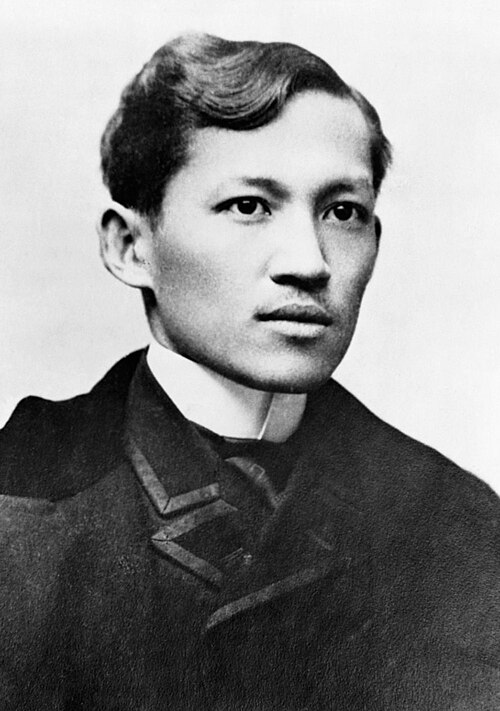
Jose Rizal
Revolutionary · Modern
51.7Total
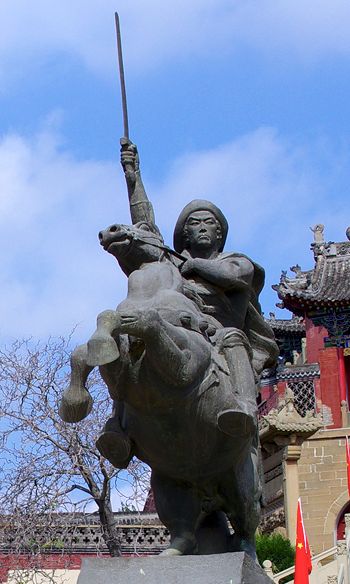
Li Zicheng
Revolutionary · Modern
54.9Total
Basic Information
Born
1861
1606
Died
1896
1645
Era
Modern
Modern
Nationality
Philippines
China
Occupation
Revolutionary
Revolutionary
Civilization
Eastern
Eastern
Score Comparison
Military (10%)
24.6
55.5
Political (20%)
37.4
40.3
Influence (20%)
70.6
74.3
Legacy (20%)
72.2
62.0
Leadership (15%)
38.3
33.8
Strategy (15%)
49.6
59.6
TOTAL
51.7
54.9
Rankings
🥇
Li ZichengLeader
Mil: 55.5Pol: 40.3Inf: 74.3
54.9
🥈
Jose Rizal
Mil: 24.6Pol: 37.4Inf: 70.6
51.7
+3.2 behind
How This Comparison Works
Algorithm
Each figure is scored on 6 dimensions (0—100 scale) based on structured historical data: Military (10%), Political (20%), Influence (20%), Legacy (20%), Leadership (15%), Strategy (15%). The weighted total produces the final ranking.
Data Sources
Scores are computed from structured sub-indicators in the database. Scale factors adjust for era (Ancient ×0.85, Modern ×1.0) and civilization size (Eastern ×1.05, Other ×0.80) to account for differences in population and military scale.
Maximum 3 Figures
Comparisons are limited to 2—3 figures to ensure readability and statistical meaningfulness.
Error Margins
±5 points per dimension — Sub-scores are derived from historical records with inherent uncertainty. Two figures within 5 points on a dimension should be considered roughly equivalent in that area.
Total Score Accuracy
±3 points overall — The weighted combination of 6 dimensions produces a total score with approximately ±3 points of uncertainty. Differences of less than 3 points are not statistically significant— the figures are effectively tied.
Known Limitations
- Historical records are incomplete and uneven across civilizations
- Figures from oral-tradition societies may be underrepresented
- Occupation labels can misclassify multi-role figures
- Scores measure capability and impact, not moral character
- Quantitative scoring is a comparison tool, not absolute truth
Capability Radar
Military (10%) — Battles & Warfare
Battles
14
55
Win Rate
21
60
Expansion
22
65
Political (20%) — Governance & Reform
Reform
15
15
Diplomacy
20
20
Economy
5
10
Influence (20%) — Cultural & Global Reach
Cultural
75
40
Global
65
35
Legacy (20%) — Historical Impact
Historical
80
55
Longevity
75
30
Leadership (15%) — Power & Stability
Tenure
0
20
Stability
5
5
Strategy (15%) — Tactics & Innovation
Strategy
27
55
Tactics
28
50
Reform
28
30
Analysis will be generated on first visit.
Scores and timeline are available below. The page will refresh automatically when ready.
Jose Rizal — Complete Timeline
1887 AD
Publication of Noli Me TangereCultural
Rizal published his first novel, Noli Me Tangere, in Berlin. The book exposed the corruption and abuses of Spanish colonial rule and the Catholic Church in the Philippines, sparking nationalist sentiment among Filipinos.
LiteratureNationalismColonial Critique
Impact: nationalprogressive
1891 AD
Publication of El FilibusterismoCultural◆ Major
Rizal published his second novel, El Filibusterismo, in Ghent, Belgium. A darker sequel to Noli Me Tangere, it advocated for revolution and further criticized Spanish oppression, intensifying calls for reform and independence.
LiteratureRevolutionColonial Critique
Impact: nationalprogressive
1892 AD
Exile to DapitanPolitical Action◆ Major
Rizal was exiled by Spanish authorities to Dapitan in Mindanao for his alleged involvement in revolutionary activities. During his four-year exile, he practiced medicine, taught, and conducted scientific research, but remained under surveillance.
ExileSpanish ColonialismDapitan
Impact: nationaltragic
1896 AD
Execution of José RizalPolitical Action
Rizal was executed by firing squad in Manila on charges of sedition and rebellion, following a trial by Spanish military court. His martyrdom galvanized the Philippine Revolution, making him a national hero and symbol of resistance.
ExecutionMartyrdomPhilippine Revolution
Impact: nationaltragic
Li Zicheng — Complete Timeline
1644 AD
Captured Beijing and Ended the Ming DynastyWar
Li Zicheng led his rebel army to capture Beijing. The Chongzhen Emperor committed suicide, ending the Ming dynasty. Li Zicheng proclaimed the Shun dynasty and briefly ruled from the Forbidden City before being defeated by Qing forces.
Ming-Qing TransitionRebellionBeijing
Impact: globaldestructive
Defeated at the Battle of Shanhai PassWar◆ Major
Li Zicheng's army was defeated by the combined forces of Wu Sangui and the Manchus at the Battle of Shanhai Pass. The defeat forced him to abandon Beijing and retreat westward, effectively ending his control over northern China.
Ming-Qing TransitionBattleDefeat
Impact: globaltragic
Proclaimed the Shun DynastyPolitical Action◆ Major
After capturing Beijing, Li Zicheng formally proclaimed the establishment of the Shun dynasty in Xi'an. He adopted the title of emperor and began implementing his own administrative policies, though his rule was short-lived.
Shun DynastyProclamationRebellion
Impact: nationalconstructive
1645 AD
Killed in Jiugong MountainWar◆ Major
Li Zicheng was killed by a local militia while fleeing through Jiugong Mountain in Hubei province. His death marked the end of the Shun dynasty and the collapse of his rebellion, though some accounts claim he survived and became a monk.
Shun DynastyDeathRebellion
Impact: nationaltragic
Similar Comparisons
Comments & Discussion
梁山笔侠6/16/2026
Rizal dying with a crucifix and Li Zicheng with a spear—how telling. The propagandists won, as always. Rizal's executed by Spaniards, becomes martyr. Li dies at peasant hands, becomes footnote. Military historians should note: Rizal never commanded an army, never stormed a capital. His revolution was symbolic, safe for posterity to sanctify. Li actually took Beijing, sat on the Dragon Throne for six weeks. Real power, real failure—no romantic editing allowed. Remember who writes the history book
数据侦探6/16/2026
别再吹什么"书生救国"神话了。黎刹的读者能有几个?19世纪菲律宾文盲率超过90%,他那些欧洲印刷的《社会毒瘤》几人读懂?对比李自成几十万饥民大军,哪边更接近真实力量?统计数据不说谎:黎刹1892年创立"菲律宾同盟"核心成员不过几十人,而明末起义军裹挟数百万流民。文人笔下的星星之火和农民脚下的燎原烈焰,从来不是同一个人间故事。
Classics Scholar6/16/2026
Observe the symmetry of their ends: Rizal faces a formal execution with his back to the firing squad, allowed final words, his body retrieved and buried—a classical martyrdom echoing Socrates. Li Zicheng, by contrast, disappears into the Hubei wilds, killed by village self-defense forces, his corpse unclaimed, perhaps fed to dogs. This is the difference between a tragic hero of the Western tradition and a cautionary figure from the Romance of the Three Kingdoms mold. One dies for posterity, the
历史重构者6/16/2026
李自成的悲剧在于他赢了太快。1644年进北京时,他还在用流寇思维治国,以为分田地就能搞定一切。潘家村那场伏击死得窝囊,但仔细看史料——他最后几个月连一套完整的官僚体系都没建立,还在靠义兄的私人关系管财政。黎刹呢?他死前十年就在计划未来,写信给菲律宾留德学生说"要培养三十年后的人才"。一个着眼千年,一个困在眼前。胜负早在枪响前就定了。
Tactical Realist6/16/2026
Let's talk logistics. Rizal never led a battle, never fed an army, never held a city. His Katipunan connection was tenuous—Aguinaldo's men did the actual fighting. Li Zicheng, whatever his flaws, commanded supply chains across five provinces, coordinated militia and defectors, besieged Beijing's walls with 300,000 troops. That's real revolutionary infrastructure. Rizal's martyrdom works because he's a clean symbol—the intellectual untainted by power's corruption. But symbols don't feed hungry pe