Loading...
Analysis will be generated on first visit.
Scores and timeline are available below. The page will refresh automatically when ready.
Li Zicheng vs Napoleon Bonaparte
Napoleon Bonaparte leads by 27.5 pts · 2 figures compared
…
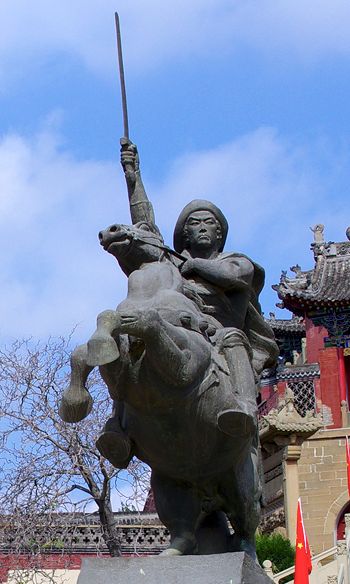
Li Zicheng
Revolutionary · Modern
54.9Total
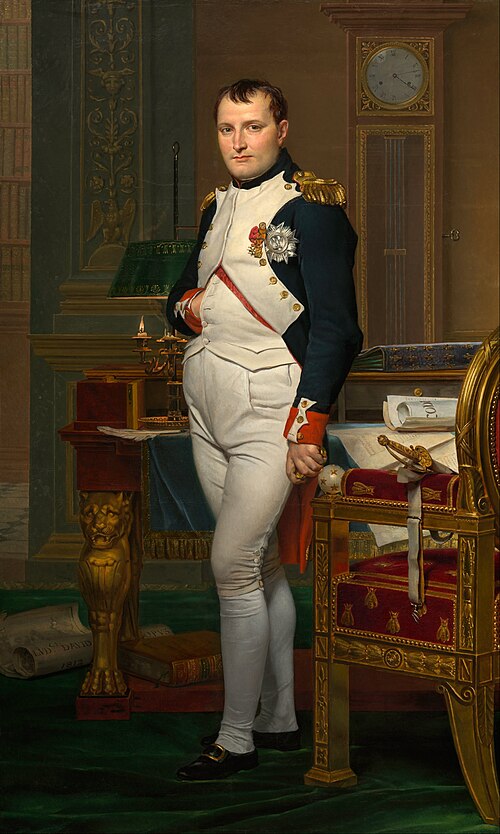
Napoleon Bonaparte
General · Modern
82.4Total
Basic Information
Born
1606
1769
Died
1645
1821
Era
Modern
Modern
Nationality
China
France
Occupation
Revolutionary
General
Civilization
Eastern
Western
Score Comparison
Military (10%)
55.5
94.0
Political (20%)
40.3
75.0
Influence (20%)
74.3
82.0
Legacy (20%)
62.0
78.0
Leadership (15%)
33.8
80.0
Strategy (15%)
59.6
93.0
TOTAL
54.9
82.4
Rankings
🥇
Napoleon BonaparteLeader
Mil: 94.0Pol: 75.0Inf: 82.0
82.4
🥈
Li Zicheng
Mil: 55.5Pol: 40.3Inf: 74.3
54.9
+27.5 behind
How This Comparison Works
Algorithm
Each figure is scored on 6 dimensions (0—100 scale) based on structured historical data: Military (10%), Political (20%), Influence (20%), Legacy (20%), Leadership (15%), Strategy (15%). The weighted total produces the final ranking.
Data Sources
Scores are computed from structured sub-indicators in the database. Scale factors adjust for era (Ancient ×0.85, Modern ×1.0) and civilization size (Eastern ×1.05, Other ×0.80) to account for differences in population and military scale.
Maximum 3 Figures
Comparisons are limited to 2—3 figures to ensure readability and statistical meaningfulness.
Error Margins
±5 points per dimension — Sub-scores are derived from historical records with inherent uncertainty. Two figures within 5 points on a dimension should be considered roughly equivalent in that area.
Total Score Accuracy
±3 points overall — The weighted combination of 6 dimensions produces a total score with approximately ±3 points of uncertainty. Differences of less than 3 points are not statistically significant— the figures are effectively tied.
Known Limitations
- Historical records are incomplete and uneven across civilizations
- Figures from oral-tradition societies may be underrepresented
- Occupation labels can misclassify multi-role figures
- Scores measure capability and impact, not moral character
- Quantitative scoring is a comparison tool, not absolute truth
Capability Radar
Military (10%) — Battles & Warfare
Battles
55
95
Win Rate
60
90
Expansion
65
95
Political (20%) — Governance & Reform
Reform
15
95
Diplomacy
20
80
Economy
10
85
Influence (20%) — Cultural & Global Reach
Cultural
40
85
Global
35
90
Legacy (20%) — Historical Impact
Historical
55
95
Longevity
30
90
Leadership (15%) — Power & Stability
Tenure
20
85
Stability
5
70
Strategy (15%) — Tactics & Innovation
Strategy
55
95
Tactics
50
98
Reform
30
92
Analysis will be generated on first visit.
Scores and timeline are available below. The page will refresh automatically when ready.
Li Zicheng — Complete Timeline
1644 AD
Captured Beijing and Ended the Ming DynastyWar
Li Zicheng led his rebel army to capture Beijing. The Chongzhen Emperor committed suicide, ending the Ming dynasty. Li Zicheng proclaimed the Shun dynasty and briefly ruled from the Forbidden City before being defeated by Qing forces.
Ming-Qing TransitionRebellionBeijing
Impact: globaldestructive
Defeated at the Battle of Shanhai PassWar◆ Major
Li Zicheng's army was defeated by the combined forces of Wu Sangui and the Manchus at the Battle of Shanhai Pass. The defeat forced him to abandon Beijing and retreat westward, effectively ending his control over northern China.
Ming-Qing TransitionBattleDefeat
Impact: globaltragic
Proclaimed the Shun DynastyPolitical Action◆ Major
After capturing Beijing, Li Zicheng formally proclaimed the establishment of the Shun dynasty in Xi'an. He adopted the title of emperor and began implementing his own administrative policies, though his rule was short-lived.
Shun DynastyProclamationRebellion
Impact: nationalconstructive
1645 AD
Killed in Jiugong MountainWar◆ Major
Li Zicheng was killed by a local militia while fleeing through Jiugong Mountain in Hubei province. His death marked the end of the Shun dynasty and the collapse of his rebellion, though some accounts claim he survived and became a monk.
Shun DynastyDeathRebellion
Impact: nationaltragic
Napoleon Bonaparte — Complete Timeline
1799 AD
Coup of 18 BrumaireOther◆ Major
Napoleon Bonaparte, with support from his brother Lucien and key political figures, overthrew the Directory in a bloodless coup. He established the Consulate with himself as First Consul, effectively becoming the ruler of France. This event ended the French Revolution's most unstable period.
French RevolutionCoupRise to Power
Impact: regional
1804 AD
Promulgation of the Napoleonic CodeOther◆ Major
Napoleon enacted the Civil Code of the French, known as the Napoleonic Code, a comprehensive set of laws that replaced the fragmented feudal legal systems. The code established legal equality, protected property rights, and secularized law. It became the basis for legal systems in many European and world countries.
Legal ReformNapoleonic CodeCivil Law
Impact: globalconstructive
1805 AD
Battle of AusterlitzWar◆ Major
Napoleon's Grande Arm
Napoleonic WarsBattleDecisive Victory
Impact: global
1812 AD
Invasion of RussiaWar◆ Major
Napoleon led the Grande Arm
Napoleonic WarsInvasionDisaster
Impact: globaldestructive
1815 AD
Battle of WaterlooWar◆ Major
Napoleon's French army was defeated by the combined forces of the Duke of Wellington's Anglo-Allied army and Gebhard Leberecht von Bl
Napoleonic WarsBattleFinal Defeat
Impact: globaldestructive
Similar Comparisons
Comments & Discussion
CORSICAN THUNDER6/17/2026
Napoleon's legacy endures because he codified systems—the Napoleonic Code, meritocratic promotion, and centralized administration—that outlived his defeat. Li Zicheng never grasped that conquest requires governance. After taking Beijing, his army looted, alienated scholar-officials, and failed to secure grain supplies. When Wu Sangui defected to the Qing, Li’s coalition crumbled in weeks. A rebel, not a reformer.
兵法草根6/17/2026
讲军事才能,李自成输在战略视野。拿破仑横扫欧洲靠的不是蛮力,是精准的战役设计与后勤协同。李自成在潼关之战后流窜陕豫,靠饥民充军,没有稳定补给线。他攻北京时,清军已在关外虎视眈眈。没有外交布局和后方基地的“流寇”,注定是昙花一现。
SCEPTIC STANCE6/17/2026
Let’s not romanticize Napoleon’s “genius.” He lost his best army in Russia, botched the Peninsular War, and got outmaneuvered at Waterloo by Wellington and Blücher. Li Zicheng was a desperate peasant who stumbled into Beijing after the Ming elite collapsed. Calling either a “conqueror” inflates their competence. They were lucky until they weren’t.
遗民旧梦6/17/2026
李自成在民间记忆中是“闯王”,但史料证明他进北京后纵容部下拷掠士绅,连吴三桂家产都没保住。而崇祯上吊前,他拒绝和谈条件。拿破仑再傲慢,至少懂得与贵族和教会妥协。李自成缺乏政治弹性,注定被精英集体抛弃。历史不是只给英雄买单,也给蠢货清算。