Loading...
Analysis will be generated on first visit.
Scores and timeline are available below. The page will refresh automatically when ready.
Jose Rizal vs Julius Caesar
Julius Caesar leads by 31.6 pts · 2 figures compared
…
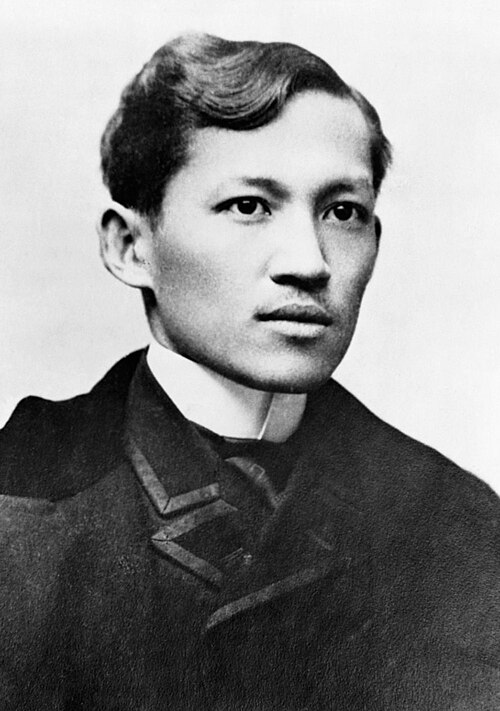
Jose Rizal
Revolutionary · Modern
51.7Total
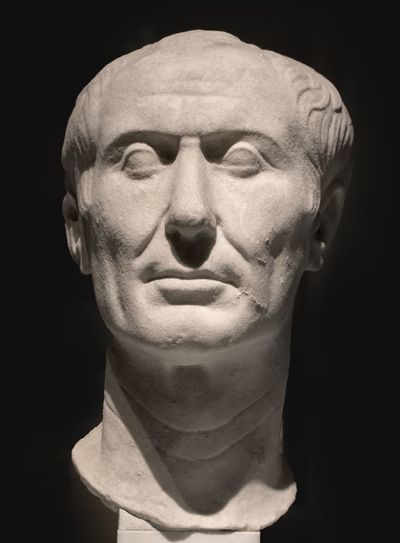
Julius Caesar
General · Ancient
83.3Total
Basic Information
Born
1861
-100
Died
1896
-44
Era
Modern
Ancient
Nationality
Philippines
Roman Republic
Occupation
Revolutionary
General
Civilization
Eastern
Western
Score Comparison
Military (10%)
24.6
88.0
Political (20%)
37.4
78.0
Influence (20%)
70.6
85.0
Legacy (20%)
72.2
82.0
Leadership (15%)
38.3
82.0
Strategy (15%)
49.6
88.0
TOTAL
51.7
83.3
Rankings
🥇
Julius CaesarLeader
Mil: 88.0Pol: 78.0Inf: 85.0
83.3
🥈
Jose Rizal
Mil: 24.6Pol: 37.4Inf: 70.6
51.7
+31.6 behind
How This Comparison Works
Algorithm
Each figure is scored on 6 dimensions (0—100 scale) based on structured historical data: Military (10%), Political (20%), Influence (20%), Legacy (20%), Leadership (15%), Strategy (15%). The weighted total produces the final ranking.
Data Sources
Scores are computed from structured sub-indicators in the database. Scale factors adjust for era (Ancient ×0.85, Modern ×1.0) and civilization size (Eastern ×1.05, Other ×0.80) to account for differences in population and military scale.
Maximum 3 Figures
Comparisons are limited to 2—3 figures to ensure readability and statistical meaningfulness.
Error Margins
±5 points per dimension — Sub-scores are derived from historical records with inherent uncertainty. Two figures within 5 points on a dimension should be considered roughly equivalent in that area.
Total Score Accuracy
±3 points overall — The weighted combination of 6 dimensions produces a total score with approximately ±3 points of uncertainty. Differences of less than 3 points are not statistically significant— the figures are effectively tied.
Known Limitations
- Historical records are incomplete and uneven across civilizations
- Figures from oral-tradition societies may be underrepresented
- Occupation labels can misclassify multi-role figures
- Scores measure capability and impact, not moral character
- Quantitative scoring is a comparison tool, not absolute truth
Capability Radar
Military (10%) — Battles & Warfare
Battles
14
95
Win Rate
21
92
Expansion
22
97
Political (20%) — Governance & Reform
Reform
15
90
Diplomacy
20
85
Economy
5
82
Influence (20%) — Cultural & Global Reach
Cultural
75
88
Global
65
94
Legacy (20%) — Historical Impact
Historical
80
95
Longevity
75
96
Leadership (15%) — Power & Stability
Tenure
0
75
Stability
5
60
Strategy (15%) — Tactics & Innovation
Strategy
27
94
Tactics
28
96
Reform
28
88
Analysis will be generated on first visit.
Scores and timeline are available below. The page will refresh automatically when ready.
Jose Rizal — Complete Timeline
1887 AD
Publication of Noli Me TangereCultural
Rizal published his first novel, Noli Me Tangere, in Berlin. The book exposed the corruption and abuses of Spanish colonial rule and the Catholic Church in the Philippines, sparking nationalist sentiment among Filipinos.
LiteratureNationalismColonial Critique
Impact: nationalprogressive
1891 AD
Publication of El FilibusterismoCultural◆ Major
Rizal published his second novel, El Filibusterismo, in Ghent, Belgium. A darker sequel to Noli Me Tangere, it advocated for revolution and further criticized Spanish oppression, intensifying calls for reform and independence.
LiteratureRevolutionColonial Critique
Impact: nationalprogressive
1892 AD
Exile to DapitanPolitical Action◆ Major
Rizal was exiled by Spanish authorities to Dapitan in Mindanao for his alleged involvement in revolutionary activities. During his four-year exile, he practiced medicine, taught, and conducted scientific research, but remained under surveillance.
ExileSpanish ColonialismDapitan
Impact: nationaltragic
1896 AD
Execution of José RizalPolitical Action
Rizal was executed by firing squad in Manila on charges of sedition and rebellion, following a trial by Spanish military court. His martyrdom galvanized the Philippine Revolution, making him a national hero and symbol of resistance.
ExecutionMartyrdomPhilippine Revolution
Impact: nationaltragic
Julius Caesar — Complete Timeline
58 BC
Gallic WarsWar◆ Major
Caesar, as proconsul of Gaul, launched a series of campaigns that conquered all of Gaul (modern France, Belgium, and parts of Switzerland). He fought numerous battles, including against the Helvetii, the Belgae, and the Gallic chieftain Vercingetorix. The wars brought immense wealth and a loyal army to Caesar.
Gallic WarsConquestRoman Expansion
Impact: regional
49 BC
Crossing the RubiconPolitical Action◆ Major
Caesar led Legio XIII across the Rubicon River into Italy, defying the Roman Senate's order to disband his army. This act triggered a civil war against Pompey and the Optimates, ultimately leading to Caesar's dictatorship and the end of the Roman Republic.
Roman Civil WarEnd of RepublicPower Struggle
Impact: global
48 BC
Battle of PharsalusWar◆ Major
Caesar's outnumbered army defeated the larger forces of Pompey the Great at Pharsalus in Greece. Caesar's tactical use of a reserve line to counter Pompey's cavalry charge proved decisive. Pompey fled to Egypt, where he was assassinated, leaving Caesar as the undisputed master of the Roman world.
Roman Civil WarBattleDecisive Victory
Impact: regional
44 BC
Appointment as Dictator for LifePolitical Action◆ Major
The Roman Senate appointed Caesar dictator perpetuo (dictator for life), granting him unprecedented personal power. This move concentrated military, legislative, and judicial authority in one person, effectively ending the Roman Republic's traditional system of checks and balances and alarming many senators.
DictatorshipEnd of RepublicPower Consolidation
Impact: regionaldestructive
Assassination on the Ides of MarchPolitical Action◆ Major
A group of Roman senators, led by Marcus Junius Brutus and Gaius Cassius Longinus, stabbed Caesar to death at a meeting of the Senate in the Theatre of Pompey. The assassination was intended to restore the Republic, but instead triggered another civil war that led to the rise of the Roman Empire.
AssassinationRoman PoliticsEnd of Republic
Impact: globaldestructive
Similar Comparisons
Comments & Discussion
TheCountingMarksman6/17/2026
Numbers don't care about martyrdom. Rizal's works reached maybe 2,000 literate Filipinos in 1896, but Caesar's Commentaries shaped the minds of Europe's ruling class for two millennia. For every peasant who died chanting Rizal's name, ten thousand learned Latin from Caesar's crisp prose. Historical impact isn't measured in sentimentality—it's measured in cultural DNA. Rizal's a footnote; Caesar's a foundation. The pen's reach depends entirely on who's reading.
速战史学6/17/2026
别把浪漫当历史。凯撒在高卢杀了100万人、奴役了100万,这比《不许犯我》里任何段落都响亮。黎萨尔的改革理想在当时连马尼拉的中产都分裂,凯撒用《高卢战记》直接让元老院颤抖。软笔再锋利,也得用硬骨撑腰。要是比谁让更多人改变生活方式,凯撒赢了十万倍。
AleaCalculatrix6/17/2026
Stop fetishizing the loser. Caesar crossed the Rubicon with one legion and gambled everything on personal ambition. Rizal? He retracted his writings, begged for mercy, and died a failed reformer. The Katipunan started the revolution without him. Let's be honest: Rizal's real talent was looking good in a suit right before execution. Caesar taught us that history belongs to those who seize it, not those who pose prettily for it.
荷马不是盲6/17/2026
说凯撒比黎萨尔伟大?那你问问埃及艳后愿不愿意为黎萨尔生孩子。凯撒不仅征服,还会写;黎萨尔只会写,被人征服。凯撒的《高卢战记》影响了拿破仑、克劳塞维茨、甚至美国开国元勋的军事思维。黎萨尔的《社会毒瘤》改变了几个殖民官员?别拿民族英雄跟人类史巨人比,这不是同一个联赛。
PlutarchsGhost6/17/2026
Caesar understood the spectacle of power. When he cried out "Et tu, Brute?" he wasn't surprised—he was staging his own myth. Rizal's final poem "Mi Último Adiós" achieves the same: a martyr's script, carefully composed to outlast his body. But here's the difference: Caesar's death started a civil war that birthed an empire. Rizal's death inspired a revolution that birthed a republic. Both pens wrote in blood, but only one founded a dynasty that still influences global law.