Loading...
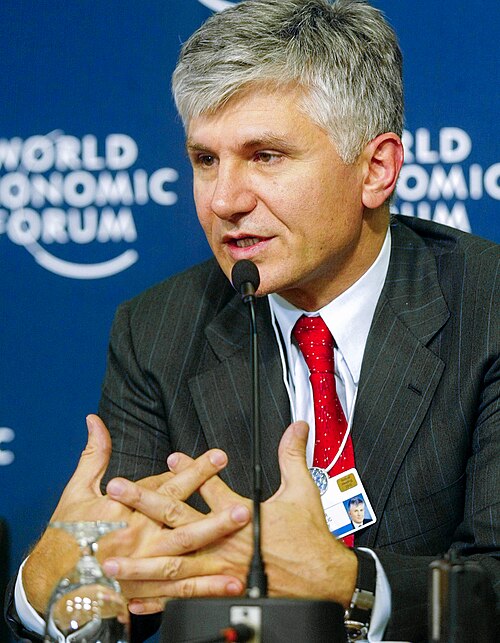
Zoran Đinđic
ModernPoliticianSerbia1952 — ?
Serbian prime minister assassinated after reforming.
Compare Zoran Đinđic with another historical figure:
Quick Facts
Born
1952
Country
Serbia
Era
Modern
Occupation
Politician
Score Overview
Military (10%)50
Political (20%)60
Influence (20%)58
Legacy (20%)46
Leadership (15%)55
Strategy (15%)44
Total Score52.6
Zoran Đinđic — Complete Timeline
2000 AD
Overthrow of Slobodan MiloševićPolitical Action◆ Major
Đinđić played a key role in the Bulldozer Revolution on October 5, 2000, which forced Slobodan Milošević to resign after disputed elections. The peaceful uprising ended Milošević's 13-year rule and paved the way for democratic reforms in Serbia.
RevolutionDemocracySerbia
Impact: nationalconstructive
2001 AD
Extradition of Slobodan Milošević to ICTYPolitical Action◆ Major
Đinđić's government extradited former President Slobodan Milošević to the International Criminal Tribunal for the former Yugoslavia on June 28, 2001. This controversial move was crucial for Serbia's reintegration into the international community but sparked political crisis.
ExtraditionWar CrimesICTY
Impact: globalconstructive
Election as Prime Minister of SerbiaPolitical Action◆ Major
Đinđić became Prime Minister of Serbia on January 25, 2001, after leading the Democratic Opposition of Serbia (DOS) to victory in the 2000 elections. He pursued pro-Western reforms, including economic liberalization, anti-corruption measures, and EU integration.
ElectionReformSerbia
Impact: nationalconstructive
2003 AD
Assassination in BelgradePolitical Action◆ Major
Zoran Đinđić was assassinated on March 12, 2003, by a sniper in Belgrade. The assassination was orchestrated by the Zemun Clan, a criminal group linked to the security services. His death was a major blow to Serbia's democratic reforms and EU integration efforts.
AssassinationDemocracySerbia
Impact: nationaltragic
Detailed Scores
▶View all detailed scores
Military
Strategy
6
Tactics
5
Battles
6
Army Scale
5
War Impact
6
Political
Governance
7
Reform
7
Stability
7
Policy
8
Power
8
Influence
History
9
Global
8
Culture
9
Ideology
9
Legacy
8
People often compare with
See how Zoran Đinđic stacks up against other historical figures
Popular Comparisons
Zoran Đinđic vs Helen Clark
vs Helen Clark60
Zoran Đinđic vs Jiang Zemin
vs Jiang Zemin59
Zoran Đinđic vs Lee Teng-hui
vs Lee Teng-hui57
Zoran Đinđic vs Arturo Frondizi
vs Arturo Frondizi55
Zoran Đinđic vs Eusebio Ayala
vs Eusebio Ayala54
Zoran Đinđic vs Timothy Harris
vs Timothy Harris51