Loading...
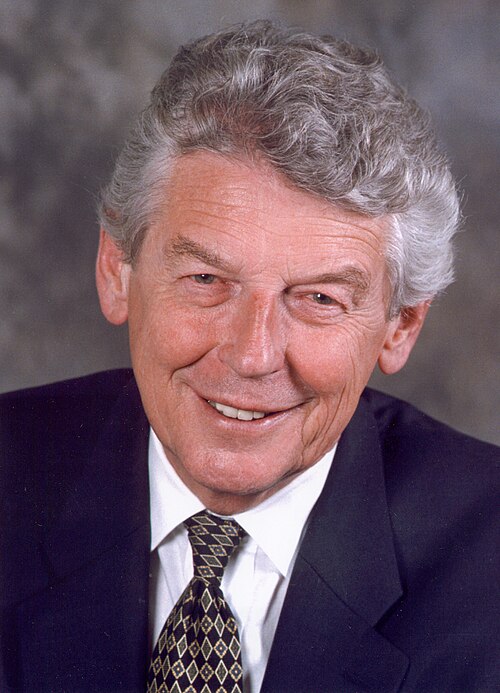
Wim Kok
ModernPoliticianNetherlands1938 — ?
Dutch prime minister during economic prosperity.
Compare Wim Kok with another historical figure:
Quick Facts
Born
1938
Country
Netherlands
Era
Modern
Occupation
Politician
Score Overview
Military (10%)48
Political (20%)60
Influence (20%)58
Legacy (20%)48
Leadership (15%)80
Strategy (15%)43
Total Score56.5
Wim Kok — Complete Timeline
1994 AD
Presided over the 'Polder Model' economic policyReform◆ Major
Kok's government implemented the 'Polder Model' of consensus-based economic policy, involving tripartite negotiations between government, unions, and employers. This led to wage moderation, reduced unemployment, and strong economic growth. The Netherlands experienced the 'Dutch Miracle' of low inflation and high employment.
Economic PolicyConsensusDutch Miracle
Impact: nationalconstructive
Became Prime Minister of the NetherlandsPolitical Action
Kok became prime minister after leading the PvdA to victory in the 1994 election. He formed the first 'Purple' coalition (PvdA, VVD, D66) without the Christian Democrats, ending 80 years of Christian Democratic dominance. This marked a shift toward secular, centrist governance.
GovernmentCoalitionPolitical Change
Impact: nationalconstructive
1995 AD
Srebrenica massacre and fall of the Kok cabinetOther◆ Major
Dutch peacekeepers under UN command failed to prevent the massacre of over 8,000 Bosniak men and boys in Srebrenica. The Kok government accepted political responsibility for the failure, leading to the resignation of the entire cabinet in 2002 after a critical report. This was a major foreign policy disaster.
War CrimeUN PeacekeepingBosnian War
Impact: regionaltragic
2000 AD
Introduced same-sex marriage legislationReform
Kok's government passed a law allowing same-sex marriage, making the Netherlands the first country in the world to legalize it. The law granted same-sex couples full marriage rights, including adoption. This was a landmark in LGBTQ+ rights globally.
LGBTQ+ RightsSocial ReformLegislation
Impact: globalprogressive
2002 AD
Resigned as Prime MinisterPolitical Action◆ Major
Kok resigned along with his entire cabinet following the publication of the NIOD report on Srebrenica. The report concluded that the Dutch government bore political responsibility for the massacre. This ended his tenure as prime minister, though he remained respected for his economic achievements.
ResignationAccountabilitySrebrenica
Impact: nationaltragic
Detailed Scores
▶View all detailed scores
Military
Strategy
6
Tactics
5
Battles
6
Army Scale
5
War Impact
6
Political
Governance
7
Reform
7
Stability
7
Policy
7
Power
8
Influence
History
9
Global
8
Culture
8
Ideology
9
Legacy
8
People often compare with
See how Wim Kok stacks up against other historical figures
Popular Comparisons
Wim Kok vs Helmut Kohl
vs Helmut Kohl59
Wim Kok vs B. S. Yediyurappa
vs B. S. Yediyurappa56
Wim Kok vs Yevgeny Primakov
vs Yevgeny Primakov52
Wim Kok vs Enrico Berlinguer
vs Enrico Berlinguer47
Wim Kok vs Wei Yuan
vs Wei Yuan44
Wim Kok vs Joan Enric Vives Sicilia
vs Joan Enric Vives Sicilia44