Loading...
This comparison has not been analyzed yet.
One-time AI generation (~1 minute). Scores and timeline are already available below.
B. S. Yediyurappa vs Wim Kok
Wim Kok leads by 0.8 pts · 2 figures compared
…

B. S. Yediyurappa
Politician · Modern
55.7Total
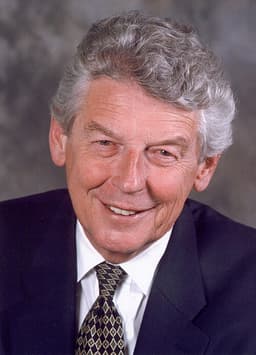
Wim Kok
Politician · Modern
56.5Total
Basic Information
Born
1943
1938
Died
—
—
Era
Modern
Modern
Nationality
India
Netherlands
Occupation
Politician
Politician
Civilization
Indian
Western
Score Comparison
Military (10%)
43.3
48.3
Political (20%)
68.0
60.0
Influence (20%)
53.3
58.0
Legacy (20%)
44.2
47.5
Leadership (15%)
72.0
80.0
Strategy (15%)
60.0
43.1
TOTAL
55.7
56.5
B. S. Yediyurappa — Complete Timeline
2007 AD
First Term as Chief Minister of KarnatakaPolitical Action◆ Major
Yediyurappa became Chief Minister of Karnataka for the first time in November 2007, leading a BJP-Janata Dal (Secular) coalition government. His term lasted only seven days after the JD(S) withdrew support, making it one of the shortest tenures in Karnataka history.
Chief MinisterCoalition GovernmentKarnataka
Impact: regional
2008 AD
Second Term as Chief Minister of KarnatakaPolitical Action◆ Major
Yediyurappa led the BJP to victory in the 2008 Karnataka Legislative Assembly election, forming the first BJP government in South India. He served as Chief Minister from 2008 to 2011, focusing on infrastructure projects and irrigation schemes.
Chief MinisterBJP GovernmentKarnataka
Impact: regionalconstructive
2011 AD
Resigned as Chief Minister Amid Corruption AllegationsPolitical Action◆ Major
Yediyurappa resigned as Chief Minister in July 2011 following allegations of corruption in the mining sector, as highlighted by the Lokayukta report. His resignation marked a significant political setback for the BJP in Karnataka.
ResignationCorruption AllegationsKarnataka
Impact: regionaldestructive
2019 AD
Third Term as Chief Minister of KarnatakaPolitical Action◆ Major
Yediyurappa became Chief Minister for a third time in July 2019 after the BJP formed a government following the collapse of the Congress-JD(S) coalition. He served until July 2021, overseeing the state's response to the COVID-19 pandemic.
Chief MinisterCoalition CollapseKarnataka
Impact: regional
2021 AD
Resigned as Chief Minister Ahead of Leadership ChangePolitical Action
Yediyurappa resigned as Chief Minister in July 2021, complying with the BJP's policy of rotating leadership. His resignation paved the way for Basavaraj Bommai to become Chief Minister, marking the end of his direct control over Karnataka's government.
ResignationLeadership ChangeKarnataka
Impact: regional
Wim Kok — Complete Timeline
1994 AD
Presided over the 'Polder Model' economic policyReform◆ Major
Kok's government implemented the 'Polder Model' of consensus-based economic policy, involving tripartite negotiations between government, unions, and employers. This led to wage moderation, reduced unemployment, and strong economic growth. The Netherlands experienced the 'Dutch Miracle' of low inflation and high employment.
Economic PolicyConsensusDutch Miracle
Impact: nationalconstructive
Became Prime Minister of the NetherlandsPolitical Action
Kok became prime minister after leading the PvdA to victory in the 1994 election. He formed the first 'Purple' coalition (PvdA, VVD, D66) without the Christian Democrats, ending 80 years of Christian Democratic dominance. This marked a shift toward secular, centrist governance.
GovernmentCoalitionPolitical Change
Impact: nationalconstructive
1995 AD
Srebrenica massacre and fall of the Kok cabinetOther◆ Major
Dutch peacekeepers under UN command failed to prevent the massacre of over 8,000 Bosniak men and boys in Srebrenica. The Kok government accepted political responsibility for the failure, leading to the resignation of the entire cabinet in 2002 after a critical report. This was a major foreign policy disaster.
War CrimeUN PeacekeepingBosnian War
Impact: regionaltragic
2000 AD
Introduced same-sex marriage legislationReform
Kok's government passed a law allowing same-sex marriage, making the Netherlands the first country in the world to legalize it. The law granted same-sex couples full marriage rights, including adoption. This was a landmark in LGBTQ+ rights globally.
LGBTQ+ RightsSocial ReformLegislation
Impact: globalprogressive
2002 AD
Resigned as Prime MinisterPolitical Action◆ Major
Kok resigned along with his entire cabinet following the publication of the NIOD report on Srebrenica. The report concluded that the Dutch government bore political responsibility for the massacre. This ended his tenure as prime minister, though he remained respected for his economic achievements.
ResignationAccountabilitySrebrenica
Impact: nationaltragic
This comparison has not been analyzed yet.
One-time AI generation (~1 minute). Scores and timeline are already available below.
Rankings
🥇
Wim KokLeader
Mil: 48.3Pol: 60.0Inf: 58.0
56.5
🥈
B. S. Yediyurappa
Mil: 43.3Pol: 68.0Inf: 53.3
55.7
+0.8 behind
How This Comparison Works
Algorithm
Each figure is scored on 6 dimensions (0—100 scale) based on structured historical data: Military (10%), Political (20%), Influence (20%), Legacy (20%), Leadership (15%), Strategy (15%). The weighted total produces the final ranking.
Data Sources
Scores are computed from structured sub-indicators in the database. Scale factors adjust for era (Ancient ×0.85, Modern ×1.0) and civilization size (Eastern ×1.05, Other ×0.80) to account for differences in population and military scale.
Maximum 3 Figures
Comparisons are limited to 2—3 figures to ensure readability and statistical meaningfulness.
Error Margins
±5 points per dimension — Sub-scores are derived from historical records with inherent uncertainty. Two figures within 5 points on a dimension should be considered roughly equivalent in that area.
Total Score Accuracy
±3 points overall — The weighted combination of 6 dimensions produces a total score with approximately ±3 points of uncertainty. Differences of less than 3 points are not statistically significant— the figures are effectively tied.
Known Limitations
- Historical records are incomplete and uneven across civilizations
- Figures from oral-tradition societies may be underrepresented
- Occupation labels can misclassify multi-role figures
- Scores measure capability and impact, not moral character
- Quantitative scoring is a comparison tool, not absolute truth
Capability Radar
Military (10%) — Battles & Warfare
Battles
42
30
Win Rate
49
32
Expansion
48
36
Political (20%) — Governance & Reform
Reform
40
60
Diplomacy
50
65
Economy
45
70
Influence (20%) — Cultural & Global Reach
Cultural
40
40
Global
20
50
Legacy (20%) — Historical Impact
Historical
35
45
Longevity
30
40
Leadership (15%) — Power & Stability
Tenure
65
65
Stability
55
70
Strategy (15%) — Tactics & Innovation
Strategy
53
36
Tactics
55
43
Reform
60
46
Similar Comparisons
Comments & Discussion
No comments yet. Be the first to share your thoughts!