Loading...
Wei Yuan vs Wim Kok
Wim Kok leads by 12.3 pts · 2 figures compared
…
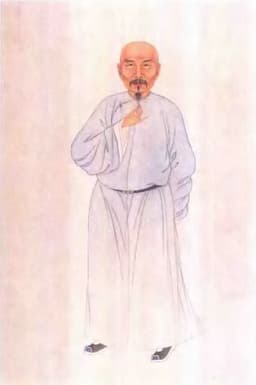
Wei Yuan
Politician · Modern
44.2Total

Wim Kok
Politician · Modern
56.5Total
Basic Information
Born
1794
1938
Died
1857
—
Era
Modern
Modern
Nationality
China
Netherlands
Occupation
Politician
Politician
Civilization
Eastern
Western
Score Comparison
Military (10%)
10.2
48.3
Political (20%)
39.4
60.0
Influence (20%)
60.0
58.0
Legacy (20%)
54.0
47.5
Leadership (15%)
41.5
80.0
Strategy (15%)
25.0
43.1
TOTAL
44.2
56.5
Wei Yuan — Complete Timeline
1830 AD
Served as magistrate and compiled local gazetteersPolitical Action
Wei Yuan served as a magistrate in various provinces, where he compiled local gazetteers and implemented administrative reforms. His practical governance experience informed his later scholarly works.
GovernanceLocal AdministrationGazetteers
1842 AD
Advocated for self-strengthening through Western technologyPolitical Action◆ Major
After China's defeat in the First Opium War, Wei Yuan proposed adopting Western military technology and industrial methods. His slogan 'Learn the superior techniques of the barbarians to control them' influenced later reformers.
Self-StrengtheningReformOpium War
Impact: nationalprogressive
1844 AD
Published Haiguo Tuzhi (Illustrated Treatise on the Maritime Kingdoms)Cultural
Wei Yuan published Haiguo Tuzhi, a comprehensive work on Western geography, technology, and politics. The book argued for learning from Western military and industrial strengths to counter foreign threats.
Western LearningReformGeography
Impact: globalprogressive
Wim Kok — Complete Timeline
1994 AD
Presided over the 'Polder Model' economic policyReform◆ Major
Kok's government implemented the 'Polder Model' of consensus-based economic policy, involving tripartite negotiations between government, unions, and employers. This led to wage moderation, reduced unemployment, and strong economic growth. The Netherlands experienced the 'Dutch Miracle' of low inflation and high employment.
Economic PolicyConsensusDutch Miracle
Impact: nationalconstructive
Became Prime Minister of the NetherlandsPolitical Action
Kok became prime minister after leading the PvdA to victory in the 1994 election. He formed the first 'Purple' coalition (PvdA, VVD, D66) without the Christian Democrats, ending 80 years of Christian Democratic dominance. This marked a shift toward secular, centrist governance.
GovernmentCoalitionPolitical Change
Impact: nationalconstructive
1995 AD
Srebrenica massacre and fall of the Kok cabinetOther◆ Major
Dutch peacekeepers under UN command failed to prevent the massacre of over 8,000 Bosniak men and boys in Srebrenica. The Kok government accepted political responsibility for the failure, leading to the resignation of the entire cabinet in 2002 after a critical report. This was a major foreign policy disaster.
War CrimeUN PeacekeepingBosnian War
Impact: regionaltragic
2000 AD
Introduced same-sex marriage legislationReform
Kok's government passed a law allowing same-sex marriage, making the Netherlands the first country in the world to legalize it. The law granted same-sex couples full marriage rights, including adoption. This was a landmark in LGBTQ+ rights globally.
LGBTQ+ RightsSocial ReformLegislation
Impact: globalprogressive
2002 AD
Resigned as Prime MinisterPolitical Action◆ Major
Kok resigned along with his entire cabinet following the publication of the NIOD report on Srebrenica. The report concluded that the Dutch government bore political responsibility for the massacre. This ended his tenure as prime minister, though he remained respected for his economic achievements.
ResignationAccountabilitySrebrenica
Impact: nationaltragic
Expert Analysis
Origins
Wei Yuan (1794–1857) was born into a modest scholar-official family in Hunan, China. He passed the imperial examinations and served as a magistrate, compiling local gazetteers. His early education in Confucian classics was supplemented by practical statecraft studies, influenced by the School of Evidential Learning. Wei Yuan's formative years coincided with the decline of the Qing dynasty, marked by the First Opium War (1839–1842), which exposed China's military weakness.
Wim Kok (1938–2018) was born in Bergambacht, Netherlands, to a Protestant family. He studied at the Netherlands School of Business and became a union leader, rising to president of the Dutch Federation of Trade Unions (FNV) in 1973. His background in labor negotiations shaped his consensus-building approach. Kok entered politics as a member of the Labour Party (PvdA), serving as Minister of Finance (1989–1994) under Prime Minister Ruud Lubbers.
Rise to Power
Wei Yuan's rise came through his scholarly work. After China's defeat in the Opium War, he published "Haiguo Tuzhi" (Illustrated Treatise on the Maritime Kingdoms) in 1844, a comprehensive study of Western geography, technology, and politics. The book was commissioned by Lin Zexu, the official who led the anti-opium campaign. Wei Yuan's slogan "Learn the superior technology of the barbarians to control them" gained traction among reform-minded officials. However, he never held high central office, serving only as a magistrate in Gaoyou and other counties.
Wim Kok rose through the labor movement. He became Prime Minister in 1994 after leading his party to win the general election. He formed the first "Purple" coalition, excluding Christian Democrats and uniting the Labour Party with the liberal VVD and D66. This coalition governed for eight years (1994–2002). Kok's rise was marked by his ability to bridge ideological divides, a skill honed in union negotiations.
Leadership & Governance
Wei Yuan's leadership was intellectual rather than executive. He advocated for self-strengthening through Western technology, proposing reforms in military, industry, and education. His ideas influenced the later Self-Strengthening Movement (1861–1895). As a magistrate, he implemented administrative reforms, including flood control and tax simplification. However, his political influence was limited; his scores reflect this: Political 39.4, Leadership 41.5.
Wim Kok's governance was defined by the "Polder Model," a consensus-based approach involving tripartite negotiations between government, unions, and employers. This model led to economic prosperity, low unemployment, and fiscal discipline. Kok's government legalized same-sex marriage in 2001, making the Netherlands the first country to do so. His leadership style was pragmatic and inclusive, scoring 80.0 in Leadership. However, his military score (48.3) is higher than Wei Yuan's (10.2) due to his role as commander-in-chief.
Triumph & Tragedy
Wei Yuan's triumph was the publication of "Haiguo Tuzhi," which opened Chinese eyes to the West. The book influenced reformers like Zeng Guofan and Li Hongzhang. His tragedy was that his ideas were only partially implemented; the Qing court resisted radical change. His total score is 44.2.
Wim Kok's triumphs include economic growth (average 3% GDP growth during his tenure) and social reforms like same-sex marriage. His tragedy was the Srebrenica massacre in 1995, where Dutch peacekeepers failed to protect Bosniak civilians. Kok's government resigned in 2002 after a report condemned the handling of the crisis. His legacy was tarnished, but his political score (60.0) and influence (58.0) remain high.
Character & Destiny
Wei Yuan was a dedicated scholar who believed knowledge could reform China. His character was cautious yet progressive; he sought gradual change within the Confucian framework. His destiny was to be a prophet unheeded. His strategy score (25.0) reflects his lack of political maneuvering.
Wim Kok was a pragmatic consensus-builder. He avoided confrontation and prioritized stability. His character led to effective governance but also to avoiding difficult decisions, as seen in Srebrenica. His destiny was to be a successful peacetime leader whose legacy is mixed due to a single catastrophic event.
Legacy
Wei Yuan's legacy is intellectual. He is remembered as a pioneer of Chinese modernization. His work influenced the Self-Strengthening Movement and later reformers. His Legacy score is 54.0.
Wim Kok's legacy is institutional. The Polder Model continued after his tenure, and same-sex marriage set a global precedent. However, Srebrenica remains a stain. His Legacy score is 47.5.
Conclusion
Wim Kok had a greater direct impact on his nation and the world. He scored 56.5 total versus Wei Yuan's 44.2. Kok's policies shaped modern Netherlands, while Wei Yuan's influence was indirect and delayed. Kok's higher Leadership (80.0) and Political (60.0) scores reflect his ability to implement change. Wei Yuan's ideas were important but not enacted. Thus, Kok is the more impactful figure.
Rankings
🥇
Wim KokLeader
Mil: 48.3Pol: 60.0Inf: 58.0
56.5
🥈
Wei Yuan
Mil: 10.2Pol: 39.4Inf: 60.0
44.2
+12.3 behind
How This Comparison Works
Algorithm
Each figure is scored on 6 dimensions (0—100 scale) based on structured historical data: Military (10%), Political (20%), Influence (20%), Legacy (20%), Leadership (15%), Strategy (15%). The weighted total produces the final ranking.
Data Sources
Scores are computed from structured sub-indicators in the database. Scale factors adjust for era (Ancient ×0.85, Modern ×1.0) and civilization size (Eastern ×1.05, Other ×0.80) to account for differences in population and military scale.
Maximum 3 Figures
Comparisons are limited to 2—3 figures to ensure readability and statistical meaningfulness.
Error Margins
±5 points per dimension — Sub-scores are derived from historical records with inherent uncertainty. Two figures within 5 points on a dimension should be considered roughly equivalent in that area.
Total Score Accuracy
±3 points overall — The weighted combination of 6 dimensions produces a total score with approximately ±3 points of uncertainty. Differences of less than 3 points are not statistically significant— the figures are effectively tied.
Known Limitations
- Historical records are incomplete and uneven across civilizations
- Figures from oral-tradition societies may be underrepresented
- Occupation labels can misclassify multi-role figures
- Scores measure capability and impact, not moral character
- Quantitative scoring is a comparison tool, not absolute truth
Capability Radar
Military (10%) — Battles & Warfare
Battles
16
30
Win Rate
18
32
Expansion
21
36
Political (20%) — Governance & Reform
Reform
40
60
Diplomacy
30
65
Economy
20
70
Influence (20%) — Cultural & Global Reach
Cultural
50
40
Global
40
50
Legacy (20%) — Historical Impact
Historical
55
45
Longevity
50
40
Leadership (15%) — Power & Stability
Tenure
20
65
Stability
10
70
Strategy (15%) — Tactics & Innovation
Strategy
23
36
Tactics
28
43
Reform
29
46
Similar Comparisons
Comments & Discussion
No comments yet. Be the first to share your thoughts!