Loading...
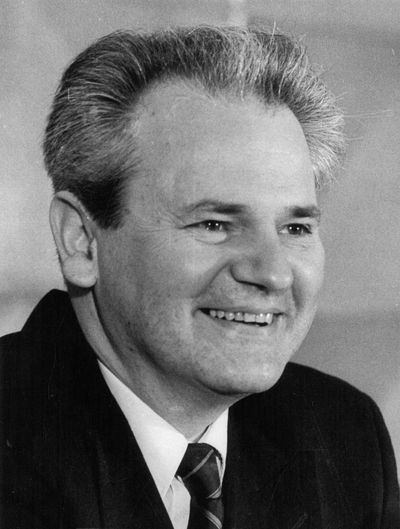
Slobodan Milosevic
ModernPoliticianSerbia1941 — ?
Serbian leader whose policies led to the Yugoslav Wars.
Compare Slobodan Milosevic with another historical figure:
Quick Facts
Born
1941
Country
Serbia
Era
Modern
Occupation
Politician
Score Overview
Military (10%)50
Political (20%)31
Influence (20%)58
Legacy (20%)48
Leadership (15%)67
Strategy (15%)37
Total Score49.7
Slobodan Milosevic — Complete Timeline
1989 AD
Milosevic's Gazimestan speechPolitical Action◆ Major
Milosevic delivered a speech at the 600th anniversary of the Battle of Kosovo, invoking Serbian nationalism and victimhood. The speech is widely seen as a catalyst for the rise of ethnic nationalism that led to the breakup of Yugoslavia.
NationalismYugoslaviaKosovo
Impact: regionaldestructive
Abolition of Kosovo's autonomyPolitical Action◆ Major
Milosevic pushed through constitutional changes that revoked the autonomous status of Kosovo and Vojvodina, concentrating power in Serbia. This move inflamed Albanian nationalism in Kosovo and was a key step toward the Yugoslav Wars.
KosovoNationalismHuman Rights
Impact: regionaldestructive
1992 AD
Start of the Bosnian WarWar
Milosevic's Serbia provided military and financial support to Bosnian Serb forces led by Radovan Karadzic. The war resulted in the Siege of Sarajevo, ethnic cleansing, and the Srebrenica massacre, with over 100,000 killed.
Yugoslav WarsBosniaWar Crimes
Impact: regionaldestructive
1995 AD
Dayton AgreementPolitical Action◆ Major
Milosevic represented the Bosnian Serbs at the Dayton peace talks, where he agreed to end the Bosnian War. The agreement created a decentralized Bosnian state but left many issues unresolved, and Milosevic was criticized for conceding too much.
Peace TreatyBosniaDiplomacy
Impact: regional
1999 AD
NATO bombing of YugoslaviaWar◆ Major
NATO launched a 78-day bombing campaign against Yugoslavia to stop Milosevic's crackdown on Kosovo Albanians. The bombing forced Milosevic to withdraw from Kosovo, but caused significant civilian casualties and infrastructure damage.
NATOKosovoWar
Impact: regionaldestructive
2001 AD
Extradition to the ICTYPolitical Action◆ Major
Milosevic was arrested in Serbia and extradited to the International Criminal Tribunal for the former Yugoslavia in The Hague. He was charged with war crimes, crimes against humanity, and genocide for his role in the Yugoslav Wars.
War CrimesJusticeICTY
Impact: global
Detailed Scores
▶View all detailed scores
Military
Strategy
6
Tactics
6
Battles
6
Army Scale
5
War Impact
6
Political
Governance
7
Reform
7
Stability
7
Policy
7
Power
8
Influence
History
9
Global
8
Culture
9
Ideology
9
Legacy
8
People often compare with
See how Slobodan Milosevic stacks up against other historical figures
Popular Comparisons
Slobodan Milosevic vs Georgios Papandreou
vs Georgios Papandreou54
Slobodan Milosevic vs Horacio Cartes
vs Horacio Cartes53
Slobodan Milosevic vs Matti Vanhanen
vs Matti Vanhanen48
Slobodan Milosevic vs Qu Qiubai
vs Qu Qiubai41
Slobodan Milosevic vs Malik Feroz Khan Noon
vs Malik Feroz Khan Noon40
Slobodan Milosevic vs Mahmoud Jibril
vs Mahmoud Jibril38