Loading...
Horacio Cartes vs Slobodan Milosevic
Horacio Cartes leads by 3.3 pts · 2 figures compared
…

Horacio Cartes
Politician · Modern
53.0Total
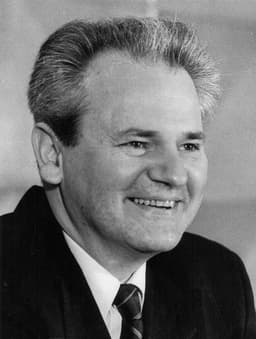
Slobodan Milosevic
Politician · Modern
49.7Total
Basic Information
Born
1956
1941
Died
—
—
Era
Modern
Modern
Nationality
Paraguay
Serbia
Occupation
Politician
Politician
Civilization
Western
Western
Score Comparison
Military (10%)
50.0
50.0
Political (20%)
68.0
30.8
Influence (20%)
50.2
58.0
Legacy (20%)
40.0
47.5
Leadership (15%)
74.0
67.0
Strategy (15%)
41.3
36.8
TOTAL
53.0
49.7
Horacio Cartes — Complete Timeline
2013 AD
Signed Tax Reform LawReform◆ Major
Cartes signed a tax reform law that increased the value-added tax from 5% to 10% and introduced a 10% income tax on agricultural exports. The reform aimed to increase state revenue for social programs but faced opposition from business sectors.
Tax ReformFiscal PolicySocial Spending
Impact: nationalconstructive
Elected President of ParaguayPolitical Action◆ Major
Horacio Cartes won the 2013 Paraguayan general election as the Colorado Party candidate, defeating the PLRA candidate Efra
ElectionColorado PartyReturn to Power
Impact: national
2017 AD
Faced Impeachment AttemptPolitical Action◆ Major
Opposition parties attempted to impeach President Cartes in March 2017 after he proposed a constitutional amendment to allow presidential re-election. The impeachment effort failed in the Senate, but the re-election proposal sparked violent protests that left one dead.
Impeachment AttemptConstitutional CrisisProtests
Impact: nationaldestructive
2018 AD
Resigned from Presidency EarlyPolitical Action
Cartes resigned from the presidency in June 2018, one month before the end of his term, to take a seat in the Senate. Vice President Alicia Pucheta served as interim president for the remaining month. The move was criticized as a maneuver to gain immunity from prosecution.
ResignationSenate SeatImmunity
Impact: nationaldestructive
Slobodan Milosevic — Complete Timeline
1989 AD
Milosevic's Gazimestan speechPolitical Action◆ Major
Milosevic delivered a speech at the 600th anniversary of the Battle of Kosovo, invoking Serbian nationalism and victimhood. The speech is widely seen as a catalyst for the rise of ethnic nationalism that led to the breakup of Yugoslavia.
NationalismYugoslaviaKosovo
Impact: regionaldestructive
Abolition of Kosovo's autonomyPolitical Action◆ Major
Milosevic pushed through constitutional changes that revoked the autonomous status of Kosovo and Vojvodina, concentrating power in Serbia. This move inflamed Albanian nationalism in Kosovo and was a key step toward the Yugoslav Wars.
KosovoNationalismHuman Rights
Impact: regionaldestructive
1992 AD
Start of the Bosnian WarWar
Milosevic's Serbia provided military and financial support to Bosnian Serb forces led by Radovan Karadzic. The war resulted in the Siege of Sarajevo, ethnic cleansing, and the Srebrenica massacre, with over 100,000 killed.
Yugoslav WarsBosniaWar Crimes
Impact: regionaldestructive
1995 AD
Dayton AgreementPolitical Action◆ Major
Milosevic represented the Bosnian Serbs at the Dayton peace talks, where he agreed to end the Bosnian War. The agreement created a decentralized Bosnian state but left many issues unresolved, and Milosevic was criticized for conceding too much.
Peace TreatyBosniaDiplomacy
Impact: regional
1999 AD
NATO bombing of YugoslaviaWar◆ Major
NATO launched a 78-day bombing campaign against Yugoslavia to stop Milosevic's crackdown on Kosovo Albanians. The bombing forced Milosevic to withdraw from Kosovo, but caused significant civilian casualties and infrastructure damage.
NATOKosovoWar
Impact: regionaldestructive
2001 AD
Extradition to the ICTYPolitical Action◆ Major
Milosevic was arrested in Serbia and extradited to the International Criminal Tribunal for the former Yugoslavia in The Hague. He was charged with war crimes, crimes against humanity, and genocide for his role in the Yugoslav Wars.
War CrimesJusticeICTY
Impact: global
Expert Analysis
Origins
Horacio Cartes was born on July 5, 1956, in Asunción, Paraguay, into a wealthy family with ties to the tobacco industry. He studied at the American School of Asunción but left before graduating to work in his family's businesses, eventually building a conglomerate that included tobacco, soft drinks, and banking. His early life was marked by a focus on entrepreneurship rather than formal politics.
Slobodan Milosevic was born on August 20, 1941, in Požarevac, Serbia, then part of Yugoslavia. His parents were both teachers; his father abandoned the family when Milosevic was young, and his mother committed suicide in 1972. He studied law at the University of Belgrade, graduating in 1964. He joined the League of Communists of Yugoslavia and began a career in party administration, working under the mentorship of Ivan Stambolić.
Rise to Power
Cartes entered politics relatively late. He joined the Colorado Party and was elected party president in 2012. Leveraging his business wealth, he funded his own campaign and won the 2013 presidential election with 45.8% of the vote, defeating Efraín Alegre. His rise was swift, relying on party machinery and personal resources.
Milosevic rose through the communist hierarchy. He became head of the League of Communists of Serbia in 1986. His turning point came in 1987 when he gave a speech in Kosovo to Serb protesters, declaring 'No one will beat you again.' This nationalist stance propelled him to the presidency of Serbia in 1989. He then orchestrated the abolition of Kosovo's autonomy in 1989, consolidating power.
Leadership & Governance
Cartes governed as a conservative reformer. His major achievement was the 2013 tax reform, which raised VAT from 5% to 10% and introduced a 10% income tax on agricultural exports—a move that increased revenue but faced opposition from agribusiness. He also promoted infrastructure projects and maintained macroeconomic stability. However, his leadership score of 74.0 reflects his ability to push reforms through a divided congress. His style was pragmatic, often using his business acumen to negotiate deals.
Milosevic's governance was characterized by authoritarian control and nationalist rhetoric. He maintained power through media manipulation and suppression of dissent. His political score of 30.8 indicates his divisive approach. He escalated conflicts in Croatia, Bosnia, and Kosovo, leading to wars that caused over 100,000 deaths. His leadership score of 67.0 reflects his strong grip on power, but his strategy score of 36.8 shows poor long-term planning.
Triumph & Tragedy
Cartes' greatest success was passing the tax reform, which increased government revenue by about 20% and funded social programs. He also stabilized Paraguay's economy during his term. His biggest failure was the failed attempt to amend the constitution for re-election, which sparked massive protests in 2017 and led to his early resignation in 2018 to take a Senate seat. His legacy score of 40.0 reflects limited lasting impact.
Milosevic's triumphs include the Dayton Agreement in 1995, which ended the Bosnian War and positioned him as a peacemaker temporarily. However, his tragedies are immense: the Yugoslav Wars resulted in ethnic cleansing, genocide (Srebrenica), and the NATO bombing of Yugoslavia in 1999. He was eventually indicted for war crimes, died in 2006 during his trial at The Hague. His legacy score of 47.5 is polarized—seen as a nationalist hero by some, a criminal by others.
Character & Destiny
Cartes was a pragmatic businessman, known for his reclusive nature and dislike of public appearances. He relied on a small circle of advisors. His decision to resign early suggests a calculation to avoid political turmoil. His character shaped a presidency focused on economic stability but lacking in transformative vision.
Milosevic was a calculating nationalist, often described as cunning and ruthless. He exploited ethnic tensions for political gain. His stubbornness led to disastrous wars and his eventual downfall. The NATO bombing forced his withdrawal from Kosovo, and his refusal to compromise sealed his fate. His character directly caused the destruction of Yugoslavia and his own indictment.
Legacy
Cartes' legacy in Paraguay is mixed. His tax reform had lasting effects on revenue, but his re-election attempt damaged democratic norms. He remains influential in the Colorado Party but is not seen as a transformative figure. His influence score of 50.2 reflects moderate impact.
Milosevic's legacy is profound and negative. He is widely blamed for the breakup of Yugoslavia and the wars that killed over 140,000 people. His policies led to the independence of Kosovo, a status he fought to prevent. His influence score of 58.0 reflects his role in reshaping the Balkans, albeit destructively.
Conclusion
While Cartes scored higher overall (total 53.0 vs. 49.7), Milosevic had far greater impact—though largely negative. Cartes' reforms were modest and confined to Paraguay, while Milosevic's actions triggered regional wars, NATO intervention, and the redrawing of borders. Milosevic's influence on global politics and international law (war crimes tribunals) is undeniable. Cartes, by contrast, is a minor figure. Thus, Milosevic's impact, for better or worse, outweighs Cartes'.
Rankings
🥇
Horacio CartesLeader
Mil: 50.0Pol: 68.0Inf: 50.2
53.0
🥈
Slobodan Milosevic
Mil: 50.0Pol: 30.8Inf: 58.0
49.7
+3.3 behind
How This Comparison Works
Algorithm
Each figure is scored on 6 dimensions (0—100 scale) based on structured historical data: Military (10%), Political (20%), Influence (20%), Legacy (20%), Leadership (15%), Strategy (15%). The weighted total produces the final ranking.
Data Sources
Scores are computed from structured sub-indicators in the database. Scale factors adjust for era (Ancient ×0.85, Modern ×1.0) and civilization size (Eastern ×1.05, Other ×0.80) to account for differences in population and military scale.
Maximum 3 Figures
Comparisons are limited to 2—3 figures to ensure readability and statistical meaningfulness.
Error Margins
±5 points per dimension — Sub-scores are derived from historical records with inherent uncertainty. Two figures within 5 points on a dimension should be considered roughly equivalent in that area.
Total Score Accuracy
±3 points overall — The weighted combination of 6 dimensions produces a total score with approximately ±3 points of uncertainty. Differences of less than 3 points are not statistically significant— the figures are effectively tied.
Known Limitations
- Historical records are incomplete and uneven across civilizations
- Figures from oral-tradition societies may be underrepresented
- Occupation labels can misclassify multi-role figures
- Scores measure capability and impact, not moral character
- Quantitative scoring is a comparison tool, not absolute truth
Capability Radar
Military (10%) — Battles & Warfare
Battles
31
30
Win Rate
31
25
Expansion
33
30
Political (20%) — Governance & Reform
Reform
40
20
Diplomacy
45
25
Economy
50
15
Influence (20%) — Cultural & Global Reach
Cultural
20
30
Global
20
50
Legacy (20%) — Historical Impact
Historical
25
55
Longevity
15
30
Leadership (15%) — Power & Stability
Tenure
55
60
Stability
35
10
Strategy (15%) — Tactics & Innovation
Strategy
37
25
Tactics
38
20
Reform
43
15
Similar Comparisons
Comments & Discussion
No comments yet. Be the first to share your thoughts!