Loading...
Georgios Papandreou vs Slobodan Milosevic
Georgios Papandreou leads by 4.2 pts · 2 figures compared
…

Georgios Papandreou
Politician · Modern
53.9Total
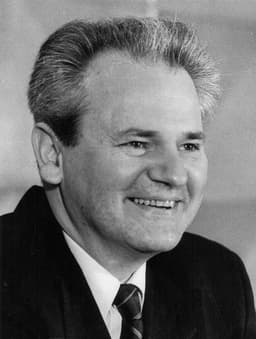
Slobodan Milosevic
Politician · Modern
49.7Total
Basic Information
Born
1888
1941
Died
1968
—
Era
Modern
Modern
Nationality
Greece
Serbia
Occupation
Politician
Politician
Civilization
Western
Western
Score Comparison
Military (10%)
48.6
50.0
Political (20%)
45.0
30.8
Influence (20%)
61.0
58.0
Legacy (20%)
50.0
47.5
Leadership (15%)
68.0
67.0
Strategy (15%)
43.5
36.8
TOTAL
53.9
49.7
Georgios Papandreou — Complete Timeline
1961 AD
Founded the Center Union PartyPolitical Action◆ Major
Papandreou founded the Center Union party, a centrist coalition that opposed the conservative National Radical Union. The party became the main opposition force in Greece, advocating for democratic reforms and social justice.
Political PartyCentrismOpposition
Impact: nationalconstructive
1963 AD
Elected Prime Minister of GreecePolitical Action◆ Major
Papandreou won the 1963 elections and became Prime Minister. His government pursued progressive policies, including educational reform, expansion of social services, and a more independent foreign policy, challenging the traditional establishment.
ElectionReformProgressivism
Impact: nationalconstructive
1965 AD
Conflict with King Constantine IIPolitical Action◆ Major
Papandreou clashed with King Constantine II over control of the military, leading to the 'Apostasia' (Apostasy) crisis. The king dismissed Papandreou in July 1965, triggering a period of political instability that culminated in the 1967 coup.
Political CrisisConstitutional ConflictInstability
Impact: nationaldestructive
1967 AD
House Arrest under the JuntaPolitical Action◆ Major
After the 1967 coup, Papandreou was placed under house arrest by the military junta. He remained under surveillance until his death in 1968, becoming a symbol of resistance against the dictatorship.
RepressionDictatorshipResistance
Impact: nationaltragic
Slobodan Milosevic — Complete Timeline
1989 AD
Milosevic's Gazimestan speechPolitical Action◆ Major
Milosevic delivered a speech at the 600th anniversary of the Battle of Kosovo, invoking Serbian nationalism and victimhood. The speech is widely seen as a catalyst for the rise of ethnic nationalism that led to the breakup of Yugoslavia.
NationalismYugoslaviaKosovo
Impact: regionaldestructive
Abolition of Kosovo's autonomyPolitical Action◆ Major
Milosevic pushed through constitutional changes that revoked the autonomous status of Kosovo and Vojvodina, concentrating power in Serbia. This move inflamed Albanian nationalism in Kosovo and was a key step toward the Yugoslav Wars.
KosovoNationalismHuman Rights
Impact: regionaldestructive
1992 AD
Start of the Bosnian WarWar
Milosevic's Serbia provided military and financial support to Bosnian Serb forces led by Radovan Karadzic. The war resulted in the Siege of Sarajevo, ethnic cleansing, and the Srebrenica massacre, with over 100,000 killed.
Yugoslav WarsBosniaWar Crimes
Impact: regionaldestructive
1995 AD
Dayton AgreementPolitical Action◆ Major
Milosevic represented the Bosnian Serbs at the Dayton peace talks, where he agreed to end the Bosnian War. The agreement created a decentralized Bosnian state but left many issues unresolved, and Milosevic was criticized for conceding too much.
Peace TreatyBosniaDiplomacy
Impact: regional
1999 AD
NATO bombing of YugoslaviaWar◆ Major
NATO launched a 78-day bombing campaign against Yugoslavia to stop Milosevic's crackdown on Kosovo Albanians. The bombing forced Milosevic to withdraw from Kosovo, but caused significant civilian casualties and infrastructure damage.
NATOKosovoWar
Impact: regionaldestructive
2001 AD
Extradition to the ICTYPolitical Action◆ Major
Milosevic was arrested in Serbia and extradited to the International Criminal Tribunal for the former Yugoslavia in The Hague. He was charged with war crimes, crimes against humanity, and genocide for his role in the Yugoslav Wars.
War CrimesJusticeICTY
Impact: global
Expert Analysis
Origins
Georgios Papandreou was born in 1888 in Kalentzi, Greece, into a family with political ties. His father was a priest, and Papandreou studied law at the University of Athens, later earning a doctorate in political science. He entered politics early, serving as a minister in the 1920s. His formative years were marked by the National Schism and the Asia Minor Catastrophe, shaping his commitment to democratic governance.
Slobodan Milosevic was born in 1941 in Pozarevac, Serbia, during World War II. His father was a priest who left the family, and his mother was a teacher. Milosevic studied law at the University of Belgrade, where he became involved in communist politics. His early career was in banking and energy, but he rose through the Serbian Communist Party. The death of his mentor, Ivan Stambolic, and the rise of Serbian nationalism in the 1980s influenced his trajectory.
Rise to Power
Papandreou rose to prominence as a liberal politician, serving as minister of education, finance, and agriculture. In 1961, he founded the Center Union Party, a centrist coalition that opposed the conservative National Radical Union. He won the 1963 elections and became Prime Minister, but his government was short-lived due to conflicts with the monarchy.
Milosevic's rise began in the late 1980s. He became president of the Serbian League of Communists in 1986. His 1989 Gazimestan speech, commemorating the 600th anniversary of the Battle of Kosovo, invoked Serbian nationalism and victimhood. He abolished Kosovo's autonomy in 1989, consolidating power. By 1991, he dominated Serbian politics, leading to the breakup of Yugoslavia.
Leadership & Governance
Papandreou pursued progressive policies, including educational reform, expansion of social welfare, and strengthening parliamentary democracy. His leadership style was conciliatory, seeking consensus. However, his conflict with King Constantine II over military control led to the Apostasia crisis in 1965, where the king dismissed him, sparking political instability. Papandreou scored 68.0 in leadership, reflecting his democratic ideals but limited effectiveness.
Milosevic's leadership was authoritarian and nationalist. He used state media to propagate Serbian interests and suppressed opposition. He maintained power through control of the security forces and nationalist rhetoric. His governance led to economic decline and international isolation. His leadership score of 67.0 is comparable to Papandreou's, but his methods were destructive.
Triumph & Tragedy
Papandreou's triumph was founding the Center Union and becoming Prime Minister, advancing democratic reforms. His tragedy was the Apostasia crisis and his house arrest under the 1967 military junta, which he opposed. He died in 1968, a symbol of resistance against authoritarianism.
Milosevic's triumphs include the Dayton Agreement in 1995, which ended the Bosnian War, and his role in the peace process. However, his tragedies are immense: the Yugoslav Wars, ethnic cleansing, and the NATO bombing of Yugoslavia in 1999. He was indicted for war crimes and died in 2006 during his trial at The Hague. His legacy is one of destruction and nationalism.
Character & Destiny
Papandreou was a democrat committed to lawful governance. His character was principled but pragmatic, leading to clashes with the monarchy. His fate was to be overthrown and later suppressed by the junta, but his ideas survived.
Milosevic was calculating and ruthless. He exploited nationalism to gain power, but his policies led to war and his downfall. His character shaped his destiny: he ended his life as a war criminal, isolated and discredited.
Legacy
Papandreou's legacy is as a defender of democracy. His son, Andreas Papandreou, later became Prime Minister and continued his political lineage. The Center Union Party evolved into the Panhellenic Socialist Movement (PASOK). His influence on Greek politics is lasting, with a score of 61.0.
Milosevic's legacy is deeply negative. He is remembered for the breakup of Yugoslavia, the deaths of over 100,000 people, and the creation of the International Criminal Tribunal for the former Yugoslavia. His influence score is 58.0, but his legacy is one of destruction. The region still suffers from his policies.
Conclusion
Papandreou had a greater positive impact on his country and the world. He scored 53.9 overall compared to Milosevic's 49.7. Papandreou's commitment to democracy, despite his failures, set a foundation for modern Greece. Milosevic's nationalism and wars led to immense suffering and instability. While Papandreou's influence is constructive, Milosevic's is destructive. Thus, Papandreou emerges as the more significant figure in terms of lasting positive legacy.
Rankings
🥇
Georgios PapandreouLeader
Mil: 48.6Pol: 45.0Inf: 61.0
53.9
🥈
Slobodan Milosevic
Mil: 50.0Pol: 30.8Inf: 58.0
49.7
+4.2 behind
How This Comparison Works
Algorithm
Each figure is scored on 6 dimensions (0—100 scale) based on structured historical data: Military (10%), Political (20%), Influence (20%), Legacy (20%), Leadership (15%), Strategy (15%). The weighted total produces the final ranking.
Data Sources
Scores are computed from structured sub-indicators in the database. Scale factors adjust for era (Ancient ×0.85, Modern ×1.0) and civilization size (Eastern ×1.05, Other ×0.80) to account for differences in population and military scale.
Maximum 3 Figures
Comparisons are limited to 2—3 figures to ensure readability and statistical meaningfulness.
Error Margins
±5 points per dimension — Sub-scores are derived from historical records with inherent uncertainty. Two figures within 5 points on a dimension should be considered roughly equivalent in that area.
Total Score Accuracy
±3 points overall — The weighted combination of 6 dimensions produces a total score with approximately ±3 points of uncertainty. Differences of less than 3 points are not statistically significant— the figures are effectively tied.
Known Limitations
- Historical records are incomplete and uneven across civilizations
- Figures from oral-tradition societies may be underrepresented
- Occupation labels can misclassify multi-role figures
- Scores measure capability and impact, not moral character
- Quantitative scoring is a comparison tool, not absolute truth
Capability Radar
Military (10%) — Battles & Warfare
Battles
31
30
Win Rate
30
25
Expansion
37
30
Political (20%) — Governance & Reform
Reform
70
20
Diplomacy
60
25
Economy
50
15
Influence (20%) — Cultural & Global Reach
Cultural
45
30
Global
50
50
Legacy (20%) — Historical Impact
Historical
55
55
Longevity
40
30
Leadership (15%) — Power & Stability
Tenure
65
60
Stability
40
10
Strategy (15%) — Tactics & Innovation
Strategy
36
25
Tactics
43
20
Reform
47
15
Similar Comparisons
Comments & Discussion
No comments yet. Be the first to share your thoughts!