Loading...
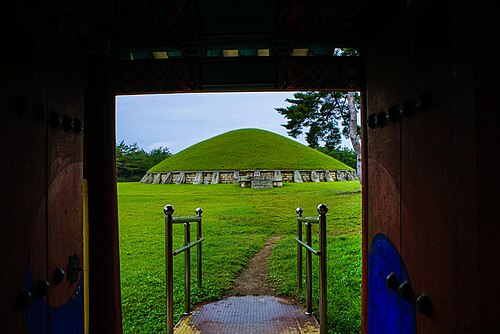
Sinmun of Silla
AncientEmperorKorea-647 — ?
Silla king who consolidated the unified kingdom.
Compare Sinmun of Silla with another historical figure:
Quick Facts
Born
647 BCE
Country
Korea
Era
Ancient
Occupation
Emperor
Score Overview
Military (10%)55
Political (20%)68
Influence (20%)52
Legacy (20%)44
Leadership (15%)70
Strategy (15%)45
Total Score54.7
Sinmun of Silla — Complete Timeline
679 AD
Construction of Sacheonwangsa TempleCultural
Sinmun built Sacheonwangsa Temple in Gyeongju, dedicated to the Four Heavenly Kings of Buddhism. The temple was intended to protect the kingdom from external threats and internal strife, reflecting the integration of Buddhist beliefs into state security.
TempleBuddhismSilla
Impact: nationalconstructive
681 AD
Suppression of the Kim Heumdol rebellionWar◆ Major
Sinmun faced a rebellion led by Kim Heumdol, a powerful aristocrat who opposed the centralization of power. The king's forces crushed the revolt, executing the rebels and confiscating their lands. This victory solidified Sinmun's control over the unified kingdom.
RebellionAristocracySilla
Impact: nationaldestructive
682 AD
Consolidation of central governmentReform◆ Major
King Sinmun reorganized the Silla government by establishing a centralized bureaucracy modeled on Tang China. He created new administrative offices and standardized tax collection, strengthening royal authority and reducing the power of local aristocrats.
AdministrationCentralizationSilla
Impact: nationalconstructive
Promotion of Confucian educationReform
Sinmun established the National Confucian Academy in Gyeongju, which taught Confucian classics and trained government officials. This institution promoted Confucian values in governance and created a merit-based system for selecting bureaucrats.
EducationConfucianismSilla
Impact: nationalconstructive
Detailed Scores
▶View all detailed scores
Military
Strategy
7
Tactics
7
Battles
7
Army Scale
7
War Impact
7
Political
Governance
7
Reform
7
Stability
7
Policy
7
Power
7
Influence
History
8
Global
7
Culture
8
Ideology
8
Legacy
7
People often compare with
See how Sinmun of Silla stacks up against other historical figures
Popular Comparisons
Sinmun of Silla vs Modu Chanyu
vs Modu Chanyu61
Sinmun of Silla vs Amenemhat I
vs Amenemhat I54
Sinmun of Silla vs Kidara I
vs Kidara I53
Sinmun of Silla vs Urukagina
vs Urukagina51
Sinmun of Silla vs Sagara
vs Sagara48
Sinmun of Silla vs Sima Lun
vs Sima Lun42