Loading...
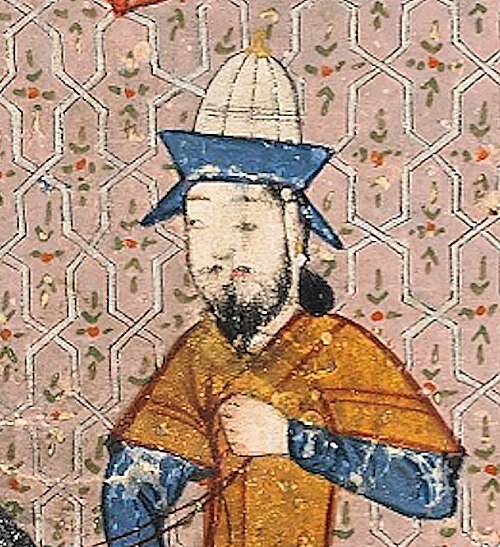
Shah Rukh
MedievalEmperorTimurid Empire1377 — 1447
Son of Tamerlane, presided over the Timurid Renaissance.
Compare Shah Rukh with another historical figure:
Quick Facts
Born
1377
Died
1447
Country
Timurid Empire
Era
Medieval
Occupation
Emperor
Score Overview
Military (10%)65
Political (20%)70
Influence (20%)65
Legacy (20%)40
Leadership (15%)72
Strategy (15%)55
Total Score59.5
Shah Rukh — Complete Timeline
1409 AD
Accession to the Timurid ThronePolitical Action
After Tamerlane's death and a period of civil war, Shah Rukh emerged as the ruler of the Timurid Empire, based in Herat. He defeated his rivals, including his nephew Khalil Sultan, and consolidated control over Persia and Central Asia.
SuccessionTimurid EmpireHerat
Impact: regional
1410 AD
Patronage of the Timurid RenaissanceCultural◆ Major
Shah Rukh patronized the arts, architecture, and literature, making Herat a center of the Timurid Renaissance. He commissioned the construction of mosques, madrasas, and libraries, and supported artists like the miniaturist Kamal-ud-din Behzad.
CulturePatronageTimurid Renaissance
Impact: regionalconstructive
1415 AD
Restoration of the Silk Road TradePolitical Action
Shah Rukh reestablished diplomatic and trade relations with Ming China, sending embassies and restoring the Silk Road. This facilitated cultural and economic exchange between the Timurid Empire and East Asia.
TradeSilk RoadMing China
Impact: globalconstructive
1420 AD
Campaigns against the Qara QoyunluWar
Shah Rukh led multiple campaigns against the Qara Qoyunlu (Black Sheep Turkomans) in western Persia and Iraq. He defeated them at the Battle of Alashkert in 1421, but the conflict continued intermittently, draining Timurid resources.
WarQara QoyunluPersia
Impact: regional
1447 AD
Death and SuccessionPolitical Action◆ Major
Shah Rukh died in 1447, leading to a succession struggle among his sons, including Ulugh Beg. His death marked the beginning of the decline of the Timurid Empire, which fragmented into smaller states.
DeathSuccessionTimurid Decline
Impact: regionaltragic
Detailed Scores
▶View all detailed scores
Military
Strategy
7
Tactics
7
Battles
7
Army Scale
6
War Impact
7
Political
Governance
6
Reform
7
Stability
6
Policy
7
Power
7
Influence
History
9
Global
8
Culture
8
Ideology
9
Legacy
8
People often compare with
See how Shah Rukh stacks up against other historical figures
Popular Comparisons
Shah Rukh vs Abd al-Rahman I
vs Abd al-Rahman I72
Shah Rukh vs Husayn Bayqara
vs Husayn Bayqara62
Shah Rukh vs Casimir III the Great
vs Casimir III the Great60
Shah Rukh vs John of England
vs John of England52
Shah Rukh vs Baldwin II of Jerusalem
vs Baldwin II of Jerusalem49
Shah Rukh vs Michael I Rangabe
vs Michael I Rangabe38