Loading...
Baldwin II of Jerusalem vs Shah Rukh
Shah Rukh leads by 10.5 pts · 2 figures compared
…
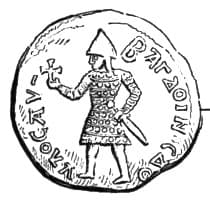
Baldwin II of Jerusalem
Emperor · Medieval
49.0Total
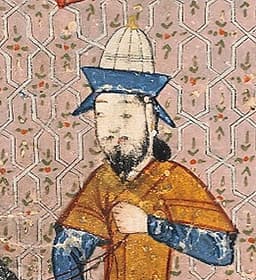
Shah Rukh
Emperor · Medieval
59.5Total
Basic Information
Born
1060
1377
Died
1131
1447
Era
Medieval
Medieval
Nationality
Kingdom of Jerusalem
Timurid Empire
Occupation
Emperor
Emperor
Civilization
Western
Middle Eastern
Score Comparison
Military (10%)
20.0
65.0
Political (20%)
43.7
70.0
Influence (20%)
52.5
65.0
Legacy (20%)
45.8
40.0
Leadership (15%)
65.7
72.0
Strategy (15%)
60.0
55.0
TOTAL
49.0
59.5
Baldwin II of Jerusalem — Complete Timeline
1118 AD
Elected as King of JerusalemPolitical Action◆ Major
Baldwin II was elected King of Jerusalem after the death of Baldwin I. As a capable military leader, he expanded the kingdom's territory and secured its borders against Muslim forces, including capturing Tyre in 1124.
Crusader StatesMonarchyTerritorial Expansion
Impact: regionalconstructive
1123 AD
Captured by Artuqids at Battle of HabWar◆ Major
Baldwin II was captured by the Artuqid Turkish ruler Belek Ghazi during a campaign near the Euphrates. He was held prisoner for over a year until being ransomed for 80,000 dinars, a significant financial blow to the kingdom.
CaptureRansomCrusader-Muslim Wars
Impact: regionaltragic
1124 AD
Captured by Egyptians at Battle of AscalonWar
Shortly after his release, Baldwin II was captured again by Egyptian forces near Ascalon. He was imprisoned in Cairo for several months before being ransomed a second time, demonstrating the precariousness of Crusader leadership.
CaptureRansomEgypt
Impact: regionaltragic
1129 AD
Arranged Marriage of Melisende to FulkPolitical Action◆ Major
Baldwin II arranged the marriage of his daughter Melisende to Fulk V of Anjou, securing a powerful European ally. This dynastic union ensured the succession and strengthened ties between Jerusalem and Western Europe.
Dynastic MarriageSuccessionAlliance
Impact: regionalconstructive
Shah Rukh — Complete Timeline
1409 AD
Accession to the Timurid ThronePolitical Action
After Tamerlane's death and a period of civil war, Shah Rukh emerged as the ruler of the Timurid Empire, based in Herat. He defeated his rivals, including his nephew Khalil Sultan, and consolidated control over Persia and Central Asia.
SuccessionTimurid EmpireHerat
Impact: regional
1410 AD
Patronage of the Timurid RenaissanceCultural◆ Major
Shah Rukh patronized the arts, architecture, and literature, making Herat a center of the Timurid Renaissance. He commissioned the construction of mosques, madrasas, and libraries, and supported artists like the miniaturist Kamal-ud-din Behzad.
CulturePatronageTimurid Renaissance
Impact: regionalconstructive
1415 AD
Restoration of the Silk Road TradePolitical Action
Shah Rukh reestablished diplomatic and trade relations with Ming China, sending embassies and restoring the Silk Road. This facilitated cultural and economic exchange between the Timurid Empire and East Asia.
TradeSilk RoadMing China
Impact: globalconstructive
1420 AD
Campaigns against the Qara QoyunluWar
Shah Rukh led multiple campaigns against the Qara Qoyunlu (Black Sheep Turkomans) in western Persia and Iraq. He defeated them at the Battle of Alashkert in 1421, but the conflict continued intermittently, draining Timurid resources.
WarQara QoyunluPersia
Impact: regional
1447 AD
Death and SuccessionPolitical Action◆ Major
Shah Rukh died in 1447, leading to a succession struggle among his sons, including Ulugh Beg. His death marked the beginning of the decline of the Timurid Empire, which fragmented into smaller states.
DeathSuccessionTimurid Decline
Impact: regionaltragic
Expert Analysis
Origins
Baldwin II of Jerusalem, born Baldwin of Bourcq around 1075, was a French nobleman from the House of Rethel. He traveled to the Holy Land during the First Crusade and became Count of Edessa in 1100. His early life was marked by warfare and diplomacy in the volatile Crusader states. Shah Rukh, born in 1377, was the son of the conqueror Timur (Tamerlane) and a Persian mother. He grew up in the shadow of his father's vast empire, receiving a cultured education in Herat. Unlike Baldwin, Shah Rukh's formative years were shaped by court intrigue and the arts.
Rise to Power
Baldwin II rose to prominence after the death of Baldwin I in 1118. As Count of Edessa, he was elected King of Jerusalem, a position he secured through military prowess and political acumen. His reign began with a campaign to expand the kingdom's borders, capturing cities like Tyre in 1124. Shah Rukh's rise was more tumultuous. After Timur's death in 1405, civil war erupted among his sons and grandsons. Shah Rukh emerged victorious by 1409, defeating his rivals including his nephew Khalil Sultan. He established his capital in Herat, shifting the empire's center from Samarkand to Khorasan.
Leadership & Governance
Baldwin II's leadership style was hands-on and militaristic. He personally led campaigns, often at great personal risk, which led to his capture twice. Politically, he secured the kingdom through dynastic alliances, notably marrying his daughter Melisende to Fulk V of Anjou, ensuring a smooth succession. Shah Rukh, in contrast, focused on consolidation and cultural patronage. He ruled through a decentralized system, delegating authority to his sons, such as Ulugh Beg in Samarkand. His governance emphasized stability and trade, restoring the Silk Road and sending embassies to Ming China. Baldwin scored 65.7 in leadership, Shah Rukh 72.0.
Triumph & Tragedy
Baldwin II's greatest success was expanding the Kingdom of Jerusalem and securing its future through the marriage of Melisende. However, his tragic captures—first by the Artuqids at the Battle of Hab in 1123, then by Egyptians at Ascalon—highlight his overextension. He was ransomed twice, draining resources. Shah Rukh's triumph was the Timurid Renaissance, a flourishing of art and science in Herat. He commissioned grand mosques and supported historians like Hafiz-i Abru. Yet, his failure to establish a clear succession led to decline after his death in 1447, with his son Ulugh Beg assassinated shortly thereafter.
Character & Destiny
Baldwin II was a resilient and pious ruler, but his chivalric boldness bordered on recklessness. His character, shaped by crusading zeal, led him to take risks that resulted in captivity. Historians note his ability to maintain morale despite setbacks. Shah Rukh, by contrast, was a cautious and cultured administrator. He preferred diplomacy over warfare, avoiding the brutal campaigns of his father. His destiny was to preside over a golden age, but his lack of military assertiveness allowed rivals like the Qara Qoyunlu to grow strong. Baldwin's strategy score is 60.0, Shah Rukh's 55.0.
Legacy
Baldwin II's legacy lies in the survival of the Crusader states. His dynastic planning ensured the kingdom lasted through his daughter and son-in-law. However, his military defeats foreshadowed the eventual loss of Jerusalem. Shah Rukh's legacy is more cultural: he is remembered as the patron of the Timurid Renaissance, which influenced Persian and Mughal art. His restoration of the Silk Road boosted trade across Asia. Yet, his political legacy is weaker; the Timurid Empire fragmented after his death. Baldwin scores 45.8 in legacy, Shah Rukh 40.0.
Conclusion
While Shah Rukh has a higher total score (59.5 vs 49.0), the comparison is nuanced. Baldwin's impact was immediate and critical for the Crusader states, but his achievements were overshadowed by eventual failure. Shah Rukh's cultural contributions were more enduring, but his empire declined quickly. In terms of lasting influence on world history, Shah Rukh's patronage of the arts and trade had a broader reach. Therefore, Shah Rukh had greater impact, despite Baldwin's higher legacy score in this dataset.
Rankings
🥇
Shah RukhLeader
Mil: 65.0Pol: 70.0Inf: 65.0
59.5
🥈
Baldwin II of Jerusalem
Mil: 20.0Pol: 43.7Inf: 52.5
49.0
+10.5 behind
How This Comparison Works
Algorithm
Each figure is scored on 6 dimensions (0—100 scale) based on structured historical data: Military (10%), Political (20%), Influence (20%), Legacy (20%), Leadership (15%), Strategy (15%). The weighted total produces the final ranking.
Data Sources
Scores are computed from structured sub-indicators in the database. Scale factors adjust for era (Ancient ×0.85, Modern ×1.0) and civilization size (Eastern ×1.05, Other ×0.80) to account for differences in population and military scale.
Maximum 3 Figures
Comparisons are limited to 2—3 figures to ensure readability and statistical meaningfulness.
Error Margins
±5 points per dimension — Sub-scores are derived from historical records with inherent uncertainty. Two figures within 5 points on a dimension should be considered roughly equivalent in that area.
Total Score Accuracy
±3 points overall — The weighted combination of 6 dimensions produces a total score with approximately ±3 points of uncertainty. Differences of less than 3 points are not statistically significant— the figures are effectively tied.
Known Limitations
- Historical records are incomplete and uneven across civilizations
- Figures from oral-tradition societies may be underrepresented
- Occupation labels can misclassify multi-role figures
- Scores measure capability and impact, not moral character
- Quantitative scoring is a comparison tool, not absolute truth
Capability Radar
Military (10%) — Battles & Warfare
Battles
45
65
Win Rate
40
70
Expansion
40
60
Political (20%) — Governance & Reform
Reform
35
75
Diplomacy
55
80
Economy
30
80
Influence (20%) — Cultural & Global Reach
Cultural
30
85
Global
25
70
Legacy (20%) — Historical Impact
Historical
45
80
Longevity
30
75
Leadership (15%) — Power & Stability
Tenure
60
85
Stability
25
85
Strategy (15%) — Tactics & Innovation
Strategy
55
75
Tactics
50
60
Reform
30
55
Similar Comparisons
Comments & Discussion
No comments yet. Be the first to share your thoughts!