Loading...
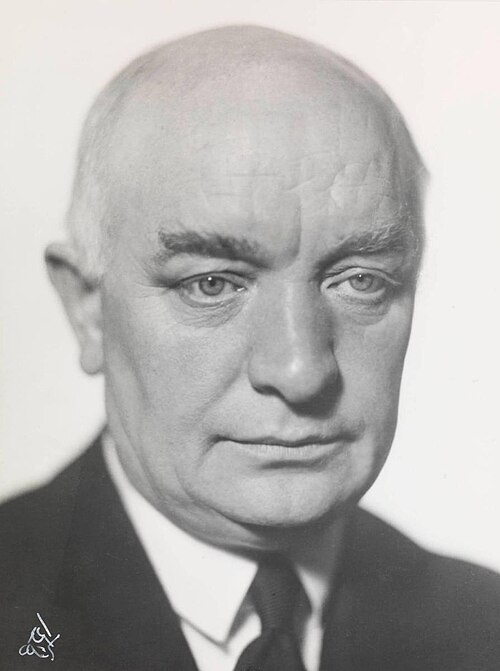
Per Albin Hansson
ModernPoliticianSweden1885 — 1946
Folkhemmet Swedish PM, neutrality champion.
Compare Per Albin Hansson with another historical figure:
Quick Facts
Born
1885
Died
1946
Country
Sweden
Era
Modern
Occupation
Politician
Score Overview
Military (10%)50
Political (20%)72
Influence (20%)62
Legacy (20%)52
Leadership (15%)72
Strategy (15%)42
Total Score59.3
Per Albin Hansson — Complete Timeline
1932 AD
Became Prime Minister of SwedenPolitical Action
Hansson became Prime Minister on September 24, 1932, leading a Social Democratic government. He initiated the 'Folkhemmet' (People's Home) welfare state program, which expanded social security, public housing, and labor rights, shaping modern Sweden.
FolkhemmetWelfare StateSocial Democracy
Impact: nationalconstructive
1939 AD
Declared Swedish Neutrality in World War IIPolitical Action◆ Major
At the outbreak of World War II in September 1939, Hansson declared Sweden's neutrality. This policy kept Sweden out of the war, though it involved controversial concessions to Nazi Germany, including iron ore exports and troop transit rights.
World War IINeutralityForeign Policy
Impact: global
Formed a National Unity GovernmentPolitical Action◆ Major
After the Soviet invasion of Finland in November 1939, Hansson formed a broad coalition government including all major parties except the Communists. This unity government managed Sweden's wartime policies and maintained domestic stability.
World War IICoalitionNational Unity
Impact: nationalconstructive
1940 AD
Negotiated the 'Permittenttrafik' AgreementPolitical Action◆ Major
In July 1940, Hansson's government agreed to allow German troops to transit through Sweden to Norway. This concession violated Sweden's neutrality and was heavily criticized, but it was seen as necessary to avoid German invasion.
World War IINeutralityConcession
Impact: regional
1946 AD
Expanded the Folkhemmet Welfare StateReform◆ Major
In his final years, Hansson oversaw the expansion of the Folkhemmet with the introduction of universal child allowances and improved pensions. These reforms solidified Sweden's social democratic model and were implemented shortly before his death.
FolkhemmetWelfareSocial Reform
Impact: nationalconstructive
Detailed Scores
▶View all detailed scores
Military
Strategy
6
Tactics
5
Battles
6
Army Scale
5
War Impact
6
Political
Governance
7
Reform
7
Stability
7
Policy
7
Power
8
Influence
History
9
Global
8
Culture
8
Ideology
9
Legacy
8
People often compare with
See how Per Albin Hansson stacks up against other historical figures
Popular Comparisons
Per Albin Hansson vs Lord Castlereagh
vs Lord Castlereagh55
Per Albin Hansson vs Luis Abinader
vs Luis Abinader55
Per Albin Hansson vs Stjepan Mesic
vs Stjepan Mesic54
Per Albin Hansson vs Boris Johnson
vs Boris Johnson52
Per Albin Hansson vs Qiao Shi
vs Qiao Shi50
Per Albin Hansson vs Alexander De Croo
vs Alexander De Croo48