Loading...
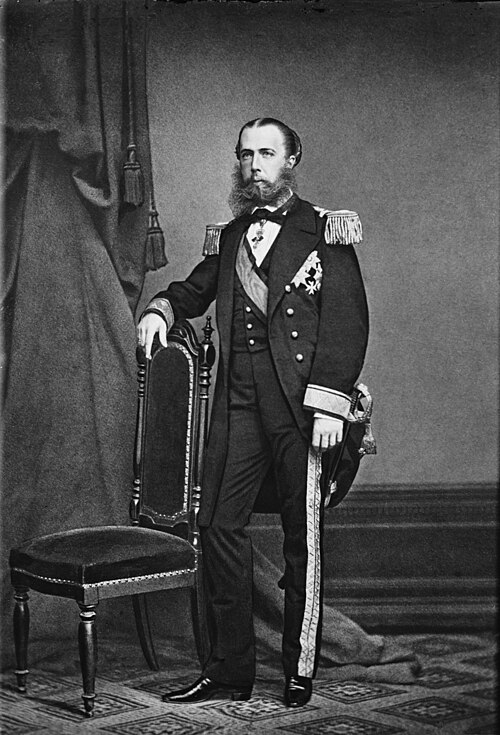
Maximilian I
MedievalEmperorHoly Roman Empire1459 — 1519
The Last Knight, expanded Habsburg power through marriage.
Compare Maximilian I with another historical figure:
Quick Facts
Born
1459
Died
1519
Country
Holy Roman Empire
Era
Medieval
Occupation
Emperor
Score Overview
Military (10%)53
Political (20%)60
Influence (20%)72
Legacy (20%)40
Leadership (15%)72
Strategy (15%)58
Total Score58.8
Maximilian I — Complete Timeline
1477 AD
Married Mary of BurgundyPolitical Action
Maximilian married Mary, the only child of Charles the Bold, Duke of Burgundy. This marriage brought the Burgundian Netherlands and Franche-Comt
MarriageHabsburg ExpansionBurgundian Inheritance
Impact: globalconstructive
1479 AD
Battle of GuinegateWar◆ Major
Maximilian led the Burgundian army to victory against French forces at Guinegate. The battle secured the Burgundian Netherlands from French annexation. However, Maximilian's subsequent military campaigns were less successful, and he eventually lost most of Burgundy proper.
BattleBurgundian WarsFranco-Habsburg Conflict
Impact: regional
1486 AD
Elected King of the RomansPolitical Action◆ Major
Maximilian was elected King of the Romans, securing his succession as Holy Roman Emperor. This election confirmed the Habsburg hold on the imperial title and allowed Maximilian to begin centralizing imperial authority, though his power remained limited by the princes.
ElectionHoly Roman EmpireSuccession
Impact: regionalconstructive
1495 AD
Imperial Reform and the ReichstagReform◆ Major
At the Diet of Worms, Maximilian proclaimed the Imperial Reform, establishing the Reichskammergericht (Imperial Chamber Court) and the Reichstag as a permanent legislative body. These reforms aimed to centralize the Holy Roman Empire but were only partially successful due to princely opposition.
ReformHoly Roman EmpireCentralization
Impact: regionalconstructive
1496 AD
Double Marriage Alliance with SpainPolitical Action
Maximilian arranged the marriage of his son Philip the Handsome to Joanna of Castile, and his daughter Margaret to John, Prince of Asturias. This alliance eventually brought Spain and its American colonies into the Habsburg domain under Charles V.
Marriage AllianceHabsburg-Spanish UnionDynastic Policy
Impact: globalconstructive
1508 AD
War of the League of CambraiWar
Maximilian joined the League of Cambrai against Venice, aiming to reclaim imperial territories in Italy. The war initially succeeded but later turned against the Habsburgs. The conflict drained imperial resources and highlighted the limits of Maximilian's military power.
Italian WarsLeague of CambraiVenice
Impact: regionaldestructive
Detailed Scores
▶View all detailed scores
Military
Strategy
7
Tactics
7
Battles
7
Army Scale
6
War Impact
7
Political
Governance
6
Reform
7
Stability
6
Policy
7
Power
7
Influence
History
9
Global
8
Culture
8
Ideology
9
Legacy
8
People often compare with
See how Maximilian I stacks up against other historical figures
Popular Comparisons
Maximilian I vs Stephen III of Moldavia
vs Stephen III of Moldavia63
Maximilian I vs Alfonso VII of Leon
vs Alfonso VII of Leon56
Maximilian I vs Daniel of Galicia
vs Daniel of Galicia55
Maximilian I vs Parakramabahu II
vs Parakramabahu II52
Maximilian I vs Qasim Khan
vs Qasim Khan52
Maximilian I vs Monomotapa
vs Monomotapa50