Loading...
Maximilian I vs Parakramabahu II
Maximilian I leads by 7.1 pts · 2 figures compared
…
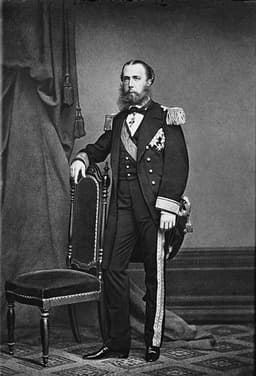
Maximilian I
Emperor · Medieval
58.8Total
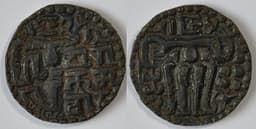
Parakramabahu II
Emperor · Medieval
51.7Total
Basic Information
Born
1459
1236
Died
1519
1270
Era
Medieval
Medieval
Nationality
Holy Roman Empire
Sri Lanka
Occupation
Emperor
Emperor
Civilization
Western
Indian
Score Comparison
Military (10%)
52.5
40.0
Political (20%)
60.0
68.0
Influence (20%)
72.0
55.7
Legacy (20%)
40.0
48.3
Leadership (15%)
72.0
40.0
Strategy (15%)
58.0
55.0
TOTAL
58.8
51.7
Maximilian I — Complete Timeline
1477 AD
Married Mary of BurgundyPolitical Action
Maximilian married Mary, the only child of Charles the Bold, Duke of Burgundy. This marriage brought the Burgundian Netherlands and Franche-Comt
MarriageHabsburg ExpansionBurgundian Inheritance
Impact: globalconstructive
1479 AD
Battle of GuinegateWar◆ Major
Maximilian led the Burgundian army to victory against French forces at Guinegate. The battle secured the Burgundian Netherlands from French annexation. However, Maximilian's subsequent military campaigns were less successful, and he eventually lost most of Burgundy proper.
BattleBurgundian WarsFranco-Habsburg Conflict
Impact: regional
1486 AD
Elected King of the RomansPolitical Action◆ Major
Maximilian was elected King of the Romans, securing his succession as Holy Roman Emperor. This election confirmed the Habsburg hold on the imperial title and allowed Maximilian to begin centralizing imperial authority, though his power remained limited by the princes.
ElectionHoly Roman EmpireSuccession
Impact: regionalconstructive
1495 AD
Imperial Reform and the ReichstagReform◆ Major
At the Diet of Worms, Maximilian proclaimed the Imperial Reform, establishing the Reichskammergericht (Imperial Chamber Court) and the Reichstag as a permanent legislative body. These reforms aimed to centralize the Holy Roman Empire but were only partially successful due to princely opposition.
ReformHoly Roman EmpireCentralization
Impact: regionalconstructive
1496 AD
Double Marriage Alliance with SpainPolitical Action
Maximilian arranged the marriage of his son Philip the Handsome to Joanna of Castile, and his daughter Margaret to John, Prince of Asturias. This alliance eventually brought Spain and its American colonies into the Habsburg domain under Charles V.
Marriage AllianceHabsburg-Spanish UnionDynastic Policy
Impact: globalconstructive
1508 AD
War of the League of CambraiWar
Maximilian joined the League of Cambrai against Venice, aiming to reclaim imperial territories in Italy. The war initially succeeded but later turned against the Habsburgs. The conflict drained imperial resources and highlighted the limits of Maximilian's military power.
Italian WarsLeague of CambraiVenice
Impact: regionaldestructive
Parakramabahu II — Complete Timeline
1236 AD
Establishment of Dambadeniya as CapitalPolitical Action◆ Major
Parakramabahu II established Dambadeniya as the capital of the Sinhalese kingdom. This marked the beginning of the Dambadeniya period, a new era of Sinhalese history.
CapitalFoundationGovernance
Impact: nationalconstructive
1240 AD
Patronage of LiteratureCultural
Parakramabahu II was a noted patron of literature. He himself wrote the 'Kavyasekaraya', a Sinhalese poem, and encouraged the composition of other works, fostering a cultural renaissance.
LiteraturePatronageCulture
Impact: nationalconstructive
Construction of the Temple of the Tooth in DambadeniyaCultural◆ Major
Parakramabahu II built a temple to house the Tooth Relic of the Buddha in Dambadeniya. This ensured the relic's safety and reinforced the capital's religious significance.
BuddhismRelicArchitecture
Impact: nationalconstructive
1255 AD
Expulsion of Kalinga MaghaWar
Parakramabahu II led a successful campaign to expel Kalinga Magha, the invader from the Kalinga region of India, from Sri Lanka. This ended a period of foreign occupation and restored Sinhalese rule.
LiberationMilitary CampaignForeign Invasion
Impact: national
Expert Analysis
Origins
**Maximilian I** (1459–1519) was born in Wiener Neustadt, the son of Emperor Frederick III and Eleanor of Portugal. Raised in the Habsburg court, he received a knightly education emphasizing chivalry, warfare, and governance. His father's careful territorial policies shaped Maximilian’s understanding of dynastic power, but he lacked a strong financial base. His early years were marked by the death of his mother and the influence of his tutor, Peter von Schaumberg.
**Parakramabahu II** (c. 1200–1270) was born into the Sinhalese royal family during a period of foreign occupation. The Kalinga Magha invasion (1215) had fragmented the island, and Parakramabahu grew up in exile or under duress. He was educated in Buddhist scriptures and statecraft, likely at the court of his uncle or father. His early life was defined by resistance against the invader, shaping his mission to restore Sinhalese sovereignty.
Rise to Power
Maximilian became King of the Romans in 1486, securing his election through a combination of military support and promises to the prince-electors. His marriage to Mary of Burgundy in 1477 was a turning point: it brought the wealthy Burgundian Netherlands into Habsburg hands, but also embroiled him in war with France. He defended the inheritance through the Battle of Guinegate (1479), where his innovative use of cavalry and infantry secured victory. However, Mary's death in 1482 led to the Treaty of Arras, temporarily ceding some territories. His election as Holy Roman Emperor in 1508 (after his father's death) solidified his position.
Parakramabahu II rose to power as the leader of the Sinhalese resistance. After the death of his predecessor (possibly his father), he organized a campaign from Dambadeniya, a fortified location. In 1232, he launched a decisive offensive that expelled Kalinga Magha from Sri Lanka, ending 17 years of occupation. This victory earned him the support of local chieftains and the Buddhist clergy, allowing him to establish Dambadeniya as the capital. He was crowned king soon after, with his authority recognized across the island except for the Jaffna kingdom.
Leadership & Governance
Maximilian’s governance style was feudal and personal. He relied on a network of loyal nobles and the Reichstag, which he reformed in 1495 at the Diet of Worms. The Imperial Reform established the Reichskammergericht (Imperial Chamber Court) to enforce peace, but implementation was weak. He also introduced the 'Common Penny' tax to fund campaigns, but it met resistance. His leadership was characterized by constant travel and direct intervention, but he lacked a centralized bureaucracy. His score of 72.0 in leadership reflects his ability to inspire loyalty, but his military score of 52.5 shows his limitations in sustained warfare.
Parakramabahu II governed from Dambadeniya, centralizing authority through the Buddhist sangha. He built the Temple of the Tooth to house the relic, making it a symbol of legitimacy. He promoted agriculture and trade, stabilizing the economy after war. His political score of 68.0 indicates effective administration, though his leadership score of 40.0 suggests he was more of a unifier than a forceful ruler. He patronized literature, writing the 'Kavyasekaraya' himself, which helped revive Sinhalese culture.
Triumph & Tragedy
Maximilian’s greatest triumph was the Double Marriage Alliance with Spain (1496-1497), which eventually led to the Habsburg inheritance of Spain and its empire. This diplomatic move, with a political score of 60.0, was visionary. His tragedy was his inability to secure a stable financial base; his military campaigns often stalled due to lack of funds. The Swiss Confederacy defeated him repeatedly, and his Italian Wars against France drained resources.
Parakramabahu II’s triumph was the expulsion of Kalinga Magha, a feat that restored Sinhalese independence and earned him the title 'Savior of the Faith'. His tragedy was the failure to fully unify the island; the Jaffna kingdom remained independent, and later invasions from India continued. His cultural achievements, while significant, did not prevent the decline of the Dambadeniya kingdom after his death.
Character & Destiny
Maximilian was a romantic idealist—the 'Last Knight'—who wrote chivalric works and designed his own tomb. He was personally brave but indecisive, often overestimating his resources. His character led him to pursue grandiose plans (like a crusade) that never materialized. His scores reflect this: influence 72.0, but legacy 40.0, as his reforms were incomplete.
Parakramabahu II was a pragmatic monarch, a poet-warrior who used culture to consolidate power. He was patient, waiting years to strike at Magha. His destiny was tied to the revival of Sinhalese identity, but his focus on the south left northern challenges unresolved. His legacy score of 48.3 shows a mixed assessment.
Legacy
Maximilian’s legacy is the Habsburg empire: through his marriage policies, he set the stage for Charles V’s vast domains. The Imperial Reform influenced German constitutional development, though its immediate impact was limited. He is remembered as a patron of the arts and a transitional figure between medieval and modern Europe.
Parakramabahu II’s legacy is the Dambadeniya period, a golden age of literature and Buddhist revival. The Temple of the Tooth remains a sacred site. However, his kingdom did not last; the capital moved again after his death. He is revered in Sri Lanka as a national hero who expelled foreign rule.
Conclusion
Maximilian I has a higher total score (58.8 vs. 51.7) due to his greater influence (72.0) and leadership (72.0). His marriage alliances shaped European history for centuries, while Parakramabahu II’s impact was more localized. Even considering the different scales, Maximilian’s strategic vision—though flawed—had a more enduring impact on world history. Parakramabahu II’s achievements were significant for Sri Lanka, but they did not alter global power structures. Thus, Maximilian I had greater overall impact.
Rankings
🥇
Maximilian ILeader
Mil: 52.5Pol: 60.0Inf: 72.0
58.8
🥈
Parakramabahu II
Mil: 40.0Pol: 68.0Inf: 55.7
51.7
+7.1 behind
How This Comparison Works
Algorithm
Each figure is scored on 6 dimensions (0—100 scale) based on structured historical data: Military (10%), Political (20%), Influence (20%), Legacy (20%), Leadership (15%), Strategy (15%). The weighted total produces the final ranking.
Data Sources
Scores are computed from structured sub-indicators in the database. Scale factors adjust for era (Ancient ×0.85, Modern ×1.0) and civilization size (Eastern ×1.05, Other ×0.80) to account for differences in population and military scale.
Maximum 3 Figures
Comparisons are limited to 2—3 figures to ensure readability and statistical meaningfulness.
Error Margins
±5 points per dimension — Sub-scores are derived from historical records with inherent uncertainty. Two figures within 5 points on a dimension should be considered roughly equivalent in that area.
Total Score Accuracy
±3 points overall — The weighted combination of 6 dimensions produces a total score with approximately ±3 points of uncertainty. Differences of less than 3 points are not statistically significant— the figures are effectively tied.
Known Limitations
- Historical records are incomplete and uneven across civilizations
- Figures from oral-tradition societies may be underrepresented
- Occupation labels can misclassify multi-role figures
- Scores measure capability and impact, not moral character
- Quantitative scoring is a comparison tool, not absolute truth
Capability Radar
Military (10%) — Battles & Warfare
Battles
55
45
Win Rate
50
50
Expansion
60
40
Political (20%) — Governance & Reform
Reform
65
50
Diplomacy
85
55
Economy
60
50
Influence (20%) — Cultural & Global Reach
Cultural
70
45
Global
65
30
Legacy (20%) — Historical Impact
Historical
75
50
Longevity
80
40
Leadership (15%) — Power & Stability
Tenure
75
60
Stability
55
55
Strategy (15%) — Tactics & Innovation
Strategy
65
55
Tactics
60
55
Reform
70
40
Similar Comparisons
Comments & Discussion
No comments yet. Be the first to share your thoughts!