Loading...
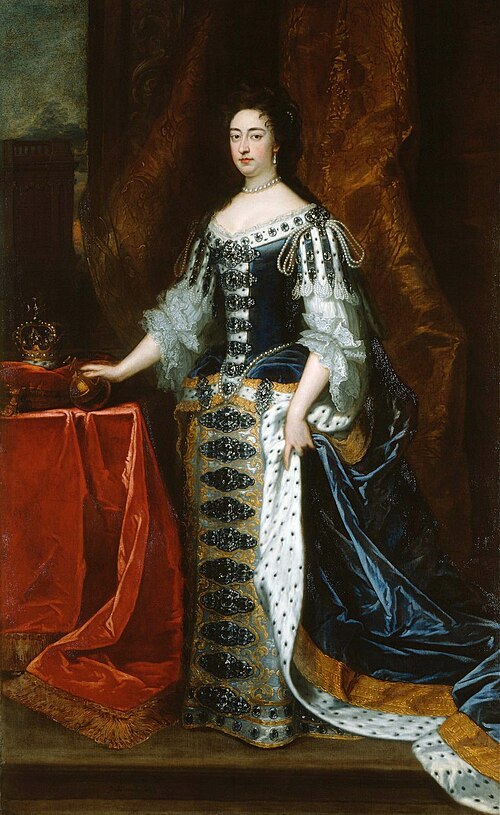
Mary II of England
ModernEmperorEngland1662 — 1694
Joint sovereign with William III after the Glorious Revolution.
Compare Mary II of England with another historical figure:
Quick Facts
Born
1662
Died
1694
Country
England
Era
Modern
Occupation
Emperor
Score Overview
Military (10%)13
Political (20%)68
Influence (20%)53
Legacy (20%)43
Leadership (15%)65
Strategy (15%)57
Total Score50.9
Mary II of England — Complete Timeline
1688 AD
Glorious RevolutionPolitical Action
Mary II accepted the invitation from English parliamentarians to replace her father James II. She and her husband William of Orange invaded England with a Dutch fleet, forcing James II to flee. This bloodless transfer of power established parliamentary sovereignty over the monarchy.
Glorious RevolutionConstitutional ChangeDynastic Shift
Impact: nationalconstructive
1689 AD
Joint Coronation with William IIIPolitical Action◆ Major
Mary II was crowned joint sovereign with her husband William III at Westminster Abbey. She accepted the Bill of Rights, which limited royal powers and affirmed parliamentary authority. This coronation formalized the new constitutional arrangement.
CoronationConstitutional MonarchyBill of Rights
Impact: nationalconstructive
1690 AD
Regency During William's AbsencePolitical Action
Mary II served as regent while William III campaigned in Ireland against James II's forces. She effectively governed England, managing the Treasury and military logistics. Her regency demonstrated her administrative competence and maintained stability.
RegencyGovernanceStability
Impact: nationalconstructive
1694 AD
Death from SmallpoxOther◆ Major
Mary II died of smallpox at Kensington Palace at age 32. Her death deeply affected William III and the nation. She was buried in Westminster Abbey. Her early death ended her joint reign and left William as sole monarch.
DeathSmallpoxMonarchy
Impact: nationaltragic
Detailed Scores
▶View all detailed scores
Military
Strategy
7
Tactics
7
Battles
7
Army Scale
6
War Impact
7
Political
Governance
7
Reform
7
Stability
7
Policy
8
Power
8
Influence
History
8
Global
8
Culture
8
Ideology
9
Legacy
8
People often compare with
See how Mary II of England stacks up against other historical figures
Popular Comparisons
Mary II of England vs Abdulaziz Al Saud
vs Abdulaziz Al Saud69
Mary II of England vs Rama III
vs Rama III52
Mary II of England vs Muhammad Adil Shah
vs Muhammad Adil Shah50
Mary II of England vs Sri Vikrama Rajasinha
vs Sri Vikrama Rajasinha47
Mary II of England vs Chitimukulu
vs Chitimukulu46
Mary II of England vs Hamir Singh of Rewa
vs Hamir Singh of Rewa44