Loading...
Hamir Singh of Rewa vs Mary II of England
Mary II of England leads by 7.1 pts · 2 figures compared
…

Hamir Singh of Rewa
Emperor · Modern
43.8Total
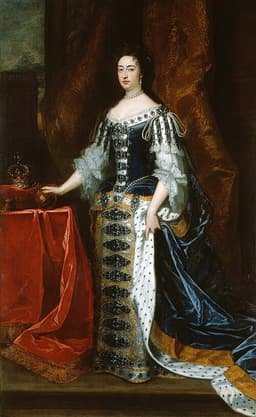
Mary II of England
Emperor · Modern
50.9Total
Basic Information
Born
1790
1662
Died
1855
1694
Era
Modern
Modern
Nationality
India
England
Occupation
Emperor
Emperor
Civilization
Indian
Western
Score Comparison
Military (10%)
20.0
13.0
Political (20%)
36.5
68.0
Influence (20%)
46.3
52.5
Legacy (20%)
36.7
43.3
Leadership (15%)
67.0
65.0
Strategy (15%)
54.8
57.4
TOTAL
43.8
50.9
Hamir Singh of Rewa — Complete Timeline
1820 AD
Construction of Rewa FortCultural
Hamir Singh commissioned the construction of the Rewa Fort, a significant architectural structure in the region. The fort served as the royal residence and administrative center, symbolizing the power of the Rewa dynasty.
ArchitectureFortRewa
constructive
Mary II of England — Complete Timeline
1688 AD
Glorious RevolutionPolitical Action
Mary II accepted the invitation from English parliamentarians to replace her father James II. She and her husband William of Orange invaded England with a Dutch fleet, forcing James II to flee. This bloodless transfer of power established parliamentary sovereignty over the monarchy.
Glorious RevolutionConstitutional ChangeDynastic Shift
Impact: nationalconstructive
1689 AD
Joint Coronation with William IIIPolitical Action◆ Major
Mary II was crowned joint sovereign with her husband William III at Westminster Abbey. She accepted the Bill of Rights, which limited royal powers and affirmed parliamentary authority. This coronation formalized the new constitutional arrangement.
CoronationConstitutional MonarchyBill of Rights
Impact: nationalconstructive
1690 AD
Regency During William's AbsencePolitical Action
Mary II served as regent while William III campaigned in Ireland against James II's forces. She effectively governed England, managing the Treasury and military logistics. Her regency demonstrated her administrative competence and maintained stability.
RegencyGovernanceStability
Impact: nationalconstructive
1694 AD
Death from SmallpoxOther◆ Major
Mary II died of smallpox at Kensington Palace at age 32. Her death deeply affected William III and the nation. She was buried in Westminster Abbey. Her early death ended her joint reign and left William as sole monarch.
DeathSmallpoxMonarchy
Impact: nationaltragic
Expert Analysis
Origins
Hamir Singh of Rewa was born in 1820 into the Baghel Rajput dynasty, rulers of the princely state of Rewa in central India. His early life was shaped by the traditions of Rajput martial honor and the complex dynamics of British paramountcy. He received a traditional education in governance, military tactics, and courtly etiquette, preparing him for his role as Maharaja.
Mary II of England was born on April 30, 1662, at St James's Palace, the eldest daughter of James, Duke of York (later James II) and his first wife, Anne Hyde. She was raised in the Anglican faith despite her father's conversion to Catholicism. Her education emphasized languages, history, and religion, but she was not groomed for rule, as her father's position as heir presumptive seemed secure.
Rise to Power
Hamir Singh became Maharaja of Rewa in 1854 upon the death of his father, Maharaja Raghuraj Singh. His rise was a straightforward inheritance, but his reign was immediately tested by the Indian Rebellion of 1857. While many Indian rulers joined the revolt, Hamir Singh chose to support the British East India Company, providing troops, supplies, and strategic access to his territory. This decision secured his position under British suzerainty and earned him rewards, including a hereditary salute of 15 guns.
Mary II's rise was far more dramatic. In 1688, the Glorious Revolution saw her father James II deposed for his Catholic policies and autocratic rule. Mary, despite being the rightful heir, accepted an invitation from English parliamentarians to take the throne jointly with her husband, William of Orange. They were crowned on April 11, 1689, after agreeing to the Bill of Rights, which established parliamentary sovereignty. Mary's political score of 68.0 reflects her role in this peaceful transfer of power.
Leadership & Governance
Hamir Singh's governance was typical of a princely state under British paramountcy. He maintained internal order, collected taxes, and administered justice according to traditional customs. His most notable project was the construction of Rewa Fort, a symbol of his authority. However, his leadership was heavily constrained by British oversight; he had limited autonomy and was expected to follow British directives. His leadership score of 67.0 reflects his effectiveness within these limits, but his political score of 36.5 shows his subordination.
Mary II, as joint sovereign, exercised significant authority but shared power with William III. She was deeply involved in governance, especially during William's military campaigns. As regent in 1690 while William fought in Ireland, she effectively managed the Treasury, oversaw the administration, and dealt with political intrigues. She supported the Bill of Rights and the Toleration Act, which granted religious freedom to nonconformists. Her political score of 68.0 and leadership score of 65.0 indicate her capability, though she often deferred to William on major decisions.
Triumph & Tragedy
Hamir Singh's greatest success was his unwavering loyalty to the British during the 1857 Rebellion, which preserved his throne and brought material rewards. He also left a physical legacy in Rewa Fort. His failure lay in his lack of independence; he is remembered as a collaborator rather than a ruler who advanced his state's autonomy. His legacy score of 36.7 reflects this limited impact.
Mary II's triumph was her role in the Glorious Revolution, which established constitutional monarchy and parliamentary supremacy. Her regency demonstrated competent governance. Her tragedy was her early death from smallpox at age 32 in 1694, which cut short her reign and left William to rule alone. Her influence score of 52.5 and legacy score of 43.3 reflect her part in a transformative event, though her personal power was shared.
Character & Destiny
Hamir Singh was pragmatic and cautious, choosing stability over rebellion. His character aligned with the destiny of a minor prince in the British Empire: survival through cooperation. He lacked the ambition to challenge British rule, and his historical assessment is that of a loyal but unremarkable ruler.
Mary II was dutiful, intelligent, and devout. She accepted the throne reluctantly but governed with competence. Her character shaped her destiny: her willingness to set aside personal claims for the good of the Protestant cause enabled the Glorious Revolution. Historians view her as a capable administrator who helped solidify parliamentary rule.
Legacy
Hamir Singh's legacy is limited to the regional history of Rewa. The fort he built still stands, but his political impact was minimal. He is remembered as a British ally during a pivotal moment, but his score of 36.7 in legacy places him among lesser figures.
Mary II's legacy is profound. The Glorious Revolution and Bill of Rights influenced democratic developments worldwide. Her joint reign with William set a precedent for shared sovereignty. She is buried in Westminster Abbey and commemorated as a key figure in English constitutional history. Her legacy score of 43.3, while modest, reflects her indirect but significant influence.
Conclusion
Mary II of England had greater impact than Hamir Singh of Rewa. Her political score of 68.0 versus his 36.5, and her influence score of 52.5 versus his 46.3, demonstrate her broader influence. While Hamir Singh's total score is 43.8 and Mary's is 50.9, the gap of 7.1 points understates the difference in historical significance. Mary participated in a foundational event for modern democracy, whereas Hamir Singh's actions affected only a small region. Therefore, Mary II is the more consequential figure.
Rankings
🥇
Mary II of EnglandLeader
Mil: 13.0Pol: 68.0Inf: 52.5
50.9
🥈
Hamir Singh of Rewa
Mil: 20.0Pol: 36.5Inf: 46.3
43.8
+7.1 behind
How This Comparison Works
Algorithm
Each figure is scored on 6 dimensions (0—100 scale) based on structured historical data: Military (10%), Political (20%), Influence (20%), Legacy (20%), Leadership (15%), Strategy (15%). The weighted total produces the final ranking.
Data Sources
Scores are computed from structured sub-indicators in the database. Scale factors adjust for era (Ancient ×0.85, Modern ×1.0) and civilization size (Eastern ×1.05, Other ×0.80) to account for differences in population and military scale.
Maximum 3 Figures
Comparisons are limited to 2—3 figures to ensure readability and statistical meaningfulness.
Error Margins
±5 points per dimension — Sub-scores are derived from historical records with inherent uncertainty. Two figures within 5 points on a dimension should be considered roughly equivalent in that area.
Total Score Accuracy
±3 points overall — The weighted combination of 6 dimensions produces a total score with approximately ±3 points of uncertainty. Differences of less than 3 points are not statistically significant— the figures are effectively tied.
Known Limitations
- Historical records are incomplete and uneven across civilizations
- Figures from oral-tradition societies may be underrepresented
- Occupation labels can misclassify multi-role figures
- Scores measure capability and impact, not moral character
- Quantitative scoring is a comparison tool, not absolute truth
Capability Radar
Military (10%) — Battles & Warfare
Battles
10
38
Win Rate
10
39
Expansion
5
42
Political (20%) — Governance & Reform
Reform
20
45
Diplomacy
40
40
Economy
20
35
Influence (20%) — Cultural & Global Reach
Cultural
10
30
Global
5
25
Legacy (20%) — Historical Impact
Historical
10
40
Longevity
10
30
Leadership (15%) — Power & Stability
Tenure
40
30
Stability
30
50
Strategy (15%) — Tactics & Innovation
Strategy
10
44
Tactics
10
50
Reform
5
51
Similar Comparisons
Comments & Discussion
No comments yet. Be the first to share your thoughts!