Loading...
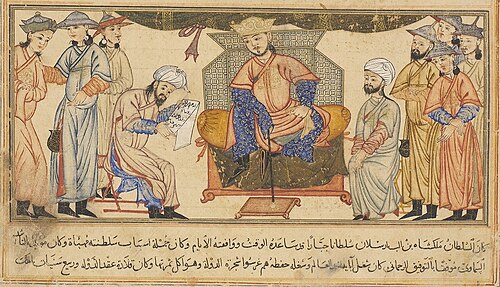
Malik-Shah I
MedievalEmperorSeljuk Empire1055 — 1092
Seljuk sultan who presided over the empire's golden age.
Compare Malik-Shah I with another historical figure:
Quick Facts
Born
1055
Died
1092
Country
Seljuk Empire
Era
Medieval
Occupation
Emperor
Score Overview
Military (10%)74
Political (20%)72
Influence (20%)82
Legacy (20%)55
Leadership (15%)78
Strategy (15%)68
Total Score71.0
Malik-Shah I — Complete Timeline
1067 AD
Patronage of the Nizamiyya MadrasasCultural◆ Major
Malik-Shah I, with his vizier Nizam al-Mulk, established a network of madrasas (Islamic schools) across the empire, the most famous being in Baghdad. These institutions standardized Sunni education and promoted Shafi'i jurisprudence, influencing Islamic scholarship for centuries.
EducationMadrasaSunni Revival
Impact: regionalconstructive
1071 AD
Battle of ManzikertWar
Malik-Shah I's forces, commanded by his general Alp Arslan, defeated the Byzantine army at Manzikert in eastern Anatolia. The victory led to the capture of Emperor Romanos IV and opened Anatolia to Turkish settlement, fundamentally altering the region's demographic and political landscape.
BattleByzantine EmpireAnatolia
Impact: global
1072 AD
Expansion of the Seljuk EmpireWar◆ Major
Under Malik-Shah I, the Seljuk Empire reached its greatest territorial extent, stretching from the Mediterranean to Central Asia. He conquered Syria, Palestine, and parts of the Arabian Peninsula, establishing Seljuk hegemony over the Middle East.
ConquestEmpireExpansion
Impact: regional
1079 AD
Reforms of the Calendar (Jalali Calendar)Invention◆ Major
Malik-Shah I commissioned a group of astronomers, including Omar Khayyam, to reform the Persian calendar. The resulting Jalali calendar was more accurate than the Gregorian calendar, with a precise calculation of the solar year, and was used in Persia for centuries.
CalendarAstronomyOmar Khayyam
Impact: globalconstructive
1092 AD
Assassination of Nizam al-MulkPolitical Action◆ Major
Malik-Shah I's vizier Nizam al-Mulk was assassinated by a member of the Assassins (Nizari Ismailis). This event destabilized the Seljuk court and contributed to the decline of the empire after Malik-Shah's own death later that year.
AssassinationNizam al-MulkAssassins
Impact: regionaltragic
Detailed Scores
▶View all detailed scores
Military
Strategy
7
Tactics
7
Battles
7
Army Scale
6
War Impact
7
Political
Governance
6
Reform
7
Stability
6
Policy
7
Power
7
Influence
History
9
Global
8
Culture
8
Ideology
9
Legacy
8
People often compare with
See how Malik-Shah I stacks up against other historical figures
Popular Comparisons
Malik-Shah I vs Rajendra Chola I
vs Rajendra Chola I82
Malik-Shah I vs Kublai Khan
vs Kublai Khan74
Malik-Shah I vs Bayanchur Khan
vs Bayanchur Khan61
Malik-Shah I vs Yusuf Adil Shah
vs Yusuf Adil Shah57
Malik-Shah I vs Philip IV of France
vs Philip IV of France56
Malik-Shah I vs Sejo of Joseon
vs Sejo of Joseon56