Loading...
Bayanchur Khan vs Malik-Shah I
Malik-Shah I leads by 9.6 pts · 2 figures compared
…

Bayanchur Khan
Emperor · Medieval
61.4Total
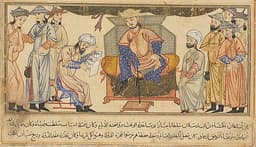
Malik-Shah I
Emperor · Medieval
71.0Total
Basic Information
Born
713
1055
Died
759
1092
Era
Medieval
Medieval
Nationality
Uyghur Khaganate
Seljuk Empire
Occupation
Emperor
Emperor
Civilization
Eastern
Middle Eastern
Score Comparison
Military (10%)
61.7
74.0
Political (20%)
72.0
72.0
Influence (20%)
58.3
82.0
Legacy (20%)
52.0
55.0
Leadership (15%)
72.0
78.0
Strategy (15%)
60.7
68.1
TOTAL
61.4
71.0
Bayanchur Khan — Complete Timeline
747 AD
Establishment of the Uyghur Khaganate as a Major PowerPolitical Action◆ Major
Bayanchur Khan consolidated Uyghur control over the former Gokturk territories, establishing the Uyghur Khaganate as the dominant steppe power. He built a capital at Ordu-Baliq and organized the Uyghur state on a model combining steppe traditions with Chinese administrative practices.
State BuildingCapitalUyghur Empire
Impact: regionalconstructive
750 AD
Military Campaigns against the Kyrgyz and KarluksWar
Bayanchur Khan led campaigns against the Kyrgyz and Karluk tribes to secure the northern and western borders of the Uyghur Khaganate. He defeated these groups and incorporated them into the Uyghur confederation, expanding Uyghur territory.
ExpansionMilitary CampaignSteppe Tribes
Impact: regional
756 AD
Alliance with Tang China against the An Lushan RebellionPolitical Action◆ Major
Bayanchur Khan sent Uyghur cavalry to aid the Tang dynasty in suppressing the An Lushan Rebellion. The Uyghur forces helped recapture the Tang capital Chang'an and Luoyang, cementing the Uyghur-Tang alliance.
AllianceAn Lushan RebellionTang Dynasty
Impact: regionalconstructive
Malik-Shah I — Complete Timeline
1067 AD
Patronage of the Nizamiyya MadrasasCultural◆ Major
Malik-Shah I, with his vizier Nizam al-Mulk, established a network of madrasas (Islamic schools) across the empire, the most famous being in Baghdad. These institutions standardized Sunni education and promoted Shafi'i jurisprudence, influencing Islamic scholarship for centuries.
EducationMadrasaSunni Revival
Impact: regionalconstructive
1071 AD
Battle of ManzikertWar
Malik-Shah I's forces, commanded by his general Alp Arslan, defeated the Byzantine army at Manzikert in eastern Anatolia. The victory led to the capture of Emperor Romanos IV and opened Anatolia to Turkish settlement, fundamentally altering the region's demographic and political landscape.
BattleByzantine EmpireAnatolia
Impact: global
1072 AD
Expansion of the Seljuk EmpireWar◆ Major
Under Malik-Shah I, the Seljuk Empire reached its greatest territorial extent, stretching from the Mediterranean to Central Asia. He conquered Syria, Palestine, and parts of the Arabian Peninsula, establishing Seljuk hegemony over the Middle East.
ConquestEmpireExpansion
Impact: regional
1079 AD
Reforms of the Calendar (Jalali Calendar)Invention◆ Major
Malik-Shah I commissioned a group of astronomers, including Omar Khayyam, to reform the Persian calendar. The resulting Jalali calendar was more accurate than the Gregorian calendar, with a precise calculation of the solar year, and was used in Persia for centuries.
CalendarAstronomyOmar Khayyam
Impact: globalconstructive
1092 AD
Assassination of Nizam al-MulkPolitical Action◆ Major
Malik-Shah I's vizier Nizam al-Mulk was assassinated by a member of the Assassins (Nizari Ismailis). This event destabilized the Seljuk court and contributed to the decline of the empire after Malik-Shah's own death later that year.
AssassinationNizam al-MulkAssassins
Impact: regionaltragic
Expert Analysis
Origins
Bayanchur Khan (reigned 747–759 CE) was born into the Yaglakar clan of the Uyghur tribe, which had been a vassal of the Göktürk Khaganate. His early life is obscure, but he emerged as a leader during a period of turmoil in the steppes. He inherited a confederation that had recently overthrown the Göktürks. In contrast, Malik-Shah I (1055–1092 CE) was born in Isfahan to Alp Arslan, the second Seljuk sultan. His father had already established the Seljuks as a major power after the Battle of Manzikert in 1071. Malik-Shah was raised in a court that blended Persian administrative traditions with Turkic military culture, and he received education from the vizier Nizam al-Mulk.
Rise to Power
Bayanchur Khan became khagan in 747 after his predecessor's death. His rise was facilitated by the Uyghur alliance with the Tang dynasty. In 755, the An Lushan Rebellion erupted, and the Tang emperor requested Uyghur aid. Bayanchur Khan sent 4,000 cavalry, which helped recapture the capital Chang'an in 757. This alliance elevated the Uyghur Khaganate from a minor steppe power to a recognized empire. Malik-Shah I ascended the throne in 1072 after his father Alp Arslan's death. His reign began with a succession struggle against his uncle, but he quickly consolidated power with the support of Nizam al-Mulk. By 1075, he had secured control over the Seljuk heartlands and began expanding into Syria and Anatolia.
Leadership & Governance
Bayanchur Khan ruled as a traditional steppe khagan, relying on tribal alliances and personal charisma. He centralized authority by establishing a capital at Ordu-Baliq and adopting Manichaeism as state religion in 763, which created a unified ideology. However, his governance was limited by tribal autonomy. Malik-Shah I, guided by Nizam al-Mulk, implemented a sophisticated bureaucracy. The Nizamiyya madrasas promoted Sunni orthodoxy and trained administrators. He also reformed the tax system and built infrastructure. Malik-Shah's leadership score of 78.0 reflects his effective delegation, while Bayanchur's 72.0 indicates competent but less institutionalized rule.
Triumph & Tragedy
Bayanchur Khan's greatest triumph was his alliance with Tang China, which secured Uyghur independence and prestige. He also defeated the Kyrgyz and Karluks, expanding the khaganate. However, his conversion to Manichaeism alienated traditionalist tribes and created internal strife. The khaganate declined after his death. Malik-Shah I's triumphs include the expansion of the Seljuk Empire to its peak, spanning from the Mediterranean to Central Asia. His patronage of the Jalali calendar was a scientific achievement. Yet, his reign ended in tragedy: the assassination of Nizam al-Mulk in 1092 by the Assassins destabilized the empire, and Malik-Shah himself died shortly after, possibly poisoned. His death triggered a civil war.
Character & Destiny
Bayanchur Khan was a pragmatic leader who leveraged diplomacy over conquest. His decision to ally with Tang China and adopt Manichaeism showed strategic foresight but also risked cultural backlash. He scored 60.7 in military strategy, reflecting his reliance on allies. Malik-Shah I was ambitious and culturally sophisticated, but his dependence on Nizam al-Mulk made him vulnerable. His military score of 74.0 indicates effective campaigns, but his political score of 72.0 equals Bayanchur's. Malik-Shah's destiny was shaped by his inability to secure succession, leading to fragmentation.
Legacy
Bayanchur Khan's legacy is mixed. The Uyghur Khaganate fell in 840, but his Manichaean state left a unique cultural imprint. The Uyghur alphabet influenced later scripts. Malik-Shah I's legacy is more enduring: the Seljuk Empire influenced the Crusades, and the Nizamiyya madrasas shaped Islamic education. The Jalali calendar is still used in Iran. Malik-Shah's total score of 71.0 exceeds Bayanchur's 61.4 by 9.6 points.
Conclusion
Malik-Shah I had greater impact due to his empire's size, administrative reforms, and cultural patronage. While Bayanchur Khan's alliance with Tang China was significant, his khaganate was short-lived. Malik-Shah's influence on Islamic civilization and Eurasian politics was more profound. The data supports this: Malik-Shah scores higher in military (74.0 vs 61.7), influence (82.0 vs 58.3), and leadership (78.0 vs 72.0). Bayanchur's political score matches Malik-Shah's at 72.0, but overall, Malik-Shah I was the more consequential ruler.
Rankings
🥇
Malik-Shah ILeader
Mil: 74.0Pol: 72.0Inf: 82.0
71.0
🥈
Bayanchur Khan
Mil: 61.7Pol: 72.0Inf: 58.3
61.4
+9.6 behind
How This Comparison Works
Algorithm
Each figure is scored on 6 dimensions (0—100 scale) based on structured historical data: Military (10%), Political (20%), Influence (20%), Legacy (20%), Leadership (15%), Strategy (15%). The weighted total produces the final ranking.
Data Sources
Scores are computed from structured sub-indicators in the database. Scale factors adjust for era (Ancient ×0.85, Modern ×1.0) and civilization size (Eastern ×1.05, Other ×0.80) to account for differences in population and military scale.
Maximum 3 Figures
Comparisons are limited to 2—3 figures to ensure readability and statistical meaningfulness.
Error Margins
±5 points per dimension — Sub-scores are derived from historical records with inherent uncertainty. Two figures within 5 points on a dimension should be considered roughly equivalent in that area.
Total Score Accuracy
±3 points overall — The weighted combination of 6 dimensions produces a total score with approximately ±3 points of uncertainty. Differences of less than 3 points are not statistically significant— the figures are effectively tied.
Known Limitations
- Historical records are incomplete and uneven across civilizations
- Figures from oral-tradition societies may be underrepresented
- Occupation labels can misclassify multi-role figures
- Scores measure capability and impact, not moral character
- Quantitative scoring is a comparison tool, not absolute truth
Capability Radar
Military (10%) — Battles & Warfare
Battles
65
78
Win Rate
70
82
Expansion
70
85
Political (20%) — Governance & Reform
Reform
60
80
Diplomacy
80
78
Economy
65
82
Influence (20%) — Cultural & Global Reach
Cultural
55
72
Global
55
68
Legacy (20%) — Historical Impact
Historical
60
74
Longevity
50
65
Leadership (15%) — Power & Stability
Tenure
75
85
Stability
70
75
Strategy (15%) — Tactics & Innovation
Strategy
65
80
Tactics
60
75
Reform
55
70
Similar Comparisons
Comments & Discussion
No comments yet. Be the first to share your thoughts!