Loading...
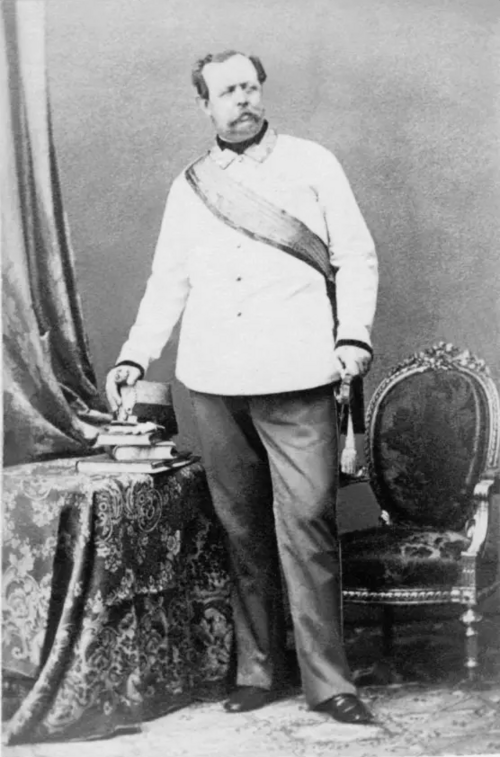
Louis III of Hesse
ModernEmperorHesse-Darmstadt1806 — 1877
Grand duke during German unification under Prussia.
Compare Louis III of Hesse with another historical figure:
Quick Facts
Born
1806
Died
1877
Country
Hesse-Darmstadt
Era
Modern
Occupation
Emperor
Score Overview
Military (10%)11
Political (20%)38
Influence (20%)49
Legacy (20%)38
Leadership (15%)67
Strategy (15%)60
Total Score44.6
Louis III of Hesse — Complete Timeline
1848 AD
Accepted Liberal ReformsReform◆ Major
Louis III agreed to a series of liberal reforms, including the abolition of feudal privileges, freedom of the press, and the establishment of a more democratic parliament. These reforms were later partially reversed.
Reforms1848 Revolution
Impact: regionalprogressive
Became Grand Duke of HessePolitical Action◆ Major
Louis III succeeded his father Louis II as Grand Duke of Hesse-Darmstadt during the 1848 revolutions. He was more pragmatic than his father and accepted some liberal reforms to stabilize his rule.
SuccessionHesse-Darmstadt
Impact: regional
1866 AD
Supported Prussia in Austro-Prussian WarPolitical Action◆ Major
Louis III sided with Prussia during the Austro-Prussian War. After Prussia's victory, Hesse-Darmstadt was forced to cede some territories but was allowed to remain independent, unlike Hesse-Kassel.
Austro-Prussian WarPrussian Alliance
Impact: regional
1871 AD
Joined German EmpirePolitical Action◆ Major
Louis III led Hesse-Darmstadt into the newly formed German Empire under Prussian leadership. He became a constituent prince of the empire, losing much of his sovereignty but preserving his throne.
German UnificationEmpire
Impact: regional
Detailed Scores
▶View all detailed scores
Military
Strategy
7
Tactics
6
Battles
7
Army Scale
6
War Impact
7
Political
Governance
7
Reform
7
Stability
7
Policy
8
Power
8
Influence
History
9
Global
8
Culture
9
Ideology
9
Legacy
8
People often compare with
See how Louis III of Hesse stacks up against other historical figures
Popular Comparisons
Louis III of Hesse vs Jai Singh II of Amber
vs Jai Singh II of Amber57
Louis III of Hesse vs Ferdinand I of Bohemia
vs Ferdinand I of Bohemia55
Louis III of Hesse vs Mutara I Semugeshi
vs Mutara I Semugeshi53
Louis III of Hesse vs Frederick William III of Prussia
vs Frederick William III of Prussia50
Louis III of Hesse vs Kosoko
vs Kosoko49
Louis III of Hesse vs Faustin Soulouque
vs Faustin Soulouque43