Loading...
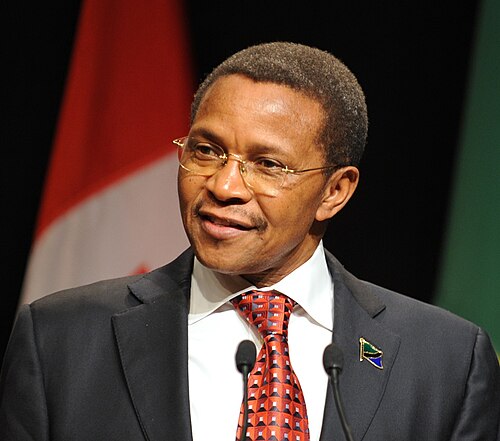
Jakaya Kikwete
ModernPoliticianTanzania1950 — ?
President of Tanzania after Mkapa.
Compare Jakaya Kikwete with another historical figure:
Quick Facts
Born
1950
Country
Tanzania
Era
Modern
Occupation
Politician
Score Overview
Military (10%)40
Political (20%)54
Influence (20%)54
Legacy (20%)42
Leadership (15%)72
Strategy (15%)38
Total Score50.6
Jakaya Kikwete — Complete Timeline
2005 AD
Became President of TanzaniaPolitical Action◆ Major
Jakaya Kikwete was elected President of Tanzania, succeeding Benjamin Mkapa. He won with over 80% of the vote, continuing the dominance of the Chama Cha Mapinduzi (CCM) party. His presidency focused on economic growth, infrastructure, and social services.
PresidencyElectionCCM
Impact: nationalconstructive
2009 AD
Launched Kilimo Kwanza (Agriculture First) InitiativeReform◆ Major
Kikwete launched the Kilimo Kwanza initiative to modernize agriculture, increase productivity, and ensure food security. The program aimed to transform Tanzania into a regional food exporter by providing subsidies, irrigation, and access to credit for farmers.
AgricultureKilimo KwanzaFood Security
Impact: nationalconstructive
2010 AD
Oversaw Economic Growth and Gas DiscoveriesOther◆ Major
Under Kikwete, Tanzania experienced sustained economic growth averaging 6-7% annually, driven by mining, tourism, and construction. Major natural gas discoveries off the coast of Mtwara raised hopes for energy exports, but development was slow due to regulatory and investment challenges.
Economic GrowthNatural GasEnergy
Impact: nationalconstructive
2015 AD
Faced Zanzibar Political CrisisPolitical Action
Kikwete's government faced a political crisis in Zanzibar after disputed elections in 2015, which were annulled by the Zanzibar Electoral Commission. The opposition Civic United Front (CUF) boycotted the rerun, leading to a one-party government in Zanzibar and increased tensions.
ZanzibarElection DisputePolitical Crisis
Impact: regionaldestructive
Stepped Down After Two TermsPolitical Action◆ Major
Kikwete stepped down after completing his two-term limit, handing power to his successor, John Magufuli. His peaceful transfer of power reinforced Tanzania's reputation for political stability in a region often marked by coups and extended presidencies.
Term LimitsSuccessionDemocracy
Impact: nationalconstructive
Detailed Scores
▶View all detailed scores
Military
Strategy
6
Tactics
5
Battles
5
Army Scale
5
War Impact
6
Political
Governance
7
Reform
7
Stability
7
Policy
7
Power
8
Influence
History
9
Global
8
Culture
8
Ideology
9
Legacy
8
People often compare with
See how Jakaya Kikwete stacks up against other historical figures
Popular Comparisons
Jakaya Kikwete vs Sekou Toure
vs Sekou Toure54
Jakaya Kikwete vs Turki al-Faisal
vs Turki al-Faisal54
Jakaya Kikwete vs Manik Sarkar
vs Manik Sarkar51
Jakaya Kikwete vs Moncef Marzouki
vs Moncef Marzouki49
Jakaya Kikwete vs Son Sann
vs Son Sann47
Jakaya Kikwete vs Mahmoud Ahmadinejad
vs Mahmoud Ahmadinejad45