Loading...
Jakaya Kikwete vs Manik Sarkar
Manik Sarkar leads by 0.1 pts · 2 figures compared
…
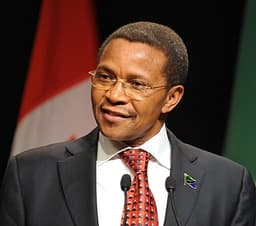
Jakaya Kikwete
Politician · Modern
50.6Total
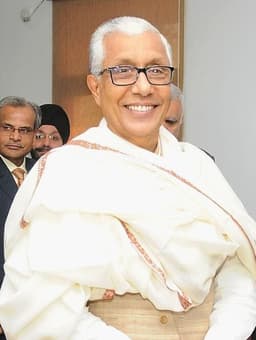
Manik Sarkar
Politician · Modern
50.7Total
Basic Information
Born
1950
1949
Died
—
—
Era
Modern
Modern
Nationality
Tanzania
India
Occupation
Politician
Politician
Civilization
Other
Indian
Score Comparison
Military (10%)
40.0
37.6
Political (20%)
53.8
46.6
Influence (20%)
54.1
47.9
Legacy (20%)
41.7
40.0
Leadership (15%)
72.0
79.8
Strategy (15%)
38.3
60.0
TOTAL
50.6
50.7
Jakaya Kikwete — Complete Timeline
2005 AD
Became President of TanzaniaPolitical Action◆ Major
Jakaya Kikwete was elected President of Tanzania, succeeding Benjamin Mkapa. He won with over 80% of the vote, continuing the dominance of the Chama Cha Mapinduzi (CCM) party. His presidency focused on economic growth, infrastructure, and social services.
PresidencyElectionCCM
Impact: nationalconstructive
2009 AD
Launched Kilimo Kwanza (Agriculture First) InitiativeReform◆ Major
Kikwete launched the Kilimo Kwanza initiative to modernize agriculture, increase productivity, and ensure food security. The program aimed to transform Tanzania into a regional food exporter by providing subsidies, irrigation, and access to credit for farmers.
AgricultureKilimo KwanzaFood Security
Impact: nationalconstructive
2010 AD
Oversaw Economic Growth and Gas DiscoveriesOther◆ Major
Under Kikwete, Tanzania experienced sustained economic growth averaging 6-7% annually, driven by mining, tourism, and construction. Major natural gas discoveries off the coast of Mtwara raised hopes for energy exports, but development was slow due to regulatory and investment challenges.
Economic GrowthNatural GasEnergy
Impact: nationalconstructive
2015 AD
Faced Zanzibar Political CrisisPolitical Action
Kikwete's government faced a political crisis in Zanzibar after disputed elections in 2015, which were annulled by the Zanzibar Electoral Commission. The opposition Civic United Front (CUF) boycotted the rerun, leading to a one-party government in Zanzibar and increased tensions.
ZanzibarElection DisputePolitical Crisis
Impact: regionaldestructive
Stepped Down After Two TermsPolitical Action◆ Major
Kikwete stepped down after completing his two-term limit, handing power to his successor, John Magufuli. His peaceful transfer of power reinforced Tanzania's reputation for political stability in a region often marked by coups and extended presidencies.
Term LimitsSuccessionDemocracy
Impact: nationalconstructive
Manik Sarkar — Complete Timeline
1998 AD
Became Chief Minister of TripuraPolitical Action
Manik Sarkar became Chief Minister of Tripura for the first time, leading a Left Front government. He would go on to serve four consecutive terms, making him one of India's longest-serving chief ministers.
Chief MinisterTripuraLeft Front
Impact: regionalconstructive
Known for frugal lifestyleOther
Throughout his tenure, Sarkar was noted for his simple and frugal lifestyle, living in a modest government quarter and driving an old car. This earned him a reputation as an honest and accessible leader.
LifestyleHonestyTripura
Impact: regionalconstructive
2013 AD
Won 2013 Tripura Assembly electionPolitical Action◆ Major
Sarkar led the CPI(M)-led Left Front to victory in the Tripura assembly election, winning 49 of 60 seats. This was his fourth consecutive term as chief minister.
ElectionTripuraLeft Front
Impact: regionalconstructive
2018 AD
Lost 2018 Tripura Assembly electionPolitical Action
Sarkar's Left Front government was defeated by the BJP-IPFT alliance, winning only 16 seats. This ended his 20-year tenure as chief minister, marking a major political shift in the state.
ElectionTripuraDefeat
Impact: regionaltragic
Expert Analysis
Origins
**Jakaya Mrisho Kikwete** was born on October 7, 1950, in Msoga, Bagamoyo District, Tanganyika (now Tanzania). His father, Mrisho Kikwete, was a teacher and later a district commissioner. Kikwete attended primary and secondary schools in the region, then joined the University of Dar es Salaam, where he earned a Bachelor of Arts in Economics in 1975. He also studied at the National Defence College in India. His early career included teaching at the National Institute of Transport and serving in the Tanzanian military, where he reached the rank of lieutenant colonel.
**Manik Sarkar** was born on February 9, 1949, in Radhakishorepur, Tripura, India. His father was a farmer. Sarkar graduated from Maharaja Bir Bikram College in Agartala with a Bachelor of Arts. He became involved in leftist politics during his student days, joining the Communist Party of India (Marxist) [CPI(M)] in the 1960s. He worked as a party organizer and rose through the ranks, becoming a key figure in the state's left movement.
Rise to Power
Kikwete's political rise began after his military service. He was elected to the National Assembly in 1988 and appointed Minister of Water, Energy and Minerals. In 1995, President Benjamin Mkapa made him Minister of Foreign Affairs and International Cooperation, a post he held until 2005. During his tenure, he chaired the African Union in 2004-2005. In 2005, he won the presidential election with over 80% of the vote, succeeding Mkapa.
Sarkar's rise was gradual within the CPI(M). He became a member of the Tripura Legislative Assembly in 1977. He served as Finance Minister in the Left Front government from 1993 to 1998. In 1998, he became Chief Minister of Tripura for the first time after the death of his predecessor, Dasarath Deb. He led the Left Front to victory in subsequent elections in 2003, 2008, and 2013, consolidating his power.
Leadership & Governance
Kikwete's leadership style was inclusive and diplomatic. He scored 72.0 in leadership and 38.3 in strategy. His governance focused on economic liberalization and infrastructure. He launched the Kilimo Kwanza (Agriculture First) initiative in 2009 to boost agricultural productivity. Under his watch, Tanzania experienced sustained GDP growth of 6-7% annually, driven by mining, tourism, and construction. Major natural gas discoveries in 2010-2012 promised energy revenues. However, critics argue that the benefits of growth did not trickle down to the poor and that corruption remained pervasive. Kikwete's political score of 53.8 reflects his ability to maintain stability but also his failure to deepen democracy.
Sarkar's leadership was marked by frugality and leftist ideology. He scored 79.8 in leadership and 60.0 in strategy. He lived in a modest government quarter and drove an old car, earning him a reputation for honesty. His government focused on rural development, education, and health. Tripura saw improvements in literacy and infrastructure. However, his regime was criticized for political repression, suppression of dissent, and lack of economic dynamism. The state's economy remained backward, with limited industrialization. His political score of 46.6 reflects the decline of leftist parties in India.
Triumph & Tragedy
Kikwete's greatest success was overseeing peaceful transitions of power. He stepped down after two terms in 2015, reinforcing Tanzania's democratic norms. His economic growth and gas discoveries were also achievements. However, his greatest failure was the handling of the Zanzibar political crisis. After disputed elections in 2015, the Zanzibar Electoral Commission annulled the results, leading to a violent crackdown and international condemnation. His government also failed to tackle corruption effectively, and the benefits of growth were unevenly distributed.
Sarkar's triumph was his long tenure and stability in Tripura, a state with a history of insurgency. He brought peace and improved human development indicators. His frugal lifestyle made him a respected figure. However, his tragedy was the electoral defeat in 2018, when the BJP-IPFT alliance ended his 20-year rule, winning only 16 seats. His model of communist governance became outdated, and he failed to connect with younger voters. The state's economy stagnated under his rule.
Character & Destiny
Kikwete was a charismatic and pragmatic leader, willing to engage with international partners. His character shaped his destiny as a consensus-builder, but his lack of strategic vision (score 38.3) meant that his government failed to address structural issues like corruption and inequality. Historical assessments view him as a transitional figure who maintained stability but did not transform Tanzania.
Sarkar was an ideologically rigid but personally honest leader. His frugality and commitment to leftist principles earned him respect, but his inability to adapt to changing political winds led to his downfall. His character of humility and simplicity contrasted with his party's authoritarian tendencies. Historians see him as a symbol of a declining communist movement in India.
Legacy
Kikwete's legacy is mixed. He is remembered for economic growth and peaceful transitions, but also for the Zanzibar crisis and corruption. His Kilimo Kwanza initiative had limited success. Tanzania's political stability under him set the stage for later development, but his policies did not fundamentally change the country. His overall score is 50.6.
Sarkar's legacy is that of a dedicated communist leader who brought stability to a troubled state. His frugal lifestyle remains an inspiration. However, his economic policies left Tripura lagging behind other Indian states. His defeat in 2018 marked the end of an era for the Left in Tripura. His overall score is 50.7, slightly higher than Kikwete's.
Conclusion
Despite Sarkar's higher total score (50.7 vs 50.6), Kikwete had a greater impact on a larger scale. As a national leader, he influenced Tanzania's trajectory for a decade, fostering economic growth and democratic stability. Sarkar's impact was confined to a small state and a declining political ideology. Kikwete's leadership (72.0) and influence (54.1) were more consequential in continental and global contexts. Therefore, Jakaya Kikwete is the more significant historical figure.
Rankings
🥇
Manik SarkarLeader
Mil: 37.6Pol: 46.6Inf: 47.9
50.7
🥈
Jakaya Kikwete
Mil: 40.0Pol: 53.8Inf: 54.1
50.6
+0.1 behind
How This Comparison Works
Algorithm
Each figure is scored on 6 dimensions (0—100 scale) based on structured historical data: Military (10%), Political (20%), Influence (20%), Legacy (20%), Leadership (15%), Strategy (15%). The weighted total produces the final ranking.
Data Sources
Scores are computed from structured sub-indicators in the database. Scale factors adjust for era (Ancient ×0.85, Modern ×1.0) and civilization size (Eastern ×1.05, Other ×0.80) to account for differences in population and military scale.
Maximum 3 Figures
Comparisons are limited to 2—3 figures to ensure readability and statistical meaningfulness.
Error Margins
±5 points per dimension — Sub-scores are derived from historical records with inherent uncertainty. Two figures within 5 points on a dimension should be considered roughly equivalent in that area.
Total Score Accuracy
±3 points overall — The weighted combination of 6 dimensions produces a total score with approximately ±3 points of uncertainty. Differences of less than 3 points are not statistically significant— the figures are effectively tied.
Known Limitations
- Historical records are incomplete and uneven across civilizations
- Figures from oral-tradition societies may be underrepresented
- Occupation labels can misclassify multi-role figures
- Scores measure capability and impact, not moral character
- Quantitative scoring is a comparison tool, not absolute truth
Capability Radar
Military (10%) — Battles & Warfare
Battles
0
46
Win Rate
0
47
Expansion
0
48
Political (20%) — Governance & Reform
Reform
55
40
Diplomacy
65
45
Economy
55
30
Influence (20%) — Cultural & Global Reach
Cultural
30
15
Global
35
10
Legacy (20%) — Historical Impact
Historical
30
20
Longevity
20
20
Leadership (15%) — Power & Stability
Tenure
60
70
Stability
60
60
Strategy (15%) — Tactics & Innovation
Strategy
0
51
Tactics
0
56
Reform
10
58
Similar Comparisons
Comments & Discussion
No comments yet. Be the first to share your thoughts!