Loading...
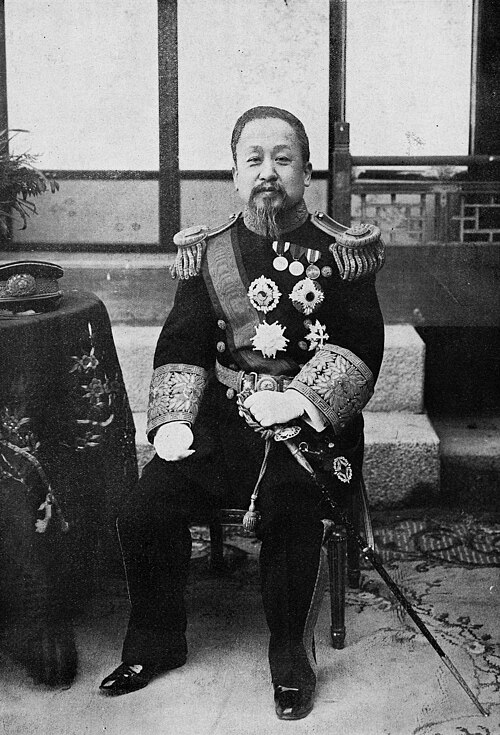
Gojong of Korea
ModernEmperorKorea1852 — 1919
Last king and first emperor of Korea.
Compare Gojong of Korea with another historical figure:
Quick Facts
Born
1852
Died
1919
Country
Korea
Era
Modern
Occupation
Emperor
Score Overview
Military (10%)43
Political (20%)68
Influence (20%)60
Legacy (20%)50
Leadership (15%)53
Strategy (15%)55
Total Score55.5
Gojong of Korea — Complete Timeline
1897 AD
Proclamation of the Korean EmpirePolitical Action
Gojong declared Korea an empire, assuming the title of Emperor. This was an attempt to assert Korea's sovereignty and equal status with China and Japan, and to modernize the state. The move was partly a response to the assassination of his wife, Empress Myeongseong.
Korean EmpireSovereigntyModernization
Impact: nationalconstructive
1905 AD
Signing of the Japan-Korea Treaty of 1905Political Action
Under Japanese pressure, Gojong's government signed the Eulsa Treaty, making Korea a Japanese protectorate. Gojong did not sign the treaty himself and later attempted to appeal to international powers, but the treaty stripped Korea of its diplomatic sovereignty.
TreatyJapanese ProtectorateLoss of Sovereignty
Impact: nationaltragic
1907 AD
Forced Abdication by JapanPolitical Action◆ Major
Japanese authorities forced Gojong to abdicate in favor of his son, Sunjong, after Gojong sent a secret envoy to the Hague Peace Conference to protest Japanese control. The abdication was part of Japan's consolidation of power over Korea.
AbdicationJapanese ImperialismHague Secret Envoy Affair
Impact: nationaltragic
1919 AD
Death and Funeral of GojongOther
Gojong died suddenly, with rumors of poisoning by Japanese agents. His funeral on March 1, 1919, became a catalyst for the March First Movement, a massive nationwide protest against Japanese rule. The movement was brutally suppressed but galvanized Korean independence efforts.
DeathMarch First MovementKorean Independence
Impact: nationaltragic
Detailed Scores
▶View all detailed scores
Military
Strategy
7
Tactics
6
Battles
6
Army Scale
6
War Impact
7
Political
Governance
8
Reform
9
Stability
8
Policy
9
Power
9
Influence
History
9
Global
8
Culture
9
Ideology
9
Legacy
8
People often compare with
See how Gojong of Korea stacks up against other historical figures
Popular Comparisons
Gojong of Korea vs Nurhaci
vs Nurhaci71
Gojong of Korea vs Bayinnaung
vs Bayinnaung69
Gojong of Korea vs Zayed bin Sultan Al Nahyan
vs Zayed bin Sultan Al Nahyan64
Gojong of Korea vs Alaungpaya
vs Alaungpaya63
Gojong of Korea vs Juan Carlos I
vs Juan Carlos I58
Gojong of Korea vs Charles Augustus of Saxe-Weimar
vs Charles Augustus of Saxe-Weimar56