Loading...
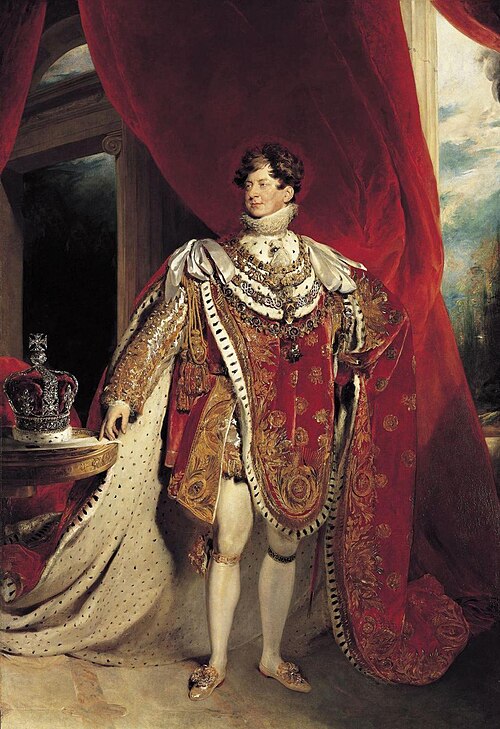
George IV of the United Kingdom
ModernEmperorUnited Kingdom1762 — 1830
Extravagant prince regent who became king.
Compare George IV of the United Kingdom with another historical figure:
Quick Facts
Born
1762
Died
1830
Country
United Kingdom
Era
Modern
Occupation
Emperor
Score Overview
Military (10%)28
Political (20%)28
Influence (20%)50
Legacy (20%)38
Leadership (15%)42
Strategy (15%)60
Total Score41.1
George IV of the United Kingdom — Complete Timeline
1788 AD
Regency Crisis of 1788Political Action◆ Major
When George III became temporarily insane, the Prince of Wales (future George IV) sought to become regent. The crisis ended when the king recovered, but it established a precedent for parliamentary control over regency.
RegencyCrisisSuccession
Impact: national
1811 AD
Appointed Prince RegentPolitical Action◆ Major
Following George III's final mental collapse, the Prince of Wales was formally appointed Prince Regent under the Regency Act 1811. He exercised royal powers for nine years while his father lived in seclusion.
RegencyGovernmentSuccession
Impact: national
Regency Era Patronage of the ArtsCultural◆ Major
As Prince Regent, George IV commissioned John Nash to design Regent Street, Regent's Park, and the Royal Pavilion in Brighton. His patronage defined the architectural and cultural style of the Regency period.
ArchitecturePatronageRegency
Impact: nationalconstructive
1820 AD
Accession as King George IVPolitical Action◆ Major
Upon George III's death, the Prince Regent became King George IV. His accession was marred by his attempt to divorce Queen Caroline, leading to a public scandal and the Pains and Penalties Bill of 1820.
AccessionScandalDivorce
Impact: national
1821 AD
State Visit to IrelandPolitical Action
George IV became the first British monarch to visit Ireland since the Acts of Union. The visit aimed to promote loyalty but was overshadowed by the ongoing Catholic Emancipation debate.
VisitIrelandUnion
Impact: national
1829 AD
Catholic Emancipation OppositionPolitical Action◆ Major
George IV reluctantly signed the Roman Catholic Relief Act 1829, granting Catholic Emancipation. He had opposed the measure but yielded to Prime Minister Wellington's threat of resignation.
Catholic EmancipationLegislationReligion
Impact: national
Detailed Scores
▶View all detailed scores
Military
Strategy
7
Tactics
6
Battles
7
Army Scale
6
War Impact
7
Political
Governance
7
Reform
7
Stability
7
Policy
7
Power
8
Influence
History
8
Global
8
Culture
8
Ideology
9
Legacy
8
People often compare with
See how George IV of the United Kingdom stacks up against other historical figures
Popular Comparisons
George IV of the United Kingdom vs Jean-Jacques Dessalines
vs Jean-Jacques Dessalines72
George IV of the United Kingdom vs Abdullah Khan II
vs Abdullah Khan II64
George IV of the United Kingdom vs Yeongjo of Joseon
vs Yeongjo of Joseon58
George IV of the United Kingdom vs Jivaji Rao Scindia
vs Jivaji Rao Scindia52
George IV of the United Kingdom vs Alexander I of Yugoslavia
vs Alexander I of Yugoslavia51
George IV of the United Kingdom vs Madansinhji of Kutch
vs Madansinhji of Kutch38