Loading...
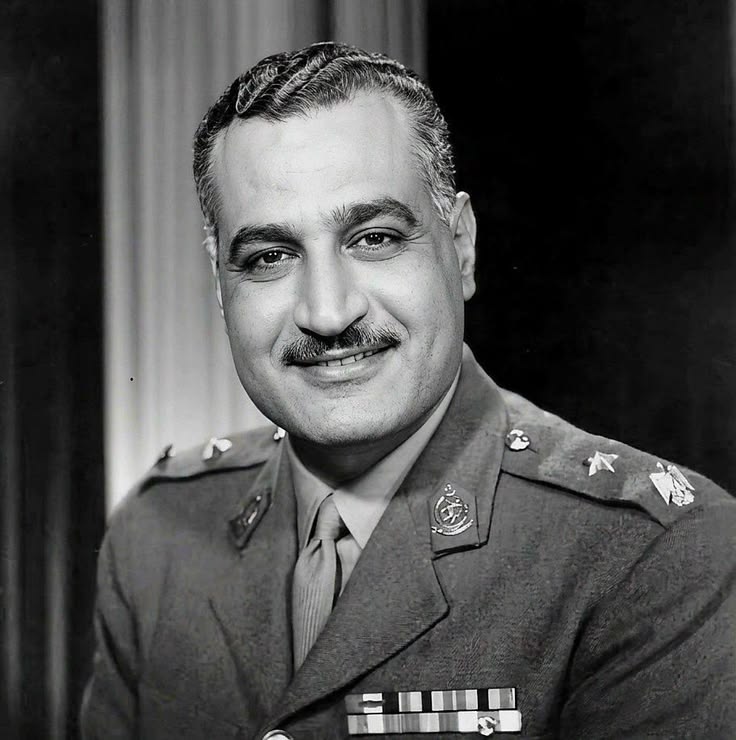
Gamal Abdel Nasser
ModernPoliticianEgypt1918 — 1970
Egyptian president, leader of Arab nationalism.
Compare Gamal Abdel Nasser with another historical figure:
Quick Facts
Born
1918
Died
1970
Country
Egypt
Era
Modern
Occupation
Politician
Score Overview
Military (10%)50
Political (20%)72
Influence (20%)88
Legacy (20%)52
Leadership (15%)72
Strategy (15%)45
Total Score66.1
Gamal Abdel Nasser — Complete Timeline
1952 AD
Led the 1952 Egyptian RevolutionPolitical Action◆ Major
Nasser was a key leader of the Free Officers Movement that overthrew King Farouk in the 1952 Egyptian Revolution. The coup ended the monarchy and British influence, establishing a republic. Nasser emerged as the dominant figure in the new government by 1954.
RevolutionRepublicEgypt
Impact: national
1956 AD
Nationalized the Suez CanalPolitical Action◆ Major
Nasser nationalized the Suez Canal Company, taking control of the vital waterway from British and French interests. This act triggered the Suez Crisis, where Israel, Britain, and France invaded Egypt. Nasser emerged politically strengthened after international pressure forced their withdrawal.
Suez CrisisNationalizationDecolonization
Impact: global
1958 AD
Formed the United Arab RepublicOther◆ Major
Nasser formed the United Arab Republic (UAR), a political union between Egypt and Syria. The union aimed to advance Arab nationalism and counter Western influence. It collapsed in 1961 when Syria seceded following a military coup, but Egypt retained the name until 1971.
Arab NationalismPolitical UnionMiddle East
Impact: regional
1961 AD
Implemented Land Reform and Arab SocialismPolitical Action◆ Major
Nasser implemented sweeping land reform laws and nationalized major industries, banks, and businesses. These socialist policies redistributed land from large landowners to peasants and expanded state control over the economy, fundamentally transforming Egyptian society.
Land ReformSocialismEconomic Policy
Impact: national
1967 AD
Suffered Defeat in the Six-Day WarWar◆ Major
Egypt under Nasser suffered a devastating military defeat in the Six-Day War against Israel. Israel captured the Sinai Peninsula, Gaza Strip, and other territories. Nasser offered to resign but remained in power after mass protests demanded he stay. The defeat severely damaged his prestige.
Six-Day WarMilitary DefeatArab-Israeli Conflict
Impact: globaldestructive
1969 AD
Launched the War of AttritionOther◆ Major
Nasser launched the War of Attrition against Israel along the Suez Canal. The conflict involved artillery exchanges, commando raids, and Soviet military support for Egypt. The war ended with a ceasefire in 1970, shortly before Nasser's death, without achieving Egyptian objectives.
War of AttritionArab-Israeli ConflictMilitary Strategy
Impact: regional
1970 AD
Accepted the Rogers Plan CeasefireOther◆ Major
Nasser accepted the US-sponsored Rogers Plan ceasefire to end the War of Attrition. This decision marked a shift toward diplomatic engagement with the United States and acceptance of UN Resolution 242, though it was controversial among hardliners in the Arab world.
CeasefireDiplomacyUS-Egypt Relations
Impact: national
Detailed Scores
▶View all detailed scores
Military
Strategy
6
Tactics
5
Battles
6
Army Scale
5
War Impact
6
Political
Governance
7
Reform
7
Stability
7
Policy
7
Power
8
Influence
History
9
Global
9
Culture
9
Ideology
10
Legacy
9
People often compare with
See how Gamal Abdel Nasser stacks up against other historical figures
Popular Comparisons
Gamal Abdel Nasser vs Maulana Abdul Hamid Khan Bhashani
vs Maulana Abdul Hamid Khan Bhashani54
Gamal Abdel Nasser vs Jack Lynch
vs Jack Lynch54
Gamal Abdel Nasser vs Ton Duc Thang
vs Ton Duc Thang51
Gamal Abdel Nasser vs Camille Chamoun
vs Camille Chamoun51
Gamal Abdel Nasser vs Adolfo de la Huerta
vs Adolfo de la Huerta37
Gamal Abdel Nasser vs Ati George Sokomanu
vs Ati George Sokomanu36