Loading...
Ati George Sokomanu vs Gamal Abdel Nasser
Gamal Abdel Nasser leads by 30.2 pts · 2 figures compared
…
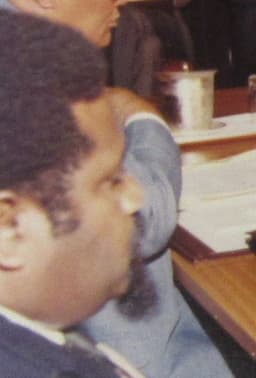
Ati George Sokomanu
Politician · Modern
35.9Total
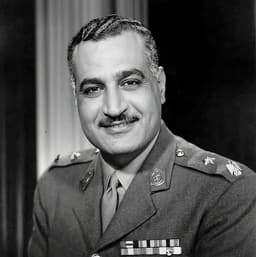
Gamal Abdel Nasser
Politician · Modern
66.1Total
Basic Information
Born
1937
1918
Died
—
1970
Era
Modern
Modern
Nationality
Vanuatu
Egypt
Occupation
Politician
Politician
Civilization
Other
Middle Eastern
Score Comparison
Military (10%)
34.1
50.0
Political (20%)
25.0
72.0
Influence (20%)
45.5
88.0
Legacy (20%)
34.2
52.0
Leadership (15%)
31.2
72.0
Strategy (15%)
41.5
45.0
TOTAL
35.9
66.1
Ati George Sokomanu — Complete Timeline
1980 AD
Election as First President of VanuatuPolitical Action
Ati George Sokomanu was elected as the first President of Vanuatu following the country's independence from joint French-British colonial rule in 1980. He served from 1980 to 1984, symbolizing the new nation's sovereignty.
IndependencePresidencyVanuatu
Impact: nationalconstructive
1984 AD
Deposition from PresidencyPolitical Action◆ Major
Sokomanu was deposed from the presidency in 1984 after a political crisis. He was removed by the electoral college amid tensions between the government and opposition. He was later reinstated briefly but eventually left office.
DepositionPolitical CrisisVanuatu
Impact: nationaldestructive
Re-election as PresidentPolitical Action◆ Major
Following his deposition, Sokomanu was re-elected as president later in 1984, serving until 1989. His second term aimed to restore stability after the political turmoil.
PresidencyRe-electionVanuatu
Impact: national
1989 AD
End of Second PresidencyPolitical Action
Sokomanu's second term ended in 1989. He was succeeded by Fred Timakata. His legacy as the first president was marked by both the founding of the republic and political instability.
PresidencyTransitionVanuatu
Impact: national
Gamal Abdel Nasser — Complete Timeline
1952 AD
Led the 1952 Egyptian RevolutionPolitical Action◆ Major
Nasser was a key leader of the Free Officers Movement that overthrew King Farouk in the 1952 Egyptian Revolution. The coup ended the monarchy and British influence, establishing a republic. Nasser emerged as the dominant figure in the new government by 1954.
RevolutionRepublicEgypt
Impact: national
1956 AD
Nationalized the Suez CanalPolitical Action◆ Major
Nasser nationalized the Suez Canal Company, taking control of the vital waterway from British and French interests. This act triggered the Suez Crisis, where Israel, Britain, and France invaded Egypt. Nasser emerged politically strengthened after international pressure forced their withdrawal.
Suez CrisisNationalizationDecolonization
Impact: global
1958 AD
Formed the United Arab RepublicOther◆ Major
Nasser formed the United Arab Republic (UAR), a political union between Egypt and Syria. The union aimed to advance Arab nationalism and counter Western influence. It collapsed in 1961 when Syria seceded following a military coup, but Egypt retained the name until 1971.
Arab NationalismPolitical UnionMiddle East
Impact: regional
1961 AD
Implemented Land Reform and Arab SocialismPolitical Action◆ Major
Nasser implemented sweeping land reform laws and nationalized major industries, banks, and businesses. These socialist policies redistributed land from large landowners to peasants and expanded state control over the economy, fundamentally transforming Egyptian society.
Land ReformSocialismEconomic Policy
Impact: national
1967 AD
Suffered Defeat in the Six-Day WarWar◆ Major
Egypt under Nasser suffered a devastating military defeat in the Six-Day War against Israel. Israel captured the Sinai Peninsula, Gaza Strip, and other territories. Nasser offered to resign but remained in power after mass protests demanded he stay. The defeat severely damaged his prestige.
Six-Day WarMilitary DefeatArab-Israeli Conflict
Impact: globaldestructive
1969 AD
Launched the War of AttritionOther◆ Major
Nasser launched the War of Attrition against Israel along the Suez Canal. The conflict involved artillery exchanges, commando raids, and Soviet military support for Egypt. The war ended with a ceasefire in 1970, shortly before Nasser's death, without achieving Egyptian objectives.
War of AttritionArab-Israeli ConflictMilitary Strategy
Impact: regional
1970 AD
Accepted the Rogers Plan CeasefireOther◆ Major
Nasser accepted the US-sponsored Rogers Plan ceasefire to end the War of Attrition. This decision marked a shift toward diplomatic engagement with the United States and acceptance of UN Resolution 242, though it was controversial among hardliners in the Arab world.
CeasefireDiplomacyUS-Egypt Relations
Impact: national
Expert Analysis
Origins
Ati George Sokomanu was born on 13 January 1937 in the village of Aneityum, Vanuatu (then the New Hebrides). He was educated at local mission schools and later studied at the University of the South Pacific in Fiji. His early career included work as a teacher and civil servant, providing him with administrative experience. Sokomanu's background was shaped by the colonial administration of the Anglo-French Condominium, which left a fragmented political landscape.
Gamal Abdel Nasser was born on 15 January 1918 in Alexandria, Egypt, into a postal worker's family. He attended the Royal Military Academy in Cairo, graduating in 1938. Nasser's formative years were marked by resentment of British colonial influence and the corruption of the Egyptian monarchy. He participated in the 1948 Arab-Israeli War, witnessing the military's inefficiency, which galvanized his desire for revolution.
Rise to Power
Sokomanu's rise was tied to Vanuatu's independence movement. In 1979, he was elected to the Representative Assembly and became the first President upon independence on 30 July 1980. His role was largely ceremonial, but he symbolized national unity. His deposition in 1984 occurred after a political crisis between Prime Minister Walter Lini and opposition factions, leading to his removal by the electoral college. However, he was re-elected later that year, serving until 1989.
Nasser rose through the Free Officers Movement, which he co-founded. On 23 July 1952, they overthrew King Farouk in a bloodless coup. Nasser initially served as deputy prime minister under Muhammad Naguib but outmaneuvered him to become Prime Minister in 1954 and President in 1956. His consolidation of power involved suppressing the Muslim Brotherhood and other rivals. The nationalization of the Suez Canal on 26 July 1956 catapulted him to global prominence as a leader of anti-colonialism.
Leadership & Governance
Sokomanu's leadership was symbolic and non-executive. As president, he had limited powers, with real authority held by the Prime Minister. His governance focused on unifying the diverse linguistic and cultural groups of Vanuatu. He advocated for Melanesian socialism and non-alignment, but his influence was constrained by political instability. He scored 31.2 in leadership and 25.0 in political acumen.
Nasser wielded substantial executive power. He implemented Arab socialism, nationalizing banks, industries, and land. His land reforms redistributed land to peasants, breaking the power of large landowners. He also promoted women's education and industrialization. However, his regime was authoritarian, with a single-party system and security forces suppressing dissent. His leadership score of 72.0 reflects his ability to mobilize masses and control the state.
Triumph & Tragedy
Sokomanu's greatest success was serving as the first president of an independent Vanuatu, overseeing a peaceful transition from colonial rule. His re-election in 1984 demonstrated resilience. His tragedy was the political instability that led to his deposition, undermining his legacy. The event exposed the fragility of Vanuatu's early political institutions.
Nasser's triumphs include nationalizing the Suez Canal, which was a strategic and symbolic victory against imperialism. He also formed the United Arab Republic (1958-1961) with Syria, advancing pan-Arabism. His economic reforms modernized Egypt. However, his tragedy was the catastrophic defeat in the Six-Day War (1967), where Egypt lost the Sinai Peninsula and Gaza. The war devastated the Egyptian military and economy, and Nasser's health declined, leading to his death in 1970. His political score of 72.0 is offset by a military score of 50.0, reflecting the defeat.
Character & Destiny
Sokomanu was a conciliatory figure, committed to national unity. His decisions were cautious, aiming to preserve stability. However, his lack of political maneuvering contributed to his deposition. He was not a charismatic leader but a respected elder statesman. His destiny was to be a transitional figure in a small island nation.
Nasser was charismatic, ambitious, and authoritarian. His decision-making was bold, often risk-taking, as seen in the Suez nationalization. He sought to lead the Arab world and challenge Western dominance. His character led to both great achievements and overreach. The defeat in 1967 was partly due to his overconfidence and strategic miscalculations. Nasser's destiny was to die as a hero to many, but with unfulfilled promises.
Legacy
Sokomanu's legacy is primarily as a founding figure of Vanuatu. He is remembered for his role in the early years of independence, but his impact is limited to national history. The institution of the presidency remains largely ceremonial. He scored 34.2 in legacy, reflecting his minor global influence.
Nasser's legacy is immense. He reshaped Egypt's political and economic landscape, inspired Arab nationalism, and influenced decolonization movements worldwide. His socialist policies lasted decades, and the 1952 revolution remains a defining event. However, his authoritarianism and the 1967 defeat tarnish his record. Nasser's influence score of 88.0 is among the highest, but his legacy score of 52.0 indicates mixed long-term outcomes.
Conclusion
Gamal Abdel Nasser had a significantly greater impact than Ati George Sokomanu. Nasser's total score of 66.1 dwarfs Sokomanu's 35.9, with Nasser leading in political (72.0 vs 25.0), influence (88.0 vs 45.5), and leadership (72.0 vs 31.2). While Sokomanu's role as Vanuatu's first president is historically important, his influence was confined to a small nation and a ceremonial role. Nasser altered the course of Egypt and the Middle East, challenged global powers, and inspired a generation. The data supports Nasser as the more consequential figure.
Rankings
🥇
Gamal Abdel NasserLeader
Mil: 50.0Pol: 72.0Inf: 88.0
66.1
🥈
Ati George Sokomanu
Mil: 34.1Pol: 25.0Inf: 45.5
35.9
+30.2 behind
How This Comparison Works
Algorithm
Each figure is scored on 6 dimensions (0—100 scale) based on structured historical data: Military (10%), Political (20%), Influence (20%), Legacy (20%), Leadership (15%), Strategy (15%). The weighted total produces the final ranking.
Data Sources
Scores are computed from structured sub-indicators in the database. Scale factors adjust for era (Ancient ×0.85, Modern ×1.0) and civilization size (Eastern ×1.05, Other ×0.80) to account for differences in population and military scale.
Maximum 3 Figures
Comparisons are limited to 2—3 figures to ensure readability and statistical meaningfulness.
Error Margins
±5 points per dimension — Sub-scores are derived from historical records with inherent uncertainty. Two figures within 5 points on a dimension should be considered roughly equivalent in that area.
Total Score Accuracy
±3 points overall — The weighted combination of 6 dimensions produces a total score with approximately ±3 points of uncertainty. Differences of less than 3 points are not statistically significant— the figures are effectively tied.
Known Limitations
- Historical records are incomplete and uneven across civilizations
- Figures from oral-tradition societies may be underrepresented
- Occupation labels can misclassify multi-role figures
- Scores measure capability and impact, not moral character
- Quantitative scoring is a comparison tool, not absolute truth
Capability Radar
Military (10%) — Battles & Warfare
Battles
20
30
Win Rate
27
25
Expansion
25
20
Political (20%) — Governance & Reform
Reform
10
75
Diplomacy
20
65
Economy
10
50
Influence (20%) — Cultural & Global Reach
Cultural
5
70
Global
5
65
Legacy (20%) — Historical Impact
Historical
10
70
Longevity
5
55
Leadership (15%) — Power & Stability
Tenure
10
70
Stability
5
40
Strategy (15%) — Tactics & Innovation
Strategy
33
40
Tactics
36
35
Reform
34
60
Similar Comparisons
Comments & Discussion
No comments yet. Be the first to share your thoughts!