Loading...
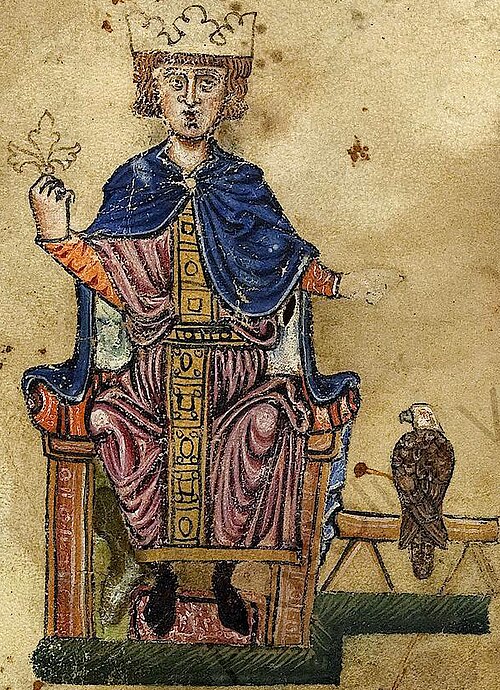
Frederick II of Hohenstaufen
MedievalEmperorHoly Roman Empire1194 — 1250
Stupor Mundi who negotiated the return of Jerusalem.
Compare Frederick II of Hohenstaufen with another historical figure:
Quick Facts
Born
1194
Died
1250
Country
Holy Roman Empire
Era
Medieval
Occupation
Emperor
Score Overview
Military (10%)40
Political (20%)72
Influence (20%)72
Legacy (20%)52
Leadership (15%)53
Strategy (15%)55
Total Score59.3
Frederick II of Hohenstaufen — Complete Timeline
1220 AD
Coronation as Holy Roman EmperorPolitical Action◆ Major
Frederick II was crowned Holy Roman Emperor by Pope Honorius III in Rome. This coronation confirmed his authority over Germany and Italy, but also set the stage for a long conflict with the papacy over imperial power in Italy.
CoronationHoly Roman EmpirePapacy
Impact: global
1229 AD
Sixth Crusade and Treaty of JaffaWar◆ Major
Frederick II led the Sixth Crusade, negotiating the Treaty of Jaffa with Sultan al-Kamil. Through diplomacy, he regained control of Jerusalem, Bethlehem, and Nazareth without battle, but was excommunicated by the Pope for negotiating with Muslims.
CrusadeDiplomacyJerusalemExcommunication
Impact: globalconstructive
1231 AD
Promulgation of the Constitutions of MelfiReform◆ Major
Frederick II issued the Constitutions of Melfi, a comprehensive legal code for the Kingdom of Sicily. This code centralized royal authority, reformed the administration, and established a modern state based on Roman law.
LawReformSicily
Impact: regionalconstructive
1237 AD
Conflict with the Lombard LeagueWar◆ Major
Frederick II defeated the Lombard League at the Battle of Cortenuova, aiming to assert imperial control over northern Italy. His victory was followed by harsh reprisals, which alienated many Italian cities and strengthened papal opposition.
BattleItalyLombard League
Impact: regionaldestructive
1245 AD
Excommunication by Pope Innocent IV at the Council of LyonPolitical Action◆ Major
Pope Innocent IV declared Frederick II deposed at the First Council of Lyon, accusing him of heresy, sacrilege, and tyranny. This excommunication intensified the conflict between the Empire and the Papacy, leading to a war of propaganda.
ExcommunicationPapacyConflict
Impact: globaldestructive
1250 AD
Death and end of the Hohenstaufen dynastyOther◆ Major
Frederick II died of dysentery at Castel Fiorentino. His death marked the beginning of the end for the Hohenstaufen dynasty, as his sons were unable to maintain control, leading to the Great Interregnum in the Holy Roman Empire.
DeathHohenstaufenInterregnum
Impact: globaltragic
Detailed Scores
▶View all detailed scores
Military
Strategy
7
Tactics
7
Battles
7
Army Scale
6
War Impact
7
Political
Governance
6
Reform
7
Stability
6
Policy
7
Power
7
Influence
History
9
Global
8
Culture
8
Ideology
9
Legacy
8
People often compare with
See how Frederick II of Hohenstaufen stacks up against other historical figures
Popular Comparisons
Frederick II of Hohenstaufen vs Umar
vs Umar74
Frederick II of Hohenstaufen vs Uthman
vs Uthman71
Frederick II of Hohenstaufen vs Murad I
vs Murad I62
Frederick II of Hohenstaufen vs Li Chun
vs Li Chun62
Frederick II of Hohenstaufen vs Emperor Tenmu
vs Emperor Tenmu59
Frederick II of Hohenstaufen vs Yang Guang
vs Yang Guang58