Loading...
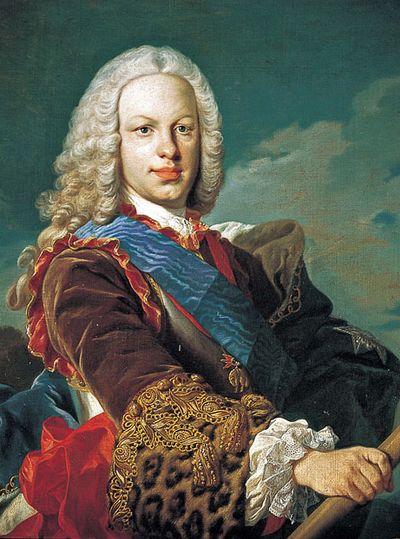
Ferdinand VI of Spain
ModernEmperorSpain1713 — 1759
Spanish king who maintained neutrality and promoted reform.
Compare Ferdinand VI of Spain with another historical figure:
Quick Facts
Born
1713
Died
1759
Country
Spain
Era
Modern
Occupation
Emperor
Score Overview
Military (10%)45
Political (20%)75
Influence (20%)53
Legacy (20%)45
Leadership (15%)82
Strategy (15%)43
Total Score57.0
Ferdinand VI of Spain — Complete Timeline
1746 AD
Became King of SpainPolitical Action
Ferdinand VI succeeded his father Philip V as king of Spain. His reign focused on domestic reform and maintaining neutrality in European conflicts, a departure from his father's aggressive foreign policy.
SuccessionReformNeutrality
Impact: nationalconstructive
1749 AD
Promoted Economic and Administrative ReformsReform◆ Major
Ferdinand VI implemented reforms to modernize Spain's economy and administration, including tax reforms, infrastructure improvements, and the promotion of trade. His minister, the Marquis of Ensenada, led many of these initiatives.
Economic ReformAdministrationEnsenada
Impact: nationalconstructive
1753 AD
Signed the Concordat of 1753 with the VaticanPolitical Action◆ Major
Ferdinand VI signed the Concordat of 1753 with the Holy See, granting the Spanish crown greater control over church appointments and revenues. This strengthened royal authority over the Catholic Church in Spain.
Church-State RelationsConcordatRoyal Authority
Impact: nationalconstructive
1756 AD
Maintained Spanish Neutrality During the Seven Years' WarPolitical Action◆ Major
Ferdinand VI kept Spain neutral during the Seven Years' War (1756-1763), avoiding costly military engagements. This policy allowed Spain to focus on economic recovery and administrative reforms, strengthening the state's finances.
NeutralitySeven Years' WarEconomic Recovery
Impact: globalconstructive
1759 AD
Suffered from Mental Illness and Died Without HeirOther◆ Major
Ferdinand VI suffered from severe depression and mental illness following the death of his wife, Barbara of Portugal. He died without an heir, leading to the succession of his half-brother Charles III.
Mental HealthSuccessionDeath
Impact: nationaltragic
Detailed Scores
▶View all detailed scores
Military
Strategy
7
Tactics
7
Battles
7
Army Scale
6
War Impact
7
Political
Governance
8
Reform
8
Stability
8
Policy
8
Power
8
Influence
History
9
Global
8
Culture
9
Ideology
9
Legacy
8
People often compare with
See how Ferdinand VI of Spain stacks up against other historical figures
Popular Comparisons
Ferdinand VI of Spain vs Nizam-ul-Mulk Asaf Jah I
vs Nizam-ul-Mulk Asaf Jah I62
Ferdinand VI of Spain vs Khalifa bin Zayed Al Nahyan
vs Khalifa bin Zayed Al Nahyan60
Ferdinand VI of Spain vs Sawai Jai Singh II
vs Sawai Jai Singh II60
Ferdinand VI of Spain vs Anaukpetlun
vs Anaukpetlun56
Ferdinand VI of Spain vs William of Julich-Cleves-Berg
vs William of Julich-Cleves-Berg50
Ferdinand VI of Spain vs Islam II Giray
vs Islam II Giray48