Loading...
Ferdinand VI of Spain vs Khalifa bin Zayed Al Nahyan
Khalifa bin Zayed Al Nahyan leads by 3.4 pts · 2 figures compared
…
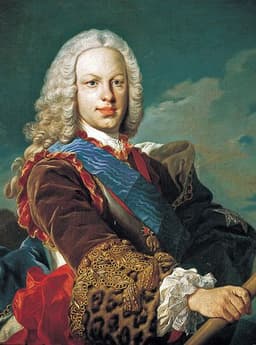
Ferdinand VI of Spain
Emperor · Modern
57.0Total
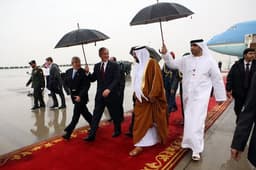
Khalifa bin Zayed Al Nahyan
Emperor · Modern
60.4Total
Basic Information
Born
1713
1948
Died
1759
—
Era
Modern
Modern
Nationality
Spain
UAE
Occupation
Emperor
Emperor
Civilization
Western
Middle Eastern
Score Comparison
Military (10%)
45.0
40.0
Political (20%)
75.0
75.0
Influence (20%)
53.3
58.3
Legacy (20%)
45.0
50.0
Leadership (15%)
82.0
80.7
Strategy (15%)
43.3
60.0
TOTAL
57.0
60.4
Ferdinand VI of Spain — Complete Timeline
1746 AD
Became King of SpainPolitical Action
Ferdinand VI succeeded his father Philip V as king of Spain. His reign focused on domestic reform and maintaining neutrality in European conflicts, a departure from his father's aggressive foreign policy.
SuccessionReformNeutrality
Impact: nationalconstructive
1749 AD
Promoted Economic and Administrative ReformsReform◆ Major
Ferdinand VI implemented reforms to modernize Spain's economy and administration, including tax reforms, infrastructure improvements, and the promotion of trade. His minister, the Marquis of Ensenada, led many of these initiatives.
Economic ReformAdministrationEnsenada
Impact: nationalconstructive
1753 AD
Signed the Concordat of 1753 with the VaticanPolitical Action◆ Major
Ferdinand VI signed the Concordat of 1753 with the Holy See, granting the Spanish crown greater control over church appointments and revenues. This strengthened royal authority over the Catholic Church in Spain.
Church-State RelationsConcordatRoyal Authority
Impact: nationalconstructive
1756 AD
Maintained Spanish Neutrality During the Seven Years' WarPolitical Action◆ Major
Ferdinand VI kept Spain neutral during the Seven Years' War (1756-1763), avoiding costly military engagements. This policy allowed Spain to focus on economic recovery and administrative reforms, strengthening the state's finances.
NeutralitySeven Years' WarEconomic Recovery
Impact: globalconstructive
1759 AD
Suffered from Mental Illness and Died Without HeirOther◆ Major
Ferdinand VI suffered from severe depression and mental illness following the death of his wife, Barbara of Portugal. He died without an heir, leading to the succession of his half-brother Charles III.
Mental HealthSuccessionDeath
Impact: nationaltragic
Khalifa bin Zayed Al Nahyan — Complete Timeline
2004 AD
Accession as Ruler of Abu DhabiPolitical Action◆ Major
Khalifa bin Zayed Al Nahyan became the Ruler of Abu Dhabi on November 3, 2004, following the death of his father, Zayed bin Sultan Al Nahyan. He also became the President of the United Arab Emirates.
SuccessionMonarchyAbu Dhabi
Impact: national
2006 AD
Establishment of Masdar CityReform◆ Major
Khalifa bin Zayed initiated the Masdar City project, a planned sustainable urban development in Abu Dhabi. The city aimed to be a hub for clean technology and renewable energy, including the Masdar Institute of Science and Technology.
SustainabilityRenewable EnergyInnovation
Impact: globalconstructive
2008 AD
Launch of Abu Dhabi Vision 2030Reform◆ Major
Khalifa bin Zayed launched the Abu Dhabi Economic Vision 2030, a long-term plan to diversify the emirate's economy away from oil, focusing on knowledge-based industries, tourism, and infrastructure. The plan guided major investments in renewable energy and technology.
DevelopmentVisionEconomy
Impact: nationalconstructive
2015 AD
UAE's Involvement in Yemen WarWar◆ Major
Under Khalifa bin Zayed's leadership, the UAE joined the Saudi-led military intervention in Yemen in March 2015, aiming to restore the internationally recognized government. The UAE deployed troops and conducted airstrikes, with significant impact on the conflict.
WarYemenMilitary Intervention
Impact: regionaldestructive
2020 AD
Normalization of Relations with Israel (Abraham Accords)Political Action◆ Major
Khalifa bin Zayed approved the Abraham Accords in September 2020, normalizing diplomatic relations between the UAE and Israel. The agreement, brokered by the United States, established trade, tourism, and security cooperation.
DiplomacyPeaceIsrael
Impact: globalconstructive
Expert Analysis
Origins
**Ferdinand VI of Spain** was born on September 23, 1713, in Madrid, the fourth son of Philip V and his first wife Maria Luisa of Savoy. His early life was overshadowed by his father's mental instability and the influence of the queen, Elisabeth Farnese, who favored her own children. Ferdinand received a limited education, focusing on music and religion, and was not groomed for the throne until his older half-brothers died. He married Barbara of Portugal in 1729, who became a stabilizing influence.
**Khalifa bin Zayed Al Nahyan** was born on September 7, 1948, in Al Ain, Abu Dhabi, as the eldest son of Zayed bin Sultan Al Nahyan. He grew up in the desert, learning traditional skills and governance from his father. His education included formal schooling in Abu Dhabi and military training in the UK. Khalifa's early exposure to tribal politics and oil wealth shaped his pragmatic approach.
Rise to Power
Ferdinand VI ascended the Spanish throne on July 9, 1746, after his father's death. His rise was not due to personal ambition but to dynastic accident. He quickly distanced himself from his stepmother's faction, surrounding himself with capable ministers like the Marquis of Ensenada. Key turning point: he refused to join the War of Austrian Succession, setting a neutral course.
Khalifa became Ruler of Abu Dhabi on November 3, 2004, following his father's death. He had been de facto ruler since 1990 due to his father's declining health. He was elected President of the UAE the same day. His rise was smooth, benefiting from his father's legacy and his own experience as chairman of the Abu Dhabi Executive Council since 1974.
Leadership & Governance
Ferdinand VI's leadership style was cautious and reformist. He centralized administration, reformed taxes (the 'Catastro' of Ensenada), promoted trade, and built infrastructure like canals and roads. His neutrality policy (scoring 43.3 in strategy) avoided wars but limited Spain's influence. He signed the Concordat of 1753, giving the crown control over church appointments, strengthening state power.
Khalifa bin Zayed governed with a focus on modernization and diversification. He launched Abu Dhabi Vision 2030 to reduce oil dependence, invested in Masdar City for clean energy, and expanded social services. His political score of 75.0 reflects his ability to maintain stability in a federation. He also pursued foreign policy goals, including the Yemen intervention (2015) and the Abraham Accords (2020), showing strategic initiative (score 60.0).
Triumph & Tragedy
Ferdinand's greatest success was maintaining peace and reforming Spain's economy. His tragedy: after his wife's death in 1758, he fell into severe depression, ceased governing, and died childless in 1759. His mental illness (scoring 82.0 in leadership for his earlier competence but failing in personal resilience) led to a succession crisis that brought his half-brother Charles III to the throne.
Khalifa's triumphs include the economic diversification of Abu Dhabi and the UAE's global diplomatic role. His tragedy: the Yemen war, which caused civilian casualties and strained resources. Additionally, his later years were marked by health issues, limiting his active role. His legacy score of 50.0 reflects mixed outcomes.
Character & Destiny
Ferdinand VI was introverted, melancholic, and deeply dependent on his wife. His character drove his peaceful policies but also led to his downfall when he lost his emotional anchor. Historians note his piety and honesty but also his indecisiveness.
Khalifa bin Zayed was reserved, methodical, and pragmatic. He avoided personal publicity, focusing on institutional development. His character shaped his steady, long-term planning, but also a reluctance to confront challenges like human rights issues.
Legacy
Ferdinand's legacy includes the Ensenada reforms, the Concordat, and a tradition of neutrality that influenced later Spanish policy. However, his reign is often overshadowed by his successors. His total score of 57.0 reflects moderate impact.
Khalifa's legacy is visible in Abu Dhabi's skyline, Masdar City, and the UAE's diplomatic influence. The Abraham Accords reshaped Middle East relations. His total score of 60.4 edges ahead, driven by higher strategy and influence.
Conclusion
Khalifa bin Zayed Al Nahyan had a greater impact, scoring 60.4 vs Ferdinand's 57.0. While Ferdinand's reforms were important, they were contained within Spain and undone by his successor. Khalifa's initiatives—Vision 2030, Masdar, the Abraham Accords—have global reach and enduring effects. His higher strategy score (60.0 vs 43.3) and influence (58.3 vs 53.3) confirm his broader legacy.
Rankings
🥇
Khalifa bin Zayed Al NahyanLeader
Mil: 40.0Pol: 75.0Inf: 58.3
60.4
🥈
Ferdinand VI of Spain
Mil: 45.0Pol: 75.0Inf: 53.3
57.0
+3.4 behind
How This Comparison Works
Algorithm
Each figure is scored on 6 dimensions (0—100 scale) based on structured historical data: Military (10%), Political (20%), Influence (20%), Legacy (20%), Leadership (15%), Strategy (15%). The weighted total produces the final ranking.
Data Sources
Scores are computed from structured sub-indicators in the database. Scale factors adjust for era (Ancient ×0.85, Modern ×1.0) and civilization size (Eastern ×1.05, Other ×0.80) to account for differences in population and military scale.
Maximum 3 Figures
Comparisons are limited to 2—3 figures to ensure readability and statistical meaningfulness.
Error Margins
±5 points per dimension — Sub-scores are derived from historical records with inherent uncertainty. Two figures within 5 points on a dimension should be considered roughly equivalent in that area.
Total Score Accuracy
±3 points overall — The weighted combination of 6 dimensions produces a total score with approximately ±3 points of uncertainty. Differences of less than 3 points are not statistically significant— the figures are effectively tied.
Known Limitations
- Historical records are incomplete and uneven across civilizations
- Figures from oral-tradition societies may be underrepresented
- Occupation labels can misclassify multi-role figures
- Scores measure capability and impact, not moral character
- Quantitative scoring is a comparison tool, not absolute truth
Capability Radar
Military (10%) — Battles & Warfare
Battles
0
0
Win Rate
0
0
Expansion
0
10
Political (20%) — Governance & Reform
Reform
75
75
Diplomacy
80
80
Economy
70
85
Influence (20%) — Cultural & Global Reach
Cultural
30
55
Global
20
65
Legacy (20%) — Historical Impact
Historical
40
60
Longevity
30
50
Leadership (15%) — Power & Stability
Tenure
60
85
Stability
85
85
Strategy (15%) — Tactics & Innovation
Strategy
0
0
Tactics
0
0
Reform
5
30
Similar Comparisons
Comments & Discussion
No comments yet. Be the first to share your thoughts!