Loading...
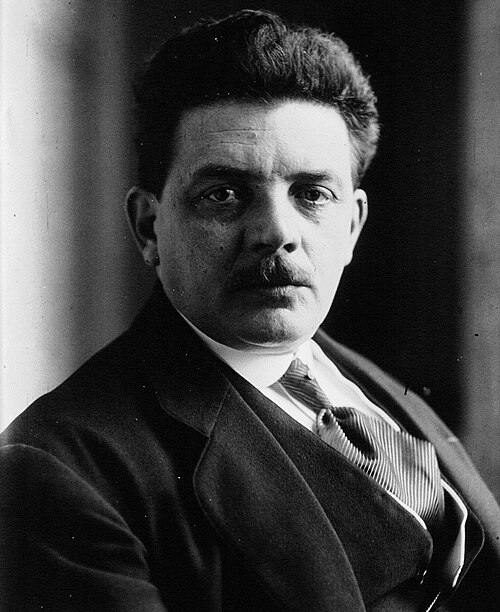
Edouard Herriot
ModernPoliticianFrance1872 — 1957
Three-time French prime minister in Third Republic.
Compare Edouard Herriot with another historical figure:
Quick Facts
Born
1872
Died
1957
Country
France
Era
Modern
Occupation
Politician
Score Overview
Military (10%)50
Political (20%)72
Influence (20%)55
Legacy (20%)48
Leadership (15%)66
Strategy (15%)41
Total Score55.4
Edouard Herriot — Complete Timeline
1924 AD
First Term as Prime Minister and the Cartel des GauchesPolitical Action◆ Major
Herriot became Prime Minister in 1924 leading the Cartel des Gauches, a left-wing coalition. His government recognized the Soviet Union, reduced military service, and pursued secular education policies, but faced financial crises and fell in 1925 due to opposition to his economic reforms.
Third RepublicCartel des GauchesGovernment
Impact: nationalconstructive
1926 AD
Second Term as Prime Minister and the Locarno TreatiesPolitical Action
Herriot served a brief second term in 1926, during which he supported the Locarno Treaties, which aimed to secure post-World War I borders. His government fell after a few months due to financial instability, leading to the formation of a national unity government under Poincar
Third RepublicLocarno TreatiesDiplomacy
Impact: regionalconstructive
1932 AD
Third Term as Prime Minister and the Great DepressionPolitical Action◆ Major
Herriot became Prime Minister for the third time in 1932, facing the Great Depression. He negotiated the Lausanne Conference on German reparations but failed to implement effective economic policies, leading to his resignation in December 1932 amid political and financial turmoil.
Third RepublicGreat DepressionEconomic Policy
Impact: national
1940 AD
President of the Chamber of Deputies and Vichy OppositionPolitical Action
Herriot served as President of the Chamber of Deputies until 1940. He opposed the armistice with Germany and the establishment of the Vichy regime, but was placed under house arrest. He was later deported to Germany in 1944, returning to France after the war.
World War IIVichy FranceOpposition
Impact: nationaltragic
Detailed Scores
▶View all detailed scores
Military
Strategy
6
Tactics
5
Battles
6
Army Scale
5
War Impact
6
Political
Governance
8
Reform
8
Stability
8
Policy
8
Power
9
Influence
History
9
Global
8
Culture
9
Ideology
9
Legacy
9
People often compare with
See how Edouard Herriot stacks up against other historical figures
Popular Comparisons
Edouard Herriot vs Jawaharlal Nehru
vs Jawaharlal Nehru60
Edouard Herriot vs Festus Mogae
vs Festus Mogae58
Edouard Herriot vs Alikhan Bukeikhanov
vs Alikhan Bukeikhanov49
Edouard Herriot vs Jean Castex
vs Jean Castex48
Edouard Herriot vs Hilda Heine
vs Hilda Heine47
Edouard Herriot vs Antti Rinne
vs Antti Rinne40