Loading...
Edouard Herriot vs Jean Castex
Edouard Herriot leads by 7.4 pts · 2 figures compared
…
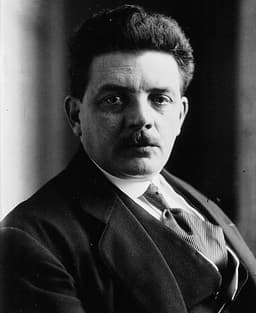
Edouard Herriot
Politician · Modern
55.4Total

Jean Castex
Politician · Modern
48.0Total
Basic Information
Born
1872
1965
Died
1957
—
Era
Modern
Modern
Nationality
France
France
Occupation
Politician
Politician
Civilization
Western
Western
Score Comparison
Military (10%)
50.0
50.0
Political (20%)
72.0
43.7
Influence (20%)
54.9
51.0
Legacy (20%)
47.5
37.5
Leadership (15%)
66.0
65.7
Strategy (15%)
41.4
44.5
TOTAL
55.4
48.0
Edouard Herriot — Complete Timeline
1924 AD
First Term as Prime Minister and the Cartel des GauchesPolitical Action◆ Major
Herriot became Prime Minister in 1924 leading the Cartel des Gauches, a left-wing coalition. His government recognized the Soviet Union, reduced military service, and pursued secular education policies, but faced financial crises and fell in 1925 due to opposition to his economic reforms.
Third RepublicCartel des GauchesGovernment
Impact: nationalconstructive
1926 AD
Second Term as Prime Minister and the Locarno TreatiesPolitical Action
Herriot served a brief second term in 1926, during which he supported the Locarno Treaties, which aimed to secure post-World War I borders. His government fell after a few months due to financial instability, leading to the formation of a national unity government under Poincar
Third RepublicLocarno TreatiesDiplomacy
Impact: regionalconstructive
1932 AD
Third Term as Prime Minister and the Great DepressionPolitical Action◆ Major
Herriot became Prime Minister for the third time in 1932, facing the Great Depression. He negotiated the Lausanne Conference on German reparations but failed to implement effective economic policies, leading to his resignation in December 1932 amid political and financial turmoil.
Third RepublicGreat DepressionEconomic Policy
Impact: national
1940 AD
President of the Chamber of Deputies and Vichy OppositionPolitical Action
Herriot served as President of the Chamber of Deputies until 1940. He opposed the armistice with Germany and the establishment of the Vichy regime, but was placed under house arrest. He was later deported to Germany in 1944, returning to France after the war.
World War IIVichy FranceOpposition
Impact: nationaltragic
Jean Castex — Complete Timeline
2020 AD
Implementation of Economic Recovery Plan (France Relance)Reform◆ Major
Castex's government launched the France Relance plan, a
Economic RecoveryStimulusCOVID-19
Impact: nationalconstructive
Appointment as Prime Minister of FrancePolitical Action◆ Major
Jean Castex was appointed Prime Minister by President Emmanuel Macron, replacing Edouard Philippe. His appointment was seen as a move to focus on the post-COVID-19 economic recovery and managing the pandemic's aftermath.
Prime MinisterCOVID-19Government
Impact: nationalconstructive
Management of COVID-19 Vaccination CampaignPolitical Action◆ Major
Castex's government oversaw the rollout of the COVID-19 vaccination campaign in France. The campaign faced initial logistical challenges and public skepticism but eventually achieved high vaccination rates.
COVID-19VaccinationPublic Health
Impact: nationalconstructive
2022 AD
Resignation as Prime MinisterPolitical Action
Jean Castex resigned as Prime Minister following the re-election of President Macron. His resignation was a standard procedure after a presidential election, leading to the appointment of
ResignationPost-ElectionGovernment Change
Impact: national
Expert Analysis
Origins
Edouard Herriot was born on July 5, 1872, in Troyes, France, into a middle-class family. His father was a military officer, and his mother was a devout Catholic. He excelled in school, attending the Lycée Louis-le-Grand and later the École Normale Supérieure, where he studied literature and philosophy. He became a professor of rhetoric and later mayor of Lyon in 1905, a position he held for decades. Herriot's early political career was shaped by his commitment to radicalism, secularism, and social reform.
Jean Castex was born on June 25, 1965, in Vic-Fezensac, France, into a family of civil servants. He studied at the École Nationale d'Administration (ENA), graduating in 1991. He began his career in the French civil service, working in various ministerial posts. He served as deputy secretary-general of the Élysée under President Nicolas Sarkozy and later as director of the French hospital system. Castex's background was technocratic, with a focus on public health and administration, leading to his appointment as Prime Minister in 2020.
Rise to Power
Herriot rose to prominence as a leader of the Radical Party. He became mayor of Lyon in 1905 and used this platform to build a national reputation. In 1924, he led the Cartel des Gauches, a left-wing coalition, to victory in legislative elections. He became Prime Minister for the first time on June 14, 1924. His government recognized the Soviet Union and reduced military service, but it fell in 1925 due to financial crises. Herriot returned for a brief second term in 1926, supporting the Locarno Treaties, but his government lasted only a few months. His third term came in 1932 during the Great Depression; he negotiated the Lausanne Conference on German reparations but resigned in December 1932 after failing to secure a loan.
Castex's rise was more unexpected. He was a senior civil servant with experience in health policy, having coordinated the deconfinement strategy after the first COVID-19 wave. On July 3, 2020, President Emmanuel Macron appointed him Prime Minister, replacing Édouard Philippe. The appointment was seen as a move to focus on the pandemic recovery. Castex, though little-known nationally, was trusted for his managerial competence. His political score of 43.7 reflects his limited electoral background, but he leveraged his bureaucratic skills.
Leadership & Governance
Herriot's leadership style was rooted in parliamentary democracy and coalition politics. He was a skilled orator and negotiator, but his governments were often unstable due to the fragmented Third Republic party system. His first term pursued leftist reforms: recognition of the USSR, amnesty for strikers, and reduction of military spending. However, financial mismanagement led to a currency crisis. His second term was too short to enact major policy. His third term focused on international diplomacy, but domestic economic woes overwhelmed him. Herriot's governance scored 66.0 in leadership, reflecting his ability to navigate coalitions, but his strategy score of 41.4 indicates a lack of long-term planning.
Castex led a technocratic government during a health crisis. His leadership was characterized by crisis management and implementation of Macron's agenda. He oversaw the COVID-19 vaccination campaign, which initially faced delays due to supply issues and public skepticism, but eventually reached high coverage. He also launched the France Relance plan, a €100 billion stimulus package focusing on green transition, competitiveness, and social cohesion. Castex's leadership score of 65.7 is similar to Herriot's, but his political score is lower due to his unelected background. His governance was effective but lacked the political independence of an elected leader.
Triumph & Tragedy
Herriot's greatest triumph was leading the Cartel des Gauches to power and implementing secular, progressive policies. He also played a key role in the Locarno Treaties, which stabilized European borders in the 1920s. His tragedy was his inability to manage the economy: his first term ended in financial chaos, and his third term failed to address the Great Depression. He also opposed the Vichy regime but was placed under house arrest, limiting his influence. Herriot's legacy score of 47.5 reflects his mixed record.
Castex's triumph was the successful rollout of the vaccination campaign, which helped France emerge from the pandemic. The France Relance plan also supported economic recovery. His tragedy was the initial vaccine rollout delays and public mistrust, which he worked to overcome. He resigned after Macron's re-election in 2022, a standard move, but his tenure was overshadowed by the pandemic's long-term effects. Castex's legacy score of 37.5 is lower, partly due to his short term and the context of crisis.
Character & Destiny
Herriot was a principled radical, committed to secularism and democracy. His character was that of a republican statesman, but his indecisiveness and reliance on coalition partners led to governmental instability. His destiny was to be a figure of the Third Republic's decline, unable to prevent the rise of extremism. Historians note his intellectualism but criticize his economic naivety.
Castex was a pragmatic technocrat, focused on efficiency and procedure. His character was steady and unassuming, suited for crisis management but not for bold political transformation. His destiny was to be a transitional figure, executing Macron's policies during an unprecedented health crisis. His influence score of 51.0 is modest, as his impact was largely administrative.
Legacy
Herriot's legacy is tied to the Radical Party and the Third Republic. He is remembered as a mayor of Lyon (the city named a university and a square after him) and a defender of secularism. However, his political achievements were ephemeral due to the instability of his governments. His recognition of the USSR had long-term diplomatic implications. His overall impact is limited, as the Third Republic collapsed a decade after his death.
Castex's legacy is still forming. He is likely to be remembered as the prime minister who managed the pandemic's second phase and the economic recovery. His technocratic approach may be seen as effective but uninspiring. The France Relance plan's long-term effects on green transition and digitalization will shape his legacy. Compared to Herriot, Castex's legacy score of 37.5 is lower, reflecting his shorter tenure and less transformative impact.
Conclusion
Edouard Herriot scored 55.4 total compared to Jean Castex's 48.0, a gap of 7.4 points. Herriot's higher scores in political (72.0 vs 43.7) and influence (54.9 vs 51.0) reflect his longer career and role in shaping the Third Republic. However, both leaders governed during crises and had limited success. Herriot's impact on French secularism and international relations was more significant than Castex's crisis management. While Castex effectively handled the pandemic, his role was largely administrative and temporary. Therefore, Herriot had greater overall impact on French history, despite his failures. The data supports that Herriot, with a higher total score, was the more influential figure.
Rankings
🥇
Edouard HerriotLeader
Mil: 50.0Pol: 72.0Inf: 54.9
55.4
🥈
Jean Castex
Mil: 50.0Pol: 43.7Inf: 51.0
48.0
+7.4 behind
How This Comparison Works
Algorithm
Each figure is scored on 6 dimensions (0—100 scale) based on structured historical data: Military (10%), Political (20%), Influence (20%), Legacy (20%), Leadership (15%), Strategy (15%). The weighted total produces the final ranking.
Data Sources
Scores are computed from structured sub-indicators in the database. Scale factors adjust for era (Ancient ×0.85, Modern ×1.0) and civilization size (Eastern ×1.05, Other ×0.80) to account for differences in population and military scale.
Maximum 3 Figures
Comparisons are limited to 2—3 figures to ensure readability and statistical meaningfulness.
Error Margins
±5 points per dimension — Sub-scores are derived from historical records with inherent uncertainty. Two figures within 5 points on a dimension should be considered roughly equivalent in that area.
Total Score Accuracy
±3 points overall — The weighted combination of 6 dimensions produces a total score with approximately ±3 points of uncertainty. Differences of less than 3 points are not statistically significant— the figures are effectively tied.
Known Limitations
- Historical records are incomplete and uneven across civilizations
- Figures from oral-tradition societies may be underrepresented
- Occupation labels can misclassify multi-role figures
- Scores measure capability and impact, not moral character
- Quantitative scoring is a comparison tool, not absolute truth
Capability Radar
Military (10%) — Battles & Warfare
Battles
28
27
Win Rate
31
33
Expansion
35
32
Political (20%) — Governance & Reform
Reform
50
30
Diplomacy
60
40
Economy
45
35
Influence (20%) — Cultural & Global Reach
Cultural
30
10
Global
30
25
Legacy (20%) — Historical Impact
Historical
40
15
Longevity
35
10
Leadership (15%) — Power & Stability
Tenure
55
20
Stability
40
45
Strategy (15%) — Tactics & Innovation
Strategy
35
39
Tactics
43
43
Reform
41
46
Similar Comparisons
Comments & Discussion
No comments yet. Be the first to share your thoughts!