Loading...
This comparison has not been analyzed yet.
One-time AI generation (~1 minute). Scores and timeline are already available below.
Antti Rinne vs Edouard Herriot
Edouard Herriot leads by 15.8 pts · 2 figures compared
…
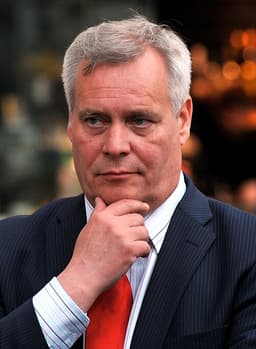
Antti Rinne
Politician · Modern
39.6Total
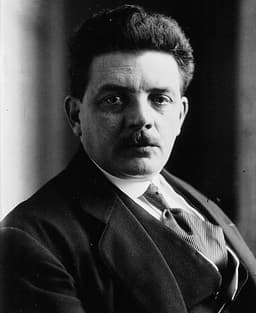
Edouard Herriot
Politician · Modern
55.4Total
Basic Information
Born
1962
1872
Died
—
1957
Era
Modern
Modern
Nationality
Finland
France
Occupation
Politician
Politician
Civilization
Western
Western
Score Comparison
Military (10%)
49.9
50.0
Political (20%)
32.2
72.0
Influence (20%)
45.5
54.9
Legacy (20%)
35.8
47.5
Leadership (15%)
34.6
66.0
Strategy (15%)
42.8
41.4
TOTAL
39.6
55.4
Antti Rinne — Complete Timeline
2005 AD
Served as President of the Finnish Trade Union ConfederationPolitical Action
Rinne served as President of the Finnish Trade Union Confederation (SAK) from 2005 to 2014. He represented Finnish workers in collective bargaining and labor policy discussions, building his political base.
Trade UnionLabor
Impact: nationalconstructive
2014 AD
Elected Leader of the Social Democratic PartyPolitical Action◆ Major
Rinne was elected leader of the Social Democratic Party of Finland in May 2014, succeeding Jutta Urpilainen. He led the party to a narrow victory in the 2019 parliamentary elections, becoming Prime Minister.
Party LeadershipElection
Impact: nationalconstructive
2019 AD
Appointed Prime Minister of FinlandPolitical Action◆ Major
Antti Rinne became Prime Minister of Finland in June 2019, leading a coalition government of five parties. His tenure lasted only six months, ending in December 2019 after a political crisis over the handling of a postal service strike.
GovernmentCoalition
Impact: national
Resigned as Prime MinisterPolitical Action◆ Major
Rinne resigned as Prime Minister in December 2019 following a no-confidence vote triggered by the Centre Party. The crisis stemmed from his handling of a postal workers' strike and disagreements over wage policies.
ResignationPolitical Crisis
Impact: nationaldestructive
Edouard Herriot — Complete Timeline
1924 AD
First Term as Prime Minister and the Cartel des GauchesPolitical Action◆ Major
Herriot became Prime Minister in 1924 leading the Cartel des Gauches, a left-wing coalition. His government recognized the Soviet Union, reduced military service, and pursued secular education policies, but faced financial crises and fell in 1925 due to opposition to his economic reforms.
Third RepublicCartel des GauchesGovernment
Impact: nationalconstructive
1926 AD
Second Term as Prime Minister and the Locarno TreatiesPolitical Action
Herriot served a brief second term in 1926, during which he supported the Locarno Treaties, which aimed to secure post-World War I borders. His government fell after a few months due to financial instability, leading to the formation of a national unity government under Poincar
Third RepublicLocarno TreatiesDiplomacy
Impact: regionalconstructive
1932 AD
Third Term as Prime Minister and the Great DepressionPolitical Action◆ Major
Herriot became Prime Minister for the third time in 1932, facing the Great Depression. He negotiated the Lausanne Conference on German reparations but failed to implement effective economic policies, leading to his resignation in December 1932 amid political and financial turmoil.
Third RepublicGreat DepressionEconomic Policy
Impact: national
1940 AD
President of the Chamber of Deputies and Vichy OppositionPolitical Action
Herriot served as President of the Chamber of Deputies until 1940. He opposed the armistice with Germany and the establishment of the Vichy regime, but was placed under house arrest. He was later deported to Germany in 1944, returning to France after the war.
World War IIVichy FranceOpposition
Impact: nationaltragic
This comparison has not been analyzed yet.
One-time AI generation (~1 minute). Scores and timeline are already available below.
Rankings
🥇
Edouard HerriotLeader
Mil: 50.0Pol: 72.0Inf: 54.9
55.4
🥈
Antti Rinne
Mil: 49.9Pol: 32.2Inf: 45.5
39.6
+15.8 behind
How This Comparison Works
Algorithm
Each figure is scored on 6 dimensions (0—100 scale) based on structured historical data: Military (10%), Political (20%), Influence (20%), Legacy (20%), Leadership (15%), Strategy (15%). The weighted total produces the final ranking.
Data Sources
Scores are computed from structured sub-indicators in the database. Scale factors adjust for era (Ancient ×0.85, Modern ×1.0) and civilization size (Eastern ×1.05, Other ×0.80) to account for differences in population and military scale.
Maximum 3 Figures
Comparisons are limited to 2—3 figures to ensure readability and statistical meaningfulness.
Error Margins
±5 points per dimension — Sub-scores are derived from historical records with inherent uncertainty. Two figures within 5 points on a dimension should be considered roughly equivalent in that area.
Total Score Accuracy
±3 points overall — The weighted combination of 6 dimensions produces a total score with approximately ±3 points of uncertainty. Differences of less than 3 points are not statistically significant— the figures are effectively tied.
Known Limitations
- Historical records are incomplete and uneven across civilizations
- Figures from oral-tradition societies may be underrepresented
- Occupation labels can misclassify multi-role figures
- Scores measure capability and impact, not moral character
- Quantitative scoring is a comparison tool, not absolute truth
Capability Radar
Military (10%) — Battles & Warfare
Battles
27
28
Win Rate
34
31
Expansion
35
35
Political (20%) — Governance & Reform
Reform
20
50
Diplomacy
25
60
Economy
20
45
Influence (20%) — Cultural & Global Reach
Cultural
5
30
Global
5
30
Legacy (20%) — Historical Impact
Historical
10
40
Longevity
5
35
Leadership (15%) — Power & Stability
Tenure
10
55
Stability
10
40
Strategy (15%) — Tactics & Innovation
Strategy
37
35
Tactics
42
43
Reform
45
41
Similar Comparisons
Comments & Discussion
No comments yet. Be the first to share your thoughts!