Loading...
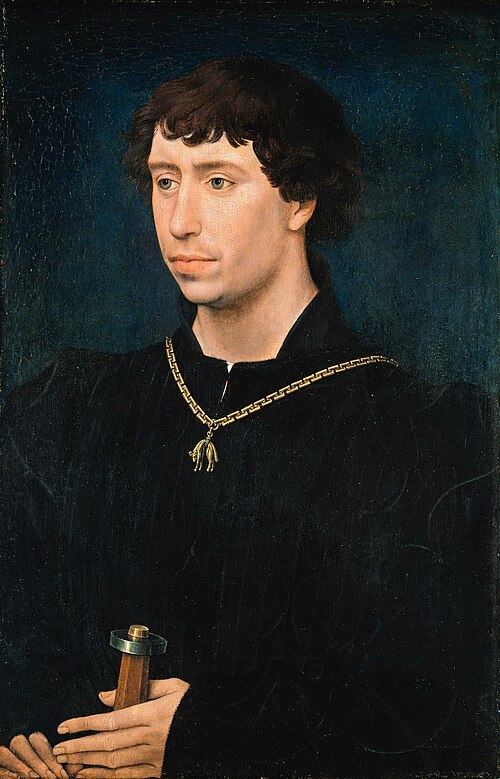
Charles the Bold
MedievalEmperorBurgundy1433 — 1477
Last Valois Duke of Burgundy who died at the Battle of Nancy.
Compare Charles the Bold with another historical figure:
Quick Facts
Born
1433
Died
1477
Country
Burgundy
Era
Medieval
Occupation
Emperor
Score Overview
Military (10%)53
Political (20%)68
Influence (20%)59
Legacy (20%)49
Leadership (15%)66
Strategy (15%)55
Total Score57.9
Charles the Bold — Complete Timeline
1467 AD
Inherited the Burgundian LandsPolitical Action◆ Major
Charles succeeded his father Philip the Good as Duke of Burgundy. He inherited a wealthy and powerful state comprising the Burgundian Netherlands, Franche-Comt
SuccessionBurgundian State
Impact: regionalconstructive
1468 AD
War with France and the Treaty of PéronneWar◆ Major
Charles forced King Louis XI of France to sign the Treaty of P
TreatyFranco-Burgundian ConflictDiplomacy
Impact: regional
1474 AD
Siege of NeussWar◆ Major
Charles besieged the imperial city of Neuss for nearly a year, defying the Holy Roman Emperor Frederick III. The siege ended inconclusively when an imperial army approached. This conflict alienated the German princes and weakened Charles's political position.
SiegeImperial ConflictBurgundian Wars
Impact: regionaldestructive
1476 AD
Battle of GrandsonWar◆ Major
Charles's army was defeated by the Swiss Confederacy at Grandson. The Burgundians abandoned their camp, which was looted. The defeat was a major setback, shattering the myth of Burgundian invincibility and encouraging further Swiss resistance.
BattleSwiss ConfederacyDefeat
Impact: regionaltragic
Battle of MoratWar◆ Major
Charles suffered a second devastating defeat by the Swiss at Morat. His army was routed, and he lost much of his artillery and baggage. The defeat effectively ended Burgundian ambitions in Switzerland and left Charles's state vulnerable.
BattleSwiss ConfederacyDefeat
Impact: regionaltragic
1477 AD
Battle of Nancy and DeathWar
Charles was killed in battle at Nancy while fighting the Swiss and the Duke of Lorraine. His body was found mutilated. His death ended the Burgundian state as an independent power, and his lands were divided between France and the Habsburgs through his daughter Mary.
BattleDeathEnd of Burgundy
Impact: regionaltragic
Detailed Scores
▶View all detailed scores
Military
Strategy
7
Tactics
7
Battles
7
Army Scale
6
War Impact
7
Political
Governance
6
Reform
7
Stability
6
Policy
7
Power
7
Influence
History
9
Global
8
Culture
9
Ideology
9
Legacy
8
People often compare with
See how Charles the Bold stacks up against other historical figures
Popular Comparisons
Charles the Bold vs Abd al-Rahman III
vs Abd al-Rahman III72
Charles the Bold vs Zhao Kuangyin
vs Zhao Kuangyin72
Charles the Bold vs Casimir IV Jagiellon
vs Casimir IV Jagiellon64
Charles the Bold vs Pulakeshin II
vs Pulakeshin II62
Charles the Bold vs Emperor Kanmu
vs Emperor Kanmu62
Charles the Bold vs Sweyn Forkbeard
vs Sweyn Forkbeard46