Loading...
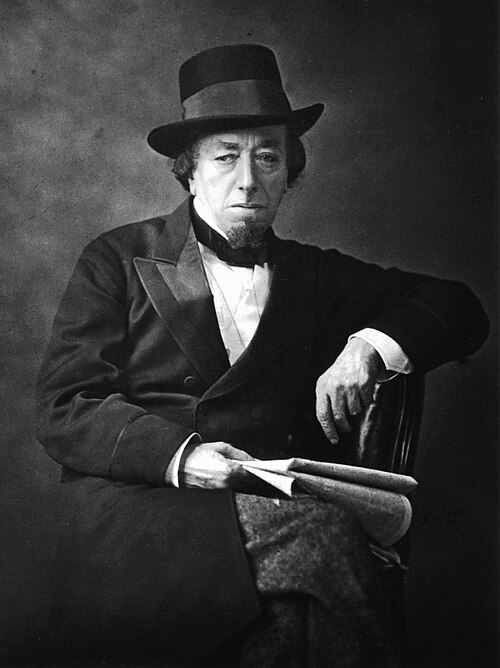
Benjamin Disraeli
ModernPoliticianUnited Kingdom1804 — 1881
Conservative prime minister and novelist.
Compare Benjamin Disraeli with another historical figure:
Quick Facts
Born
1804
Died
1881
Country
United Kingdom
Era
Modern
Occupation
Politician
Score Overview
Military (10%)47
Political (20%)63
Influence (20%)55
Legacy (20%)55
Leadership (15%)78
Strategy (15%)42
Total Score57.5
Benjamin Disraeli — Complete Timeline
1867 AD
Reform Act 1867Reform
As Chancellor of the Exchequer, Disraeli steered the Reform Act 1867 through Parliament, which doubled the electorate by extending the vote to many urban working-class men. This 'leap in the dark' was a major political reform that reshaped British democracy.
Electoral ReformDemocracyWorking Class
Impact: nationalprogressive
1868 AD
Became Prime MinisterPolitical Action
Disraeli became Prime Minister for the first time on February 27, 1868, after the resignation of Lord Derby. His first ministry lasted only 10 months, but he passed the Reform Act 1867 during his time as Chancellor of the Exchequer, which expanded the electorate.
Prime MinisterConservative PartyReform
Impact: national
1875 AD
Purchase of Suez Canal SharesPolitical Action◆ Major
Disraeli arranged the purchase of a 44% stake in the Suez Canal Company from the Khedive of Egypt for
Suez CanalImperialismFinance
Impact: globalconstructive
1876 AD
Royal Titles Act 1876Political Action
Disraeli's government passed the Royal Titles Act 1876, which added 'Empress of India' to Queen Victoria's titles. This formalized British imperial rule in India and was a symbolic assertion of British power, though it was criticized as flattery of the monarch.
MonarchyIndiaImperial Title
Impact: global
1878 AD
Congress of BerlinPolitical Action◆ Major
Disraeli attended the Congress of Berlin in June-July 1878, representing Britain. He secured revisions to the Treaty of San Stefano, limiting Russian influence in the Balkans and gaining Cyprus for Britain. He returned claiming 'peace with honour', boosting his popularity.
Foreign PolicyBalkansDiplomacy
Impact: global
Detailed Scores
▶View all detailed scores
Military
Strategy
6
Tactics
5
Battles
6
Army Scale
5
War Impact
6
Political
Governance
7
Reform
7
Stability
7
Policy
7
Power
8
Influence
History
9
Global
8
Culture
8
Ideology
9
Legacy
8
People often compare with
See how Benjamin Disraeli stacks up against other historical figures
Popular Comparisons
Benjamin Disraeli vs Habib Bourguiba
vs Habib Bourguiba64
Benjamin Disraeli vs Lalith Athulathmudali
vs Lalith Athulathmudali54
Benjamin Disraeli vs Jose Maria Velasco Ibarra
vs Jose Maria Velasco Ibarra49
Benjamin Disraeli vs Oscar Berger
vs Oscar Berger44
Benjamin Disraeli vs Halimah Yacob
vs Halimah Yacob44
Benjamin Disraeli vs Julius Caesar
vs Julius Caesar83