Loading...
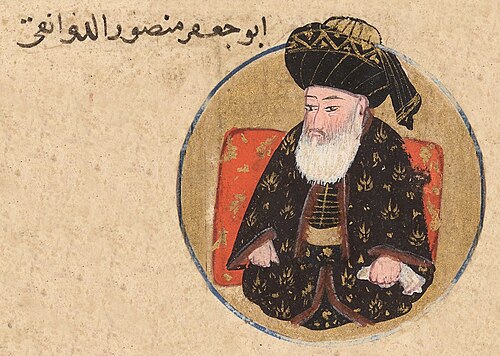
Al-Mansur
MedievalEmperorAbbasid Caliphate714 — 775
Second Abbasid caliph who founded Baghdad.
Compare Al-Mansur with another historical figure:
Quick Facts
Born
714
Died
775
Country
Abbasid Caliphate
Era
Medieval
Occupation
Emperor
Score Overview
Military (10%)65
Political (20%)63
Influence (20%)65
Legacy (20%)65
Leadership (15%)72
Strategy (15%)55
Total Score64.7
Al-Mansur — Complete Timeline
750 AD
Administrative ReformsReform◆ Major
Al-Mansur established a centralized bureaucracy modeled on Sassanid practices, creating the office of the vizier and a postal service (barid). These reforms improved tax collection, communication, and governance across the vast Abbasid Empire.
BureaucracyGovernanceAdministration
Impact: regionalconstructive
Patronage of Translation MovementCultural◆ Major
Al-Mansur sponsored the translation of Greek, Persian, and Indian scientific and philosophical works into Arabic. This initiative laid the foundation for the Abbasid translation movement, which later flourished under the House of Wisdom and preserved classical knowledge.
TranslationScienceCulture
Impact: globalconstructive
754 AD
Consolidation of Abbasid PowerPolitical Action◆ Major
After the death of his brother As-Saffah, Al-Mansur became the second Abbasid caliph. He systematically eliminated rivals, including the powerful Barmakid family and other potential claimants, to secure his rule and establish the Abbasid dynasty as the sole ruling house.
Dynastic ConsolidationPurgePower Struggle
Impact: regionaldestructive
762 AD
Suppression of the Alid RevoltWar◆ Major
Al-Mansur faced a major rebellion led by Muhammad al-Nafs al-Zakiyya, a descendant of Ali, who claimed the caliphate. The revolt was crushed by Abbasid forces, and Muhammad was killed, solidifying Abbasid control against Alid claimants.
RebellionAlid RevoltCivil War
Impact: regionaldestructive
Foundation of BaghdadPolitical Action◆ Major
Al-Mansur ordered the construction of the new capital city, Baghdad, on the west bank of the Tigris River. The city was designed as a circular 'Round City' and became the administrative and cultural center of the Abbasid Caliphate, replacing the previous capital at Al-Hashimiya.
Urban PlanningCapital CityAbbasid Caliphate
Impact: globalconstructive
Detailed Scores
▶View all detailed scores
Military
Strategy
7
Tactics
7
Battles
7
Army Scale
6
War Impact
7
Political
Governance
6
Reform
7
Stability
6
Policy
7
Power
7
Influence
History
9
Global
8
Culture
8
Ideology
9
Legacy
8
People often compare with
See how Al-Mansur stacks up against other historical figures
Popular Comparisons
Al-Mansur vs Topa Inca Yupanqui
vs Topa Inca Yupanqui63
Al-Mansur vs Rajadhiraja Chola I
vs Rajadhiraja Chola I62
Al-Mansur vs Tokhtamysh
vs Tokhtamysh61
Al-Mansur vs John I of Portugal
vs John I of Portugal60
Al-Mansur vs Baldwin I of Jerusalem
vs Baldwin I of Jerusalem56
Al-Mansur vs Man Singh Tomar
vs Man Singh Tomar55