Loading...
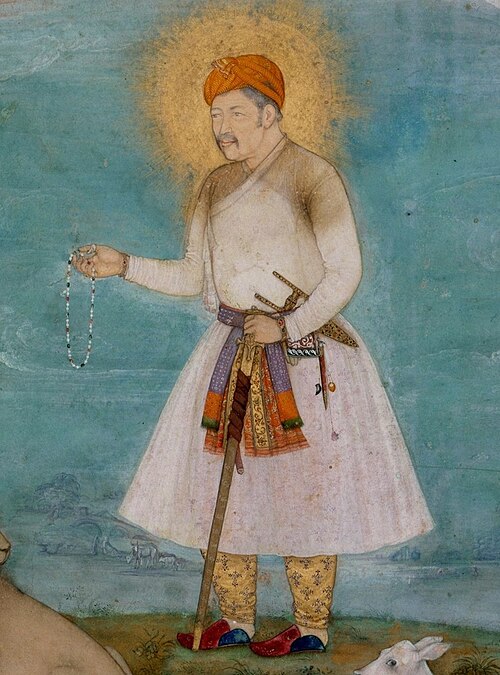
Akbar the Great
ModernEmperorIndia1542 — 1605
莫卧儿帝国最伟大的皇帝。推行宗教宽容政策,进行行政改革,奠定了莫卧儿帝国的黄金时代。
Compare Akbar the Great with another historical figure:
Quick Facts
Born
1542
Died
1605
Country
India
Era
Modern
Occupation
Emperor
Score Overview
Military (10%)80
Political (20%)82
Influence (20%)68
Legacy (20%)55
Leadership (15%)80
Strategy (15%)68
Total Score69.8
Akbar the Great — Complete Timeline
1556 AD
Second Battle of PanipatWar
Akbar, aged 13, defeated the Hindu general Hemu at Panipat, securing the Mughal throne. Hemu had captured Delhi and declared himself emperor. Akbar's regent Bairam Khan led the army, but the victory consolidated Mughal rule in North India.
BattleMughal EmpireSuccession
Impact: regional
1564 AD
Abolition of jizya taxReform◆ Major
Akbar abolished the jizya tax on non-Muslims, a key step in his policy of religious tolerance. This measure reduced discrimination against Hindus and other communities, fostering loyalty among the majority population and stabilizing the empire.
Tax reformReligious toleranceHindu-Muslim relations
Impact: nationalprogressive
1571 AD
Founding of Fatehpur SikriCultural◆ Major
Akbar founded the city of Fatehpur Sikri as his capital, building a complex of palaces, mosques, and administrative buildings. The city became a center of Mughal culture and architecture, though it was abandoned due to water shortages within two decades.
ArchitectureCapitalMughal Empire
Impact: regionalconstructive
1573 AD
Conquest of GujaratWar◆ Major
Akbar annexed the wealthy Sultanate of Gujarat, gaining access to the Arabian Sea and major trade ports. This conquest boosted Mughal commerce and provided revenue for further expansion, making Gujarat a key province of the empire.
ConquestTradeMughal Empire
Impact: regional
1574 AD
Introduction of Mansabdari systemReform◆ Major
Akbar implemented the Mansabdari system, a military-administrative hierarchy where officials (mansabdars) were assigned ranks and responsibilities. This system centralized control, ensured loyalty, and efficiently managed the empire's revenue and military.
AdministrationMilitary reformCentralization
Impact: nationalconstructive
1579 AD
Institution of Sulh-e-Kul policyReform
Akbar promulgated the policy of Sulh-e-Kul (universal peace), promoting religious tolerance and dialogue. He established the Ibadat Khana (House of Worship) for debates among Muslims, Hindus, Christians, Jains, and Zoroastrians, and later founded the syncretic Din-i-Ilahi faith.
Religious policySyncretismTolerance
Impact: nationalprogressive
Detailed Scores
▶View all detailed scores
Military
Strategy
7
Tactics
7
Battles
7
Army Scale
7
War Impact
7
Political
Governance
8
Reform
8
Stability
8
Policy
8
Power
8
Influence
History
8
Global
8
Culture
8
Ideology
8
Legacy
8
People often compare with
See how Akbar the Great stacks up against other historical figures
Popular Comparisons
Akbar the Great vs Peter the Great
vs Peter the Great73
Akbar the Great vs Catherine the Great
vs Catherine the Great67
Akbar the Great vs Louis XIV
vs Louis XIV65
Akbar the Great vs Prithvi Narayan Shah
vs Prithvi Narayan Shah62
Akbar the Great vs Haqnazar Khan
vs Haqnazar Khan57
Akbar the Great vs Mao Zedong
vs Mao Zedong79