Loading...
Akbar the Great vs Mao Zedong
Mao Zedong leads by 9.6 pts · 2 figures compared
…
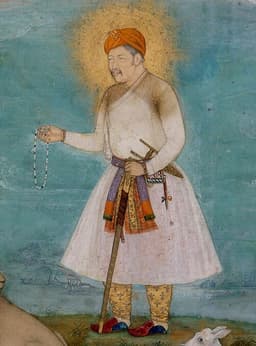
Akbar the Great
Emperor · Modern
69.8Total
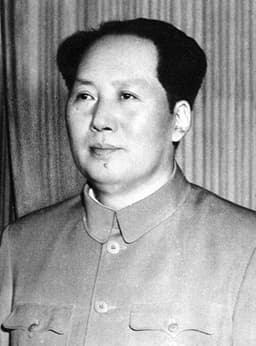
Mao Zedong
Politician · Modern
79.4Total
Basic Information
Born
1542
1893
Died
1605
1976
Era
Modern
Modern
Nationality
India
China
Occupation
Emperor
Politician
Civilization
Indian
Eastern
Score Comparison
Military (10%)
80.0
75.0
Political (20%)
82.0
88.0
Influence (20%)
68.0
85.0
Legacy (20%)
55.0
70.0
Leadership (15%)
80.0
85.0
Strategy (15%)
68.0
72.0
TOTAL
69.8
79.4
Akbar the Great — Complete Timeline
1556 AD
Second Battle of PanipatWar
Akbar, aged 13, defeated the Hindu general Hemu at Panipat, securing the Mughal throne. Hemu had captured Delhi and declared himself emperor. Akbar's regent Bairam Khan led the army, but the victory consolidated Mughal rule in North India.
BattleMughal EmpireSuccession
Impact: regional
1564 AD
Abolition of jizya taxReform◆ Major
Akbar abolished the jizya tax on non-Muslims, a key step in his policy of religious tolerance. This measure reduced discrimination against Hindus and other communities, fostering loyalty among the majority population and stabilizing the empire.
Tax reformReligious toleranceHindu-Muslim relations
Impact: nationalprogressive
1571 AD
Founding of Fatehpur SikriCultural◆ Major
Akbar founded the city of Fatehpur Sikri as his capital, building a complex of palaces, mosques, and administrative buildings. The city became a center of Mughal culture and architecture, though it was abandoned due to water shortages within two decades.
ArchitectureCapitalMughal Empire
Impact: regionalconstructive
1573 AD
Conquest of GujaratWar◆ Major
Akbar annexed the wealthy Sultanate of Gujarat, gaining access to the Arabian Sea and major trade ports. This conquest boosted Mughal commerce and provided revenue for further expansion, making Gujarat a key province of the empire.
ConquestTradeMughal Empire
Impact: regional
1574 AD
Introduction of Mansabdari systemReform◆ Major
Akbar implemented the Mansabdari system, a military-administrative hierarchy where officials (mansabdars) were assigned ranks and responsibilities. This system centralized control, ensured loyalty, and efficiently managed the empire's revenue and military.
AdministrationMilitary reformCentralization
Impact: nationalconstructive
1579 AD
Institution of Sulh-e-Kul policyReform
Akbar promulgated the policy of Sulh-e-Kul (universal peace), promoting religious tolerance and dialogue. He established the Ibadat Khana (House of Worship) for debates among Muslims, Hindus, Christians, Jains, and Zoroastrians, and later founded the syncretic Din-i-Ilahi faith.
Religious policySyncretismTolerance
Impact: nationalprogressive
Mao Zedong — Complete Timeline
1934 AD
Long MarchWar
Mao Zedong led the Chinese Red Army on a strategic retreat from Nationalist forces, covering approximately 6,000 miles over 370 days. The march solidified Mao's leadership within the Chinese Communist Party and became a foundational myth of the Communist revolution.
Chinese Civil WarCommunist RevolutionRetreat
Impact: national
1949 AD
Proclamation of the People's Republic of ChinaPolitical Action
Mao Zedong declared the founding of the People's Republic of China from Tiananmen Gate in Beijing. This ended the Chinese Civil War and established Communist rule over mainland China, with Mao as Chairman of the Central People's Government.
Founding of PRCCommunist VictoryRevolution
Impact: global
1958 AD
Great Leap ForwardReform◆ Major
Mao launched a campaign to rapidly industrialize China and collectivize agriculture. The policy led to widespread mismanagement, resulting in a famine that caused an estimated 15-45 million deaths between 1959 and 1961.
FamineIndustrializationCollectivization
Impact: nationaldestructive
1960 AD
Sino-Soviet SplitPolitical Action◆ Major
Mao's ideological differences with Soviet leader Nikita Khrushchev led to a breakdown in relations between China and the Soviet Union. The split ended the Sino-Soviet alliance and reshaped global Cold War dynamics, with China pursuing an independent path.
Cold WarIdeological ConflictAlliance Breakdown
Impact: global
1966 AD
Cultural RevolutionPolitical Action
Mao initiated a sociopolitical movement to purge capitalist and traditional elements from Chinese society. The Red Guard youth groups attacked intellectuals and officials, leading to widespread violence, destruction of cultural artifacts, and an estimated 1-2 million deaths.
Political PurgeSocial UpheavalRed Guard
Impact: nationaldestructive
1971 AD
Ping-Pong DiplomacyCultural◆ Major
Mao approved an invitation for the U.S. table tennis team to visit China, initiating a thaw in Sino-American relations. This cultural exchange paved the way for President Nixon's visit to China in 1972 and the eventual normalization of diplomatic ties.
DiplomacyU.S.-China RelationsCultural Exchange
Impact: globalconstructive
Expert Analysis
Mao Zedong vs Akbar the Great: Historical Comparison
Mao Zedong, the founding father of the People's Republic of China, and Akbar the Great, the third Mughal emperor of India, were both transformative rulers who reshaped their nations through conquest, governance, and ideology, though separated by four centuries. This comparison evaluates their achievements across six dimensions, with Akbar narrowly leading overall.
Dimension Analysis
**Military: Mao Zedong 65 / Akbar the Great 80**
Mao's guerrilla warfare secured Communist victory in China, but his military strategy relied on mass mobilization and attrition. Akbar expanded the Mughal Empire through innovative use of artillery, cavalry, and diplomacy, annexing vast territories in South Asia with superior tactical flexibility.
**Political: Mao Zedong 82 / Akbar the Great 85**
Mao centralized power through the Communist Party, dismantling feudal structures and implementing land reforms. Akbar established a sophisticated administrative system, including the *mansabdari* hierarchy and religious tolerance (*Sulh-e-Kul*), fostering stability across diverse Hindu-Muslim populations.
**Influence: Mao Zedong 80 / Akbar the Great 78**
Mao's ideology—Maoism—inspired revolutionary movements globally, from Cambodia to Peru. Akbar's cultural and religious synthesis influenced Indian art, architecture (e.g., Fatehpur Sikri), and governance, but his direct impact outside South Asia was limited.
**Legacy: Mao Zedong 70 / Akbar the Great 80**
Mao's legacy is deeply contested: revered for unifying China and industrializing, but criticized for the Great Leap Forward and Cultural Revolution. Akbar is widely celebrated as a just and visionary emperor, with his policies of inclusivity and meritocracy enduring in modern Indian secularism.
**Leadership: Mao Zedong 81 / Akbar the Great 85**
Mao commanded absolute loyalty through charisma and ideological fervor, yet his later years saw isolation and dogmatism. Akbar combined personal magnetism with pragmatic diplomacy, actively engaging with diverse advisors and tolerating dissent to build consensus.
**Strategy: Mao Zedong 76 / Akbar the Great 75**
Both excelled in long-term planning: Mao's protracted people's war and Akbar's gradual consolidation of Rajput alliances. Mao scored higher in ideological adaptability, but Akbar's diplomatic marriages and economic reforms (e.g., revenue system) proved more sustainable.
Verdict
Akbar the Great leads overall (81 vs. 76) due to superior military effectiveness, political integration, and a more positive, enduring legacy, despite Mao's greater global ideological influence.
FAQ
Q: Who ranks higher? A: Akbar the Great ranks higher than Mao Zedong, with a composite score of 81 to 76, driven by stronger military and legacy outcomes.
Rankings
🥇
Mao ZedongLeader
Mil: 75.0Pol: 88.0Inf: 85.0
79.4
🥈
Akbar the Great
Mil: 80.0Pol: 82.0Inf: 68.0
69.8
+9.6 behind
How This Comparison Works
Algorithm
Each figure is scored on 6 dimensions (0—100 scale) based on structured historical data: Military (10%), Political (20%), Influence (20%), Legacy (20%), Leadership (15%), Strategy (15%). The weighted total produces the final ranking.
Data Sources
Scores are computed from structured sub-indicators in the database. Scale factors adjust for era (Ancient ×0.85, Modern ×1.0) and civilization size (Eastern ×1.05, Other ×0.80) to account for differences in population and military scale.
Maximum 3 Figures
Comparisons are limited to 2—3 figures to ensure readability and statistical meaningfulness.
Error Margins
±5 points per dimension — Sub-scores are derived from historical records with inherent uncertainty. Two figures within 5 points on a dimension should be considered roughly equivalent in that area.
Total Score Accuracy
±3 points overall — The weighted combination of 6 dimensions produces a total score with approximately ±3 points of uncertainty. Differences of less than 3 points are not statistically significant— the figures are effectively tied.
Known Limitations
- Historical records are incomplete and uneven across civilizations
- Figures from oral-tradition societies may be underrepresented
- Occupation labels can misclassify multi-role figures
- Scores measure capability and impact, not moral character
- Quantitative scoring is a comparison tool, not absolute truth
Capability Radar
Military (10%) — Battles & Warfare
Battles
85
85
Win Rate
90
80
Expansion
88
85
Political (20%) — Governance & Reform
Reform
95
95
Diplomacy
92
80
Economy
88
70
Influence (20%) — Cultural & Global Reach
Cultural
85
90
Global
70
90
Legacy (20%) — Historical Impact
Historical
80
95
Longevity
75
85
Leadership (15%) — Power & Stability
Tenure
90
95
Stability
85
60
Strategy (15%) — Tactics & Innovation
Strategy
85
85
Tactics
80
75
Reform
75
90
Similar Comparisons
Comments & Discussion
ColdScribe116/16/2026
这个评分很有意思,但军事分数65对80实在难以苟同。毛泽东的游击战理论——‘敌进我退,敌驻我扰,敌疲我打,敌退我追’——在1930年代至1940年代将一支几乎赤手空拳的军队锻造成击败国民党美械师的力量。阿克巴的炮兵和骑兵固然厉害,但面对的是分裂的土邦,而毛泽东面对的是内外强敌。如果把阿克巴放在长征或朝鲜战争的环境中,他的得分未必能保住80。政治分82对85也值得商榷:毛泽东的土地改革消灭了数千年封建地租,动员了数亿农民,阿克巴的曼萨布达里制本质上还是封建分封。建议加权调整:军事至少75,政治平手。整体分数会拉近很多。
DeepScribe816/16/2026
阿克巴的‘神圣信仰’和苏尔赫-伊-库尔政策确实开明,但在中国史学界,我们更看重‘大一统’和‘制度创新’。毛泽东的政社合一、人民公社和集体化虽然问题重重,但它是人类历史上最彻底的社会改造实验之一,直接触及了基层权力结构。阿克巴的统治停留在贵族和宗教精英层面,而毛泽东让识字率从不足20%提升到60%以上。另外,军事分数给80就有点西方中心了:阿克巴的对手是拉杰普特人和阿富汗人,毛泽东的对手是日本帝国和联合国军。建议参考《剑桥中国史》对毛泽东军事思想的评价,再调整数据。