Loading...
Yi Sun-sin vs Zachary Taylor
Yi Sun-sin leads by 10.2 pts · 2 figures compared
…

Yi Sun-sin
General · Modern
58.3Total
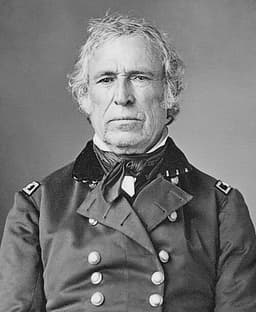
Zachary Taylor
General · Modern
48.1Total
Basic Information
Born
1545
1784
Died
1598
1850
Era
Modern
Modern
Nationality
Korea
United States
Occupation
General
General
Civilization
Eastern
Western
Score Comparison
Military (10%)
79.1
63.3
Political (20%)
42.3
29.3
Influence (20%)
65.0
53.3
Legacy (20%)
40.0
44.2
Leadership (15%)
68.0
48.4
Strategy (15%)
76.0
57.5
TOTAL
58.3
48.1
Yi Sun-sin — Complete Timeline
1592 AD
Introduction of the Turtle Ship (Geobukseon)Invention◆ Major
Yi Sun-sin oversaw the deployment of the turtle ship, an ironclad warship with a spiked iron roof and cannons. These ships played a crucial role in early victories against the Japanese navy, breaking their supply lines and protecting Korean coastlines.
Naval InnovationWarshipImjin War
Impact: regional
1597 AD
Battle of MyeongnyangWar
Admiral Yi Sun-sin, with only 13 ships, defeated a Japanese fleet of over 130 vessels in the Myeongnyang Strait. Using the strong currents and his tactical skill, he inflicted heavy losses without losing a single ship, cutting off Japanese supply lines and turning the tide of the war.
Naval BattleTactical VictoryImjin War
Impact: regional
1598 AD
Death at the Battle of NoryangWar◆ Major
Yi Sun-sin was killed by a stray bullet during the Battle of Noryang, the final major naval engagement of the Imjin War. His death occurred as his fleet was defeating the Japanese, securing a decisive victory that ended the Japanese invasion of Korea.
Death in BattleFinal VictoryImjin War
Impact: regionaltragic
Zachary Taylor — Complete Timeline
1846 AD
Battle of Palo AltoWar◆ Major
Taylor commanded U.S. forces in the first major battle of the Mexican-American War near present-day Brownsville, Texas. His army defeated Mexican forces under General Mariano Arista, securing the Rio Grande border.
Mexican-American WarBattleMilitary
Impact: regional
1847 AD
Battle of Buena VistaWar◆ Major
Taylor's outnumbered army defeated a larger Mexican force led by Santa Anna at Buena Vista, Coahuila. The victory made Taylor a national hero and boosted his presidential prospects.
Mexican-American WarBattleSanta Anna
Impact: regional
1848 AD
Elected President of the United StatesPolitical Action◆ Major
Taylor won the 1848 presidential election as the Whig candidate, defeating Democrat Lewis Cass and Free Soil candidate Martin Van Buren. His military fame and ambiguous stance on slavery secured victory.
PresidencyElectionWhig Party
Impact: national
1850 AD
Threatened to Veto Compromise of 1850Political Action◆ Major
Taylor opposed the Compromise of 1850, threatening to veto it and even to lead troops against secessionists. His death in July 1850 removed the main obstacle to the compromise's passage.
Compromise of 1850SlaverySecession
Impact: national
Died in OfficeOther◆ Major
Taylor died suddenly on July 9, 1850, after a brief illness likely caused by gastroenteritis. His death elevated Millard Fillmore to the presidency, who then signed the Compromise of 1850.
DeathPresidential Succession
Impact: nationaltragic
Expert Analysis
Origins
Yi Sun-sin was born in 1545 in Seoul, Korea, into a yangban (aristocratic) family. However, his family fell from grace, and he grew up in relative poverty. He passed the military examination in 1576 at age 31, a late start due to his family's decline. His early career was marked by minor posts and conflicts with superiors.
Zachary Taylor was born in 1784 in Orange County, Virginia, into a planter family. He grew up on a plantation in Kentucky with minimal formal education. He joined the U.S. Army in 1808 as a first lieutenant, beginning a 40-year military career. His early assignments included frontier posts and the War of 1812.
Rise to Power
Yi Sun-sin rose to prominence during the Imjin War (1592–1598). In 1591, he was appointed Left Naval Commander of Jeolla Province. His first major engagement was the Battle of Okpo in May 1592, where he destroyed 26 Japanese ships. His innovative use of the turtle ship (Geobukseon) — an ironclad vessel with spikes and cannons — gave him a decisive edge. By 1593, he had won a series of victories, including the Battle of Hansando, where his crane wing formation destroyed 59 Japanese ships.
Zachary Taylor rose to fame during the Mexican-American War (1846–1848). He commanded U.S. forces in the Battle of Palo Alto on May 8, 1846, where his army of 2,300 defeated a Mexican force of 3,400. His victory at the Battle of Buena Vista on February 22–23, 1847, was his greatest triumph: with 4,700 troops, he repelled 15,000 Mexicans led by Santa Anna. This made him a national hero, leading to his election as the 12th president in 1848.
Leadership & Governance
Yi Sun-sin's leadership was characterized by strict discipline, strategic innovation, and resilience. He maintained morale despite court intrigue and unjust imprisonment. He was known for his meticulous planning: at the Battle of Myeongnyang (1597), he used the strong currents to neutralize Japanese numerical superiority. His governance of the navy included building infrastructure, training crews, and developing the turtle ship. He scored 68.0 in leadership and 76.0 in strategy.
Zachary Taylor's leadership style was informal and hands-on. He led from the front, earning the nickname "Old Rough and Ready" for his unpretentious appearance. As president, he took a strong stance against secession, threatening to veto the Compromise of 1850 and even to lead troops against southern states. However, his political inexperience and lack of clear policy direction limited his effectiveness. He scored 48.4 in leadership and 57.5 in strategy.
Triumph & Tragedy
Yi Sun-sin's greatest triumph was the Battle of Myeongnyang on October 26, 1597. With only 13 ships, he defeated a Japanese fleet of over 130 vessels, sinking 31 and damaging many without losing a single ship. His greatest failure was his temporary downfall due to court intrigue: in 1597, he was falsely accused and demoted to a common soldier, but was reinstated after his successor lost the Battle of Chilchonryang. His death at the Battle of Noryang on December 16, 1598, from a stray bullet, was a tragedy that occurred as he achieved final victory.
Zachary Taylor's triumph was the Battle of Buena Vista, which cemented his reputation and propelled him to the presidency. His failure was his brief presidency: he died on July 9, 1850, after only 16 months in office, likely from gastroenteritis. His death removed the main obstacle to the Compromise of 1850, which temporarily delayed the Civil War. His threat to veto the compromise and lead troops against secessionists was bold but unfulfilled.
Character & Destiny
Yi Sun-sin was known for his integrity, perseverance, and tactical genius. He remained loyal despite persecution. His character led him to continue fighting even when outnumbered. His destiny was to become a national savior; his death at the moment of victory cemented his martyrdom. Historians rate his military score at 79.1, reflecting his near-perfect record.
Zachary Taylor was straightforward, blunt, and apolitical. His military success made him president, but his lack of political skills hindered his governance. His destiny was to be a transitional figure: his death allowed the Compromise of 1850 to pass, postponing the Civil War. His military score is 63.3, reflecting solid but not exceptional generalship.
Legacy
Yi Sun-sin's legacy is immense in Korea. He is revered as a national hero, with statues, a naval order named after him, and his diaries preserved as a UNESCO Memory of the World. His tactics influenced naval warfare. He scored 40.0 in legacy and 65.0 in influence.
Zachary Taylor's legacy is mixed. He is remembered as a capable general but an ineffective president. His presidency is often ranked near the bottom. However, his firm stance against secession presaged Lincoln's resolve. He scored 44.2 in legacy and 53.3 in influence.
Conclusion
Yi Sun-sin had a greater impact than Zachary Taylor. His military achievements, particularly the Battle of Myeongnyang, are unmatched in naval history. With a total score of 58.3 versus Taylor's 48.1, and higher scores in military (79.1 vs 63.3), leadership (68.0 vs 48.4), and strategy (76.0 vs 57.5), Yi Sun-sin's legacy as a defender of his nation and innovator of naval warfare surpasses Taylor's limited presidential impact. Taylor's contributions, while significant in the Mexican-American War, were cut short by his early death and lack of political accomplishments. Thus, Yi Sun-sin stands as the more influential figure.
Rankings
🥇
Yi Sun-sinLeader
Mil: 79.1Pol: 42.3Inf: 65.0
58.3
🥈
Zachary Taylor
Mil: 63.3Pol: 29.3Inf: 53.3
48.1
+10.2 behind
How This Comparison Works
Algorithm
Each figure is scored on 6 dimensions (0—100 scale) based on structured historical data: Military (10%), Political (20%), Influence (20%), Legacy (20%), Leadership (15%), Strategy (15%). The weighted total produces the final ranking.
Data Sources
Scores are computed from structured sub-indicators in the database. Scale factors adjust for era (Ancient ×0.85, Modern ×1.0) and civilization size (Eastern ×1.05, Other ×0.80) to account for differences in population and military scale.
Maximum 3 Figures
Comparisons are limited to 2—3 figures to ensure readability and statistical meaningfulness.
Error Margins
±5 points per dimension — Sub-scores are derived from historical records with inherent uncertainty. Two figures within 5 points on a dimension should be considered roughly equivalent in that area.
Total Score Accuracy
±3 points overall — The weighted combination of 6 dimensions produces a total score with approximately ±3 points of uncertainty. Differences of less than 3 points are not statistically significant— the figures are effectively tied.
Known Limitations
- Historical records are incomplete and uneven across civilizations
- Figures from oral-tradition societies may be underrepresented
- Occupation labels can misclassify multi-role figures
- Scores measure capability and impact, not moral character
- Quantitative scoring is a comparison tool, not absolute truth
Capability Radar
Military (10%) — Battles & Warfare
Battles
85
65
Win Rate
98
70
Expansion
30
55
Political (20%) — Governance & Reform
Reform
30
10
Diplomacy
50
20
Economy
20
10
Influence (20%) — Cultural & Global Reach
Cultural
75
30
Global
65
20
Legacy (20%) — Historical Impact
Historical
80
40
Longevity
75
25
Leadership (15%) — Power & Stability
Tenure
40
15
Stability
35
25
Strategy (15%) — Tactics & Innovation
Strategy
90
65
Tactics
95
60
Reform
80
20
Similar Comparisons
Comments & Discussion
No comments yet. Be the first to share your thoughts!