Loading...
Wu Peifu vs Zachary Taylor
Wu Peifu leads by 12.5 pts · 2 figures compared
…

Wu Peifu
General · Modern
60.6Total
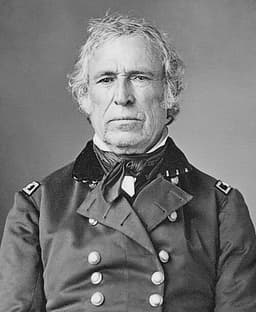
Zachary Taylor
General · Modern
48.1Total
Basic Information
Born
1874
1784
Died
1939
1850
Era
Modern
Modern
Nationality
China
United States
Occupation
General
General
Civilization
Eastern
Western
Score Comparison
Military (10%)
74.7
63.3
Political (20%)
68.0
29.3
Influence (20%)
58.0
53.3
Legacy (20%)
50.0
44.2
Leadership (15%)
62.0
48.4
Strategy (15%)
66.3
57.5
TOTAL
60.6
48.1
Wu Peifu — Complete Timeline
1915 AD
Command of the Third DivisionPolitical Action◆ Major
Wu Peifu was appointed commander of the Third Division of the Beiyang Army under the Zhili clique. He built a reputation as a skilled military strategist and became a key figure in the Zhili faction.
Beiyang ArmyMilitary CommandZhili Clique
Impact: national
1920 AD
Victory in the Zhili-Anhui WarWar◆ Major
Wu Peifu played a decisive role in the Zhili-Anhui War, leading forces that defeated the Anhui clique. His tactical brilliance earned him the nickname 'Jade Marshal' and elevated his status among warlords.
Warlord EraWarVictory
Impact: national
1922 AD
Defeat of Zhang Zuolin in the First Zhili-Fengtian WarWar◆ Major
Wu Peifu commanded Zhili forces to a decisive victory over Zhang Zuolin's Fengtian army in the First Zhili-Fengtian War. This victory made him the most powerful warlord in northern China.
Warlord EraWarVictory
Impact: national
1924 AD
Defeat in the Second Zhili-Fengtian WarWar◆ Major
Wu Peifu's Zhili forces were defeated by the Fengtian clique in the Second Zhili-Fengtian War, partly due to the defection of Feng Yuxiang. This loss ended his dominance and forced him to retreat to central China.
Warlord EraWarDefeat
Impact: nationaltragic
1926 AD
Resistance against the Northern ExpeditionWar◆ Major
Wu Peifu led his remaining forces against the National Revolutionary Army during the Northern Expedition. He was decisively defeated at the Battle of Heshengqiao and lost control of Hubei and Hunan, marking the end of his warlord power.
Northern ExpeditionWarDefeat
Impact: nationaltragic
Zachary Taylor — Complete Timeline
1846 AD
Battle of Palo AltoWar◆ Major
Taylor commanded U.S. forces in the first major battle of the Mexican-American War near present-day Brownsville, Texas. His army defeated Mexican forces under General Mariano Arista, securing the Rio Grande border.
Mexican-American WarBattleMilitary
Impact: regional
1847 AD
Battle of Buena VistaWar◆ Major
Taylor's outnumbered army defeated a larger Mexican force led by Santa Anna at Buena Vista, Coahuila. The victory made Taylor a national hero and boosted his presidential prospects.
Mexican-American WarBattleSanta Anna
Impact: regional
1848 AD
Elected President of the United StatesPolitical Action◆ Major
Taylor won the 1848 presidential election as the Whig candidate, defeating Democrat Lewis Cass and Free Soil candidate Martin Van Buren. His military fame and ambiguous stance on slavery secured victory.
PresidencyElectionWhig Party
Impact: national
1850 AD
Threatened to Veto Compromise of 1850Political Action◆ Major
Taylor opposed the Compromise of 1850, threatening to veto it and even to lead troops against secessionists. His death in July 1850 removed the main obstacle to the compromise's passage.
Compromise of 1850SlaverySecession
Impact: national
Died in OfficeOther◆ Major
Taylor died suddenly on July 9, 1850, after a brief illness likely caused by gastroenteritis. His death elevated Millard Fillmore to the presidency, who then signed the Compromise of 1850.
DeathPresidential Succession
Impact: nationaltragic
Expert Analysis
Origins
Wu Peifu (1874-1939) was born in Penglai, Shandong Province, China, into a scholarly family. His father, a minor official, died when Wu was young, leaving the family in modest circumstances. Wu passed the imperial civil service examinations at the county level but failed the provincial exams, leading him to enroll in the Beiyang Military Academy in 1902. He graduated in 1904 and served in the Qing New Army, gaining experience under Yuan Shikai.
Zachary Taylor (1784-1850) was born in Orange County, Virginia, into a prominent planter family. His father, Richard Taylor, served in the American Revolution. The family moved to Kentucky when Taylor was young. He received a limited formal education but learned surveying and frontier skills. In 1808, he obtained a commission as a first lieutenant in the U.S. Army through family connections.
Rise to Power
Wu Peifu's rise began within the Beiyang Army. He served under Cao Kun, a key figure in the Zhili clique. In 1920, during the Zhili-Anhui War, Wu commanded the Third Division and played a decisive role in defeating the Anhui clique. His tactical brilliance earned him the nickname “Jade Marshal.” In 1922, he led Zhili forces to victory in the First Zhili-Fengtian War against Zhang Zuolin, becoming the most powerful warlord in northern China.
Zachary Taylor rose through the ranks during the War of 1812, the Black Hawk War, and the Second Seminole War. His major breakthrough came during the Mexican-American War (1846-1848). In 1846, he won the Battle of Palo Alto and the Battle of Resaca de la Palma. His greatest victory came at the Battle of Buena Vista in 1847, where his outnumbered army defeated a larger Mexican force under Santa Anna. This victory made him a national hero and propelled him to the presidency in 1848.
Leadership & Governance
Wu Peifu governed the territories under his control with a focus on order and Confucian values. He attempted to restore traditional Chinese governance, suppressing banditry and promoting education. However, his reliance on military force and inability to form lasting alliances undermined his rule. He scored 68.0 in political ability, reflecting his limited success in unifying China.
Zachary Taylor's presidency (1849-1850) was short and contentious. He advocated for the admission of California as a free state and opposed the Compromise of 1850, threatening to veto it and even to lead troops against secessionists. His leadership was characterized by a strong stance against Southern secession, but his abrupt death in 1850 ended his influence. His political score of 29.3 reflects his brief and largely unfulfilled presidency.
Triumph & Tragedy
Wu Peifu's greatest triumph was his victory in the First Zhili-Fengtian War, which established him as the dominant figure in northern China. His military score of 74.7 reflects his tactical acumen. However, his tragedy came in the Second Zhili-Fengtian War (1924), when the defection of Feng Yuxiang led to his defeat. He never recovered and was eventually defeated by the National Revolutionary Army during the Northern Expedition in 1926-1927.
Zachary Taylor's triumph was his victory at Buena Vista, which secured his reputation as a military hero. His military score of 63.3 reflects his solid but not exceptional performance. His tragedy was his death in office, which removed the main obstacle to the Compromise of 1850, a series of laws that temporarily delayed the Civil War but also strengthened the Fugitive Slave Act. His legacy as president is limited due to his short tenure.
Character & Destiny
Wu Peifu was known for his personal integrity and adherence to traditional Confucian principles. He was a skilled strategist but politically naive, often failing to secure alliances or anticipate betrayals. His character led to his downfall when he trusted Feng Yuxiang, who later defected. His destiny was to be a transitional figure in China's chaotic warlord period.
Zachary Taylor was known for his informal leadership style and lack of political experience. He was decisive and stubborn, as seen in his opposition to the Compromise of 1850. His character shaped his presidency, but his sudden death prevented him from fully implementing his policies. Historians assess him as a well-intentioned but ineffective president.
Legacy
Wu Peifu's legacy is mixed. He is remembered as a capable military commander but a failed unifier. His scores reflect this: Influence 58.0, Legacy 50.0. He did not establish lasting institutions, and his defeat paved the way for the rise of the Kuomintang. In China, he is often seen as a representative of the warlord era's futility.
Zachary Taylor's legacy is primarily as a military hero. His presidency is considered below average due to its brevity and lack of achievement. His influence score of 53.3 and legacy score of 44.2 reflect his limited impact. However, his stance against secession is noted by historians as a principled position that foreshadowed the Civil War.
Conclusion
Wu Peifu had a greater impact in military and political terms compared to Zachary Taylor. Wu's military score of 74.7 and total score of 60.6 exceed Taylor's 63.3 and 48.1 respectively. Wu commanded larger armies, influenced a broader region, and his actions shaped the trajectory of Chinese history during the warlord period. Taylor's impact was more limited to a single war and a short presidency. While both faced ultimate defeat, Wu's role in China's transition from empire to republic was more significant. Therefore, Wu Peifu holds a higher place in historical impact.
Rankings
🥇
Wu PeifuLeader
Mil: 74.7Pol: 68.0Inf: 58.0
60.6
🥈
Zachary Taylor
Mil: 63.3Pol: 29.3Inf: 53.3
48.1
+12.5 behind
How This Comparison Works
Algorithm
Each figure is scored on 6 dimensions (0—100 scale) based on structured historical data: Military (10%), Political (20%), Influence (20%), Legacy (20%), Leadership (15%), Strategy (15%). The weighted total produces the final ranking.
Data Sources
Scores are computed from structured sub-indicators in the database. Scale factors adjust for era (Ancient ×0.85, Modern ×1.0) and civilization size (Eastern ×1.05, Other ×0.80) to account for differences in population and military scale.
Maximum 3 Figures
Comparisons are limited to 2—3 figures to ensure readability and statistical meaningfulness.
Error Margins
±5 points per dimension — Sub-scores are derived from historical records with inherent uncertainty. Two figures within 5 points on a dimension should be considered roughly equivalent in that area.
Total Score Accuracy
±3 points overall — The weighted combination of 6 dimensions produces a total score with approximately ±3 points of uncertainty. Differences of less than 3 points are not statistically significant— the figures are effectively tied.
Known Limitations
- Historical records are incomplete and uneven across civilizations
- Figures from oral-tradition societies may be underrepresented
- Occupation labels can misclassify multi-role figures
- Scores measure capability and impact, not moral character
- Quantitative scoring is a comparison tool, not absolute truth
Capability Radar
Military (10%) — Battles & Warfare
Battles
75
65
Win Rate
70
70
Expansion
65
55
Political (20%) — Governance & Reform
Reform
40
10
Diplomacy
50
20
Economy
35
10
Influence (20%) — Cultural & Global Reach
Cultural
45
30
Global
35
20
Legacy (20%) — Historical Impact
Historical
55
40
Longevity
40
25
Leadership (15%) — Power & Stability
Tenure
55
15
Stability
30
25
Strategy (15%) — Tactics & Innovation
Strategy
75
65
Tactics
80
60
Reform
60
20
Similar Comparisons
Comments & Discussion
No comments yet. Be the first to share your thoughts!