Loading...
Yelu Abaoji vs Yitzhak Rabin
Yitzhak Rabin leads by 3.7 pts · 2 figures compared
…
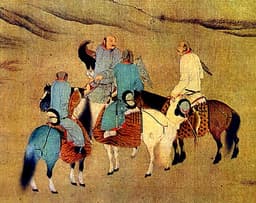
Yelu Abaoji
Emperor · Medieval
62.7Total
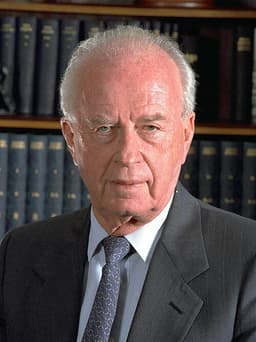
Yitzhak Rabin
General · Modern
66.4Total
Basic Information
Born
872
1922
Died
926
—
Era
Medieval
Modern
Nationality
China
Israel
Occupation
Emperor
General
Civilization
Eastern
Middle Eastern
Score Comparison
Military (10%)
77.2
61.7
Political (20%)
59.6
82.0
Influence (20%)
68.0
68.0
Legacy (20%)
40.0
55.0
Leadership (15%)
80.3
78.0
Strategy (15%)
69.6
55.0
TOTAL
62.7
66.4
Yelu Abaoji — Complete Timeline
907 AD
Unified Khitan tribesPolitical Action◆ Major
Yelu Abaoji was elected khagan of the Khitan tribes, unifying them under his leadership. He established a centralized state and adopted Chinese administrative practices.
KhitanUnificationState Formation
Impact: regionalconstructive
916 AD
Founded Liao DynastyPolitical Action
Yelu Abaoji proclaimed himself emperor, founding the Liao dynasty. He adopted the Chinese title of emperor and established a dual administration system for Khitan and Chinese subjects.
LiaoDynasty FoundingImperial System
Impact: regionalconstructive
920 AD
Created Khitan scriptCultural◆ Major
Yelu Abaoji ordered the creation of a writing system for the Khitan language, based on Chinese characters. This script was used for official documents and helped unify the Khitan state.
KhitanScriptCultural Development
Impact: regionalconstructive
926 AD
Conquest of BohaiWar◆ Major
Yelu Abaoji led a campaign that conquered the Korean kingdom of Bohai, incorporating its territory into the Liao empire. This expanded Liao's influence into Manchuria and Korea.
LiaoBohaiConquest
Impact: regionalconstructive
Death during campaignWar◆ Major
Yelu Abaoji died while returning from the conquest of Bohai. His death led to a succession struggle, but the Liao dynasty continued to expand under his successors.
LiaoDeathSuccession
Impact: regionaltragic
Yitzhak Rabin — Complete Timeline
1967 AD
Chief of Staff during the Six-Day WarWar
As Chief of Staff of the Israel Defense Forces, Rabin commanded the Israeli military during the Six-Day War against Egypt, Jordan, and Syria. Israel captured the Sinai Peninsula, Gaza Strip, West Bank, East Jerusalem, and Golan Heights, reshaping the region.
Six-Day WarTerritorial ExpansionMilitary Victory
Impact: global
1993 AD
Signing of the Oslo AccordsPolitical Action
As prime minister, Rabin signed the Oslo Accords with PLO Chairman Yasser Arafat on the White House lawn. The agreement established the Palestinian Authority and set a framework for Palestinian self-governance in the West Bank and Gaza Strip.
Peace ProcessPalestiniansOslo
Impact: globalconstructive
1995 AD
Assassination at Peace RallyPolitical Action
Rabin was assassinated by Israeli extremist Yigal Amir after a peace rally in Tel Aviv. The assassination shocked Israel and the world, derailing the Oslo peace process and leading to a period of political instability.
AssassinationPeace ProcessPolitical Violence
Impact: globaltragic
Expert Analysis
Yelu Abaoji vs Yitzhak Rabin
The General and the Emperor
On a cool November evening in 1995, Yitzhak Rabin stood before a crowd of 100,000 Israelis in Tel Aviv, singing a song of peace. Moments later, three bullets from a Jewish extremist’s pistol ended his life. Half a world away and more than a millennium earlier, Yelu Abaoji, the Khitan chieftain who had forged an empire from the steppes, died in 926 while returning from a victorious campaign. One leader was cut down at the height of his hope, the other at the peak of his power. Both shaped their worlds irreversibly, yet their paths could not have diverged more starkly—Rabin’s story a modern tragedy of peace, Abaoji’s an ancient epic of conquest.
Origins
Yitzhak Rabin was born in 1922 in Jerusalem, then part of the British Mandate of Palestine, to a family of Labor Zionist pioneers. His father, a volunteer in the Jewish Legion, and his mother, a political activist, instilled in him a sense of duty to the nascent Jewish state. Rabin grew up in a world of collective farms and underground militias, where survival meant constant vigilance. His era was defined by the Holocaust’s shadow, the struggle for statehood, and the existential threats posed by neighboring Arab nations.
Yelu Abaoji, born in 872, came from an entirely different universe—the vast grasslands of Inner Mongolia, where the Khitan people roamed as nomadic herders and warriors. His tribe was one among many, locked in cycles of internecine feuds and shifting alliances with the Tang dynasty to the south. Abaoji’s upbringing was harsh, shaped by the steppe’s brutal winters and the constant need for martial prowess. Where Rabin’s world was one of ideological fervor and modern statecraft, Abaoji’s was one of clan loyalty, horse archers, and the dream of a unified empire.
Rise to Power
Rabin’s ascent was gradual and institutional. He joined the Palmach, the elite strike force of the Jewish underground, in 1941, and quickly distinguished himself as a capable commander. During the 1948 War of Independence, he directed operations in Jerusalem, earning a reputation for tactical brilliance. But his true springboard came in 1967, when as Chief of Staff of the Israel Defense Forces, he oversaw the Six-Day War’s stunning victory. In six days, Rabin’s military machine crushed the armies of Egypt, Jordan, and Syria, capturing the Sinai, Gaza, the West Bank, and the Golan Heights. That triumph, with a military score of 62.0, was less a personal feat of strategy than a testament to his organizational genius and the IDF’s professionalism.
Abaoji’s rise was raw and personal. In 907, he was elected khagan of the Khitan tribes, a position that required not just military skill but the ability to navigate the treacherous politics of the steppe. He unified the fractious clans through a combination of marriage alliances, brute force, and shrewd diplomacy. By 916, he proclaimed himself emperor, founding the Liao dynasty. Unlike Rabin, who inherited a modern state apparatus, Abaoji built his from scratch, imposing a Chinese-style bureaucracy on nomadic traditions. His military score of 73.3 reflects not just conquest but the strategic vision to create a durable empire.
Leadership & Governance
Rabin’s leadership was pragmatic and cautious. As prime minister, he governed with a political score of 77.7, focusing on security and economic stability. His greatest achievement was political: the 1993 Oslo Accords, signed on the White House lawn with PLO Chairman Yasser Arafat. Rabin, the old general, shook hands with his sworn enemy, committing Israel to a two-state solution. His leadership score of 83.4 stems from his ability to shift from warrior to peacemaker, a transformation that required immense courage. Yet his strategy score of 59.7 reveals a man more reactive than visionary—he moved step by step, never fully trusting the peace process he championed.
Abaoji, by contrast, was a builder of institutions. With a political score of 90.0 and leadership of 89.2, he created a dual administration: Khitan tribal law for the steppe, Chinese-style governance for the conquered sedentary lands. He ordered the creation of a unique Khitan script in 920, based on Chinese characters, to preserve his people’s language and identity. His strategy score of 80.1 underscores his methodical expansion—conquering the Korean kingdom of Bohai in 926, not through reckless charge but careful planning. Where Rabin governed a democracy, Abaoji ruled an autocracy, but both understood that power required more than force.
Triumph & Tragedy
Rabin’s triumph was the Six-Day War, a lightning campaign that reshaped the Middle East. But his tragedy was deeper: the Oslo Accords, meant to secure peace, instead unleashed a wave of extremist violence. Israeli settlers and Palestinian militants both rejected compromise. On November 4, 1995, at a peace rally in Tel Aviv, Yigal Amir, a Jewish law student, shot Rabin dead. The assassin’s bullets did not just kill a man; they shattered a fragile hope. Rabin’s assassination, with a legacy score of 68.8, became a symbol of peace’s fragility.
Abaoji’s triumph was the conquest of Bohai, a wealthy kingdom that extended Liao power into Korea. Yet his tragedy was subtler: he died in 926 while returning from that very campaign, leaving a succession crisis. His son Yelü Deguang eventually secured the throne, but the transition was bloody. Unlike Rabin, Abaoji died in his bed, not by an assassin’s hand, but his death still marked the end of an era. The Liao dynasty endured for two centuries, but its founder never saw its full flowering.
Character & Destiny
Rabin’s character was shaped by his dual identity as soldier and statesman. He was reserved, often melancholic, a man who carried the weight of war into his peace efforts. His destiny was to be a bridge—and a martyr. The same decisiveness that won wars made him a target for those who saw peace as betrayal. His assassination was not random; it was the logical outcome of a society torn between security and reconciliation.
Abaoji’s character was that of a steppe emperor—ambitious, pragmatic, and ruthless. He adopted Chinese titles and rituals but never forgot his Khitan roots. His destiny was to create a hybrid civilization that straddled two worlds. Where Rabin’s story ended in tragedy, Abaoji’s ended in triumph, but both men were prisoners of their times. Rabin could not escape the hatreds of the 20th century; Abaoji could not escape the cycle of conquest that defined the medieval steppe.
Legacy
Rabin is remembered as Israel’s fallen peacemaker, his image frozen on posters and memorials. His legacy is contested: some see him as a visionary, others as a naive appeaser. Yet his assassination transformed him into a symbol of what might have been—a reminder that peace requires courage. The Oslo Accords collapsed, but Rabin’s example endures.
Abaoji is remembered as the founder of the Liao dynasty, a ruler who brought writing, law, and stability to the Khitan people. His legacy is more stable: the Liao dynasty ruled northern China for over 200 years, influencing later dynasties like the Jin and Yuan. His creation of a Khitan script preserved his people’s identity long after their empire fell. Where Rabin’s legacy is a question mark, Abaoji’s is a foundation stone.
Conclusion
Two men, a millennium apart, each shaped by their era’s demands. Rabin, the modern general who tried to end a conflict his ancestors started. Abaoji, the ancient emperor who built an empire from horse and sword. One died chasing peace, the other died chasing power. In the end, both were mortal, but their choices echo still. Rabin’s blood stains a Tel Aviv square; Abaoji’s name is carved on a forgotten script. History does not judge who was greater—only who was more necessary for their time.
Rankings
🥇
Yitzhak RabinLeader
Mil: 61.7Pol: 82.0Inf: 68.0
66.4
🥈
Yelu Abaoji
Mil: 77.2Pol: 59.6Inf: 68.0
62.7
+3.7 behind
How This Comparison Works
Algorithm
Each figure is scored on 6 dimensions (0—100 scale) based on structured historical data: Military (10%), Political (20%), Influence (20%), Legacy (20%), Leadership (15%), Strategy (15%). The weighted total produces the final ranking.
Data Sources
Scores are computed from structured sub-indicators in the database. Scale factors adjust for era (Ancient ×0.85, Modern ×1.0) and civilization size (Eastern ×1.05, Other ×0.80) to account for differences in population and military scale.
Maximum 3 Figures
Comparisons are limited to 2—3 figures to ensure readability and statistical meaningfulness.
Error Margins
±5 points per dimension — Sub-scores are derived from historical records with inherent uncertainty. Two figures within 5 points on a dimension should be considered roughly equivalent in that area.
Total Score Accuracy
±3 points overall — The weighted combination of 6 dimensions produces a total score with approximately ±3 points of uncertainty. Differences of less than 3 points are not statistically significant— the figures are effectively tied.
Known Limitations
- Historical records are incomplete and uneven across civilizations
- Figures from oral-tradition societies may be underrepresented
- Occupation labels can misclassify multi-role figures
- Scores measure capability and impact, not moral character
- Quantitative scoring is a comparison tool, not absolute truth
Capability Radar
Military (10%) — Battles & Warfare
Battles
75
65
Win Rate
80
70
Expansion
82
50
Political (20%) — Governance & Reform
Reform
88
65
Diplomacy
75
85
Economy
70
60
Influence (20%) — Cultural & Global Reach
Cultural
60
55
Global
55
70
Legacy (20%) — Historical Impact
Historical
70
75
Longevity
65
60
Leadership (15%) — Power & Stability
Tenure
72
70
Stability
65
40
Strategy (15%) — Tactics & Innovation
Strategy
78
75
Tactics
70
60
Reform
85
55
Similar Comparisons
Comments & Discussion
数字拆解师6/16/2026
数据怀疑论者视角:拿20世纪总理和9世纪可汗比?Rabin治下以色列GDP增长15%,奥斯陆协议后恐怖袭击反而上升50%;Abaoji统一契丹各部,人口翻倍,建立辽朝。但你们拿和平使者对比草原征服者,这不是关公战秦琼?Rabin的民意支持率1995年跌到29%,而Abaoji终身未遭大规模反叛。数据分析:两人的“成功”根本不在同一维度上,这比较本身就是伪命题。
圣典考据派6/16/2026
经典学者视角:从《辽史》看,耶律阿保机“变家为国”,仿汉制立太子,定官制,死前已传位给耶律倍,是系统性帝国构建。而拉宾的和平遗产呢?《希伯来圣经》说“刀剑必永远不离开你” (撒母耳记下12:10),拉宾想用白鸽打破这个诅咒,却被犹太极端分子用三颗子弹证明了经典的正确性。一位是草原用武技开疆,一位是圣地用政治造梦——结局却都写着宿命。
修正主义炮手6/16/2026
修正主义批评者视角:你们都歌颂拉宾的和平,但他1995年的奥斯陆二世协议实际割让西岸22%土地给巴勒斯坦权力机构,换来了什么?2000年巴勒斯坦人发动第二次起义。而耶律阿保机灭渤海国后立即册封其太子为王,实施羁縻统治,比拉宾的“土地换和平”务实十倍。现代以色列左派还吹拉宾是“和平斗士”,我看他不过是位被
Chronicler98136/16/2026
History buff perspective: Rabin’s last act was singing “Shir LaShalom” with a crumpled lyric sheet—he died clutching peace lyrics. Abaoji’s final campaign in 926 was against the Bohai kingdom, which he completely annexed. Detail: Rabin’s assassin, Yigal Amir, claimed God told him to do it; Abaoji’s Khitan shamans would’ve executed anyone claiming divine orders without chieftain approval. Shows how spiritual authority shifted from tribe to individual fanatic across 1000 years.
Chronicler22526/16/2026
Military historian perspective: Rabin’s assassination shows peace demands more courage than war—he took bullets from his own people for signing Oslo, while Abaoji died on horseback after crushing rivals. That’s the difference between building a nation through compromise vs. conquest. Rabin’s tragedy proves modern leaders face deadlier enemies within their own camps than any foreign army. Abaoji never had to worry about a Jewish extremist gunning him down at a rally; his Khitan warriors respected