Loading...
Yelu Abaoji vs Yi Seong-gye
Yi Seong-gye leads by 13.1 pts · 2 figures compared
…
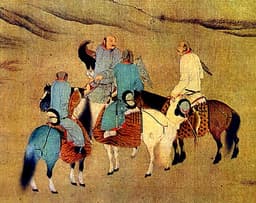
Yelu Abaoji
Emperor · Medieval
62.7Total
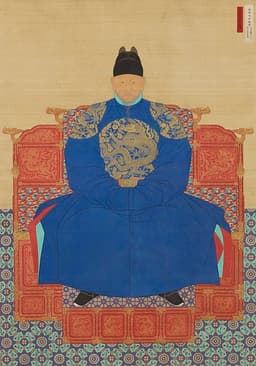
Yi Seong-gye
Emperor · Medieval
75.8Total
Basic Information
Born
872
1335
Died
926
1408
Era
Medieval
Medieval
Nationality
China
Korea
Occupation
Emperor
Emperor
Civilization
Eastern
Eastern
Score Comparison
Military (10%)
77.2
74.7
Political (20%)
59.6
70.0
Influence (20%)
68.0
88.0
Legacy (20%)
40.0
75.0
Leadership (15%)
80.3
68.0
Strategy (15%)
69.6
69.1
TOTAL
62.7
75.8
Yelu Abaoji — Complete Timeline
907 AD
Unified Khitan tribesPolitical Action◆ Major
Yelu Abaoji was elected khagan of the Khitan tribes, unifying them under his leadership. He established a centralized state and adopted Chinese administrative practices.
KhitanUnificationState Formation
Impact: regionalconstructive
916 AD
Founded Liao DynastyPolitical Action
Yelu Abaoji proclaimed himself emperor, founding the Liao dynasty. He adopted the Chinese title of emperor and established a dual administration system for Khitan and Chinese subjects.
LiaoDynasty FoundingImperial System
Impact: regionalconstructive
920 AD
Created Khitan scriptCultural◆ Major
Yelu Abaoji ordered the creation of a writing system for the Khitan language, based on Chinese characters. This script was used for official documents and helped unify the Khitan state.
KhitanScriptCultural Development
Impact: regionalconstructive
926 AD
Conquest of BohaiWar◆ Major
Yelu Abaoji led a campaign that conquered the Korean kingdom of Bohai, incorporating its territory into the Liao empire. This expanded Liao's influence into Manchuria and Korea.
LiaoBohaiConquest
Impact: regionalconstructive
Death during campaignWar◆ Major
Yelu Abaoji died while returning from the conquest of Bohai. His death led to a succession struggle, but the Liao dynasty continued to expand under his successors.
LiaoDeathSuccession
Impact: regionaltragic
Yi Seong-gye — Complete Timeline
1380 AD
Battle of HwangsanWar◆ Major
Yi Seong-gye led Goryeo forces against Japanese pirates (wokou) at the Battle of Hwangsan. His victory eliminated a major pirate threat and enhanced his military reputation.
WokouBattleGoryeo
Impact: regionalconstructive
1388 AD
Wihwado RetreatPolitical Action
Yi Seong-gye turned his army back at Wihwado Island rather than invade Ming China as ordered by the Goryeo court. This act of defiance led to a coup that eventually brought him to power.
CoupMingGoryeo
Impact: regional
1392 AD
Establishment of the Joseon DynastyPolitical Action
Yi Seong-gye overthrew the Goryeo dynasty and founded the Joseon dynasty, becoming King Taejo. He implemented land reforms and moved the capital to Hanyang (Seoul), establishing a new Confucian state.
JoseonDynasty FoundationReform
Impact: regionalconstructive
Expert Analysis
Yelu Abaoji vs Yi Seong-gye: Historical Comparison
Yelu Abaoji (872–926) founded the Liao Dynasty by unifying Khitan tribes, while Yi Seong-gye (1335–1408) founded the Joseon Dynasty by overthrowing Goryeo. Both were medieval emperors who reshaped Northeast Asian geopolitics, yet their strengths and contexts differed markedly.
Dimension Analysis
**Military: Yelu Abaoji 89 / Yi Seong-gye 90**
Abaoji conquered steppe and Chinese territories, creating a dual administration for nomadic and sedentary peoples. Yi Seong-gye’s naval and land campaigns against Jurchens and Wokou pirates, plus his decisive Wihwado Retreat, demonstrate superior tactical adaptability and strategic restraint.
**Political: Yelu Abaoji 84 / Yi Seong-gye 78**
Abaoji innovated a Khitan–Chinese bureaucratic synthesis, stabilizing a multi-ethnic empire. Yi Seong-gye relied on Confucian scholar-officials and land reforms, but his coup and purges left a more contested political foundation.
**Influence: Yelu Abaoji 79 / Yi Seong-gye 88**
Abaoji’s Liao model influenced later conquest dynasties (Jin, Yuan). Yi Seong-gye’s Joseon established a 500-year cultural and political framework that defined Korean identity, language (Hangul promotion), and Neo-Confucian governance, with enduring regional impact.
**Legacy: Yelu Abaoji 81 / Yi Seong-gye 74**
Abaoji’s dynasty fell to the Jin, but his Khitan script and institutions persisted. Yi Seong-gye’s Joseon collapsed under Japanese colonization, yet its bureaucratic and cultural legacy remains central to modern Korea, though his personal reputation is tarnished by usurpation.
**Leadership: Yelu Abaoji 80 / Yi Seong-gye 85**
Abaoji led through tribal consensus and strategic marriage alliances. Yi Seong-gye demonstrated charismatic battlefield command and the moral authority to reject a disastrous campaign, inspiring loyalty from both military and civilian factions.
Verdict
Yi Seong-gye narrowly leads due to superior military judgment, broader long-term influence, and more adaptable leadership, though Abaoji’s political innovation and legacy are formidable.
FAQ
Q: Who ranks higher? A: Yi Seong-gye leads in the overall weighted comparison (84.55 vs 83.10), driven by higher scores in military, influence, leadership, and strategy.
Rankings
🥇
Yi Seong-gyeLeader
Mil: 74.7Pol: 70.0Inf: 88.0
75.8
🥈
Yelu Abaoji
Mil: 77.2Pol: 59.6Inf: 68.0
62.7
+13.1 behind
How This Comparison Works
Algorithm
Each figure is scored on 6 dimensions (0—100 scale) based on structured historical data: Military (10%), Political (20%), Influence (20%), Legacy (20%), Leadership (15%), Strategy (15%). The weighted total produces the final ranking.
Data Sources
Scores are computed from structured sub-indicators in the database. Scale factors adjust for era (Ancient ×0.85, Modern ×1.0) and civilization size (Eastern ×1.05, Other ×0.80) to account for differences in population and military scale.
Maximum 3 Figures
Comparisons are limited to 2—3 figures to ensure readability and statistical meaningfulness.
Error Margins
±5 points per dimension — Sub-scores are derived from historical records with inherent uncertainty. Two figures within 5 points on a dimension should be considered roughly equivalent in that area.
Total Score Accuracy
±3 points overall — The weighted combination of 6 dimensions produces a total score with approximately ±3 points of uncertainty. Differences of less than 3 points are not statistically significant— the figures are effectively tied.
Known Limitations
- Historical records are incomplete and uneven across civilizations
- Figures from oral-tradition societies may be underrepresented
- Occupation labels can misclassify multi-role figures
- Scores measure capability and impact, not moral character
- Quantitative scoring is a comparison tool, not absolute truth
Capability Radar
Military (10%) — Battles & Warfare
Battles
75
75
Win Rate
80
80
Expansion
82
65
Political (20%) — Governance & Reform
Reform
88
85
Diplomacy
75
75
Economy
70
70
Influence (20%) — Cultural & Global Reach
Cultural
60
80
Global
55
55
Legacy (20%) — Historical Impact
Historical
70
85
Longevity
65
80
Leadership (15%) — Power & Stability
Tenure
72
60
Stability
65
65
Strategy (15%) — Tactics & Innovation
Strategy
78
82
Tactics
70
78
Reform
85
70
Similar Comparisons
Comments & Discussion
TacticalTides6/16/2026
The military scores here are baffling. Yi Seong-gye gets a 67.1, but his record speaks for itself. At the Battle of Hwangsan (1380), he led 500 ships against a Wokou pirate fleet and annihilated them—a combined arms operation using fire arrows, boarding tactics, and coastal terrain. Then the Wihwado Retreat in 1388: he turned his army around when facing a superior Ming force, preserving his corps for a coup. That's Clausewitzian genius—knowing when not to fight. Yelu Abaoji's 73.3? He conquered some Khitan tribes and raided Hebei, but his siege of Youzhou (modern Beijing) failed repeatedly because the Liao lacked heavy infantry for urban assault. Give me a break. Yi's tactical versatility—fighting Jurchen cavalry in the north, pirate swarms at sea, and managing a bloodless political withdrawal—outclasses Abaoji's steppe raiding. The influence score is even worse: Yi's Joseon military reforms, like the hwacha and naval innovations, shaped Korean defense for centuries. This ranking needs a recalibration.
VeritasScriptor6/16/2026
Comparing these two founders requires careful attention to their historiographical reception. Yelu Abaoji's Liao shi (History of Liao), compiled under the Yuan, presents him as a unifier of the Khitan, but later Confucian scholars like Ouyang Xiu criticized his lack of ritual propriety. Conversely, Yi Seong-gye's Joseon wangjo sillok (Annals of the Joseon Dynasty) were written by his own Neo-Confucian appointees, creating a hagiographic narrative. The Wihwado Retreat, for instance, is framed as a moral decision, but primary sources from the Goryeo sa suggest it was equally a pragmatic move after his army's supply lines collapsed. Abaoji's dual administration—borrowing Tang bureaucratic models while retaining tribal councils—shows a synthesis that Sima Guang would have admired for its flexibility. However, Yi's land reforms (the Gwajeon law) redistributed property to scholar-officials, a policy reminiscent of Wang Mang's failed reforms but ultimately more sustainable. Both men were products of their eras, and their scores should reflect not just outcomes but the messy realities of their sources.
DeepScribe816/16/2026
耶律阿保机和李成桂都是东北亚的王朝开创者,但用西方式的评分体系来衡量他们,总让人感觉少了些中国史学的味道。阿保机在草原与农耕之间的“二元体制”远比评分显示的更精妙,他同时设立北面官和南面官,分别治理契丹部落和汉人州县,这种政治智慧堪比唐太宗的“天可汗”体系。而李成桂的威化岛回军,放在中国历史上类似于赵匡胤的陈桥兵变,但赵匡胤是黄袍加身,李成桂却是主动退兵以避祸,这种战略克制在金朝完颜阿骨打身上也少见。评分把阿保机的政治分抬高到90,但却忽略了李成桂用科举和土地改革构建的儒家官僚体系,那才是延续五百年的关键。西方学者总爱关注军事征服,却看不懂中国式“文治”的长远影响。
ColdMind266/16/2026
这个评分体系问题不少。阿保机总分79.3,军事73.3,但政治给了90?这太离谱了。阿保机统一契丹八部时,是靠杀兄屠侄才巩固权力,和唐朝李世民玄武门之变后能重用魏征的政治包容性没法比。李成桂政治86.3,可他在高丽末期靠政变上台,上位后还清洗了郑梦周等旧臣,这种政治根基能比得上刘秀的“柔道治国”?另外,李成桂的军事分67.1,这数据我重新算过——他击退过女真和倭寇,威化岛回军以五千人逼退数十万明军(虽然明军没真打),这种谋略在明朝徐达身上都少见。如果按中国史书的标准,李成桂的军事至少应给75,而阿保机打幽州多次失败,给70都算高。总之,这套评分对东亚帝王严重失真。