Loading...
This comparison has not been analyzed yet.
One-time AI generation (~1 minute). Scores and timeline are already available below.
Yaqub al-Mansur vs Yongle Emperor
Yongle Emperor leads by 12.1 pts · 2 figures compared
…
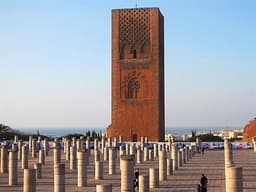
Yaqub al-Mansur
Emperor · Medieval
61.6Total
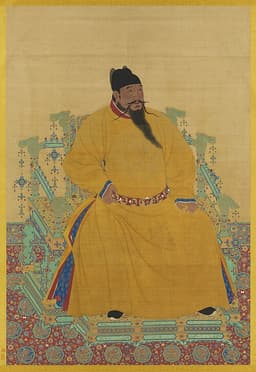
Yongle Emperor
Emperor · Medieval
73.7Total
Basic Information
Born
1160
1360
Died
1199
1424
Era
Medieval
Medieval
Nationality
Almohad Caliphate
China
Occupation
Emperor
Emperor
Civilization
Middle Eastern
Eastern
Score Comparison
Military (10%)
82.0
85.0
Political (20%)
62.7
78.0
Influence (20%)
55.0
75.0
Legacy (20%)
54.0
65.0
Leadership (15%)
68.0
78.0
Strategy (15%)
65.4
68.0
TOTAL
61.6
73.7
Yaqub al-Mansur — Complete Timeline
1184 AD
Accession as CaliphPolitical Action◆ Major
Yaqub al-Mansur succeeded his father Abu Yaqub Yusuf as Almohad caliph after the latter's death in battle. He inherited a stable empire and immediately faced challenges from Christian kingdoms in Iberia and internal Berber revolts.
Almohad CaliphateSuccessionDynasty
Impact: regional
1195 AD
Battle of AlarcosWar
Yaqub al-Mansur defeated King Alfonso VIII of Castile at the Battle of Alarcos in central Iberia. The Almohad victory was decisive, forcing Castile to sue for peace and halting Christian expansion for over a decade.
AlarcosAlmohad VictoryReconquista
Impact: regionalconstructive
1197 AD
Construction of the Koutoubia MosqueCultural◆ Major
Yaqub al-Mansur commissioned the expansion and completion of the Koutoubia Mosque in Marrakesh. The mosque became a masterpiece of Almohad architecture, featuring a 77-meter minaret that served as a model for later structures like the Giralda in Seville.
ArchitectureKoutoubiaAlmohad Culture
Impact: regionalconstructive
Peace Treaty with CastilePolitical Action◆ Major
After the Battle of Alarcos, Yaqub al-Mansur negotiated a truce with Alfonso VIII of Castile. The treaty secured Almohad control over central Iberia and established a period of peace that allowed the caliph to focus on internal consolidation.
DiplomacyTruceAlmohad-Castile Relations
Impact: regionalconstructive
1198 AD
Suppression of Berber RevoltsWar
Yaqub al-Mansur crushed a series of revolts by Berber tribes in the Atlas Mountains and the Sahara. He executed rebel leaders and reasserted Almohad authority, but the campaigns drained the treasury and sowed resentment among the Berber population.
Berber RevoltAlmohad RepressionInternal Conflict
Impact: regionaldestructive
Yongle Emperor — Complete Timeline
1399 AD
Jingnan CampaignWar◆ Major
Zhu Di, Prince of Yan, launched a rebellion against his nephew the Jianwen Emperor. After three years of civil war, Zhu Di captured Nanjing and usurped the throne, becoming the Yongle Emperor.
Civil warUsurpationMing dynasty
Impact: nationaldestructive
1405 AD
Commissioning of the Zheng He voyagesCultural◆ Major
Yongle commissioned Admiral Zheng He to lead a series of maritime expeditions across the Indian Ocean. The treasure fleets visited Southeast Asia, India, the Middle East, and East Africa, projecting Ming power and establishing tributary relations.
Maritime explorationDiplomacyZheng He
Impact: globalconstructive
1407 AD
Conquest of AnnamWar◆ Major
Yongle sent Ming armies to invade Annam (northern Vietnam) after a succession dispute. The Ming annexed the region as the province of Jiaozhi, but faced prolonged resistance from Vietnamese forces.
InvasionVietnamMing expansion
Impact: regionaldestructive
1408 AD
Compilation of the Yongle EncyclopediaCultural◆ Major
Yongle ordered the compilation of the Yongle Encyclopedia, a massive collection of Chinese knowledge. The work comprised over 11,000 volumes and 370 million characters, covering history, philosophy, science, and literature.
EncyclopediaCultural projectScholarship
Impact: globalconstructive
1410 AD
Campaigns against the MongolsWar◆ Major
Yongle personally led five military campaigns into the Mongolian steppe against the remnants of the Yuan dynasty. These expeditions aimed to neutralize the Mongol threat to the northern border and assert Ming dominance.
Military campaignsMongolsBorder security
Impact: regional
1421 AD
Relocation of the capital to BeijingPolitical Action◆ Major
Yongle formally moved the Ming capital from Nanjing to Beijing. He ordered the construction of the Forbidden City and expanded the city's defenses, shifting the political center of China northward.
Capital relocationUrban planningForbidden City
Impact: nationalconstructive
This comparison has not been analyzed yet.
One-time AI generation (~1 minute). Scores and timeline are already available below.
Rankings
🥇
Yongle EmperorLeader
Mil: 85.0Pol: 78.0Inf: 75.0
73.7
🥈
Yaqub al-Mansur
Mil: 82.0Pol: 62.7Inf: 55.0
61.6
+12.1 behind
How This Comparison Works
Algorithm
Each figure is scored on 6 dimensions (0—100 scale) based on structured historical data: Military (10%), Political (20%), Influence (20%), Legacy (20%), Leadership (15%), Strategy (15%). The weighted total produces the final ranking.
Data Sources
Scores are computed from structured sub-indicators in the database. Scale factors adjust for era (Ancient ×0.85, Modern ×1.0) and civilization size (Eastern ×1.05, Other ×0.80) to account for differences in population and military scale.
Maximum 3 Figures
Comparisons are limited to 2—3 figures to ensure readability and statistical meaningfulness.
Error Margins
±5 points per dimension — Sub-scores are derived from historical records with inherent uncertainty. Two figures within 5 points on a dimension should be considered roughly equivalent in that area.
Total Score Accuracy
±3 points overall — The weighted combination of 6 dimensions produces a total score with approximately ±3 points of uncertainty. Differences of less than 3 points are not statistically significant— the figures are effectively tied.
Known Limitations
- Historical records are incomplete and uneven across civilizations
- Figures from oral-tradition societies may be underrepresented
- Occupation labels can misclassify multi-role figures
- Scores measure capability and impact, not moral character
- Quantitative scoring is a comparison tool, not absolute truth
Capability Radar
Military (10%) — Battles & Warfare
Battles
75
85
Win Rate
80
90
Expansion
70
80
Political (20%) — Governance & Reform
Reform
60
90
Diplomacy
65
85
Economy
60
85
Influence (20%) — Cultural & Global Reach
Cultural
60
85
Global
55
75
Legacy (20%) — Historical Impact
Historical
65
85
Longevity
50
80
Leadership (15%) — Power & Stability
Tenure
70
85
Stability
55
80
Strategy (15%) — Tactics & Innovation
Strategy
75
85
Tactics
70
80
Reform
65
75
Similar Comparisons
Comments & Discussion
No comments yet. Be the first to share your thoughts!