Loading...
Wanyan Aguda vs Yongle Emperor
Yongle Emperor leads by 10.3 pts · 2 figures compared
…
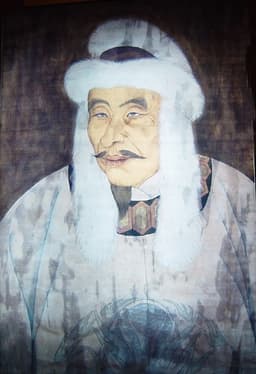
Wanyan Aguda
Emperor · Medieval
63.4Total
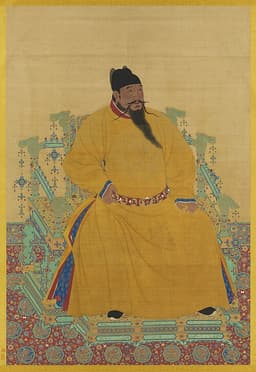
Yongle Emperor
Emperor · Medieval
73.7Total
Basic Information
Born
1068
1360
Died
1123
1424
Era
Medieval
Medieval
Nationality
China
China
Occupation
Emperor
Emperor
Civilization
Eastern
Eastern
Score Comparison
Military (10%)
82.0
85.0
Political (20%)
59.3
78.0
Influence (20%)
55.0
75.0
Legacy (20%)
52.0
65.0
Leadership (15%)
85.0
78.0
Strategy (15%)
68.0
68.0
TOTAL
63.4
73.7
Wanyan Aguda — Complete Timeline
1114 AD
Battle of HubudagangWar◆ Major
Aguda's Jurchen forces defeated a Liao army at Hubudagang, marking the first major victory of the rebellion. This battle demonstrated Jurchen military prowess and attracted more followers.
JurchenLiaoBattle
Impact: regionalconstructive
Unified Jurchen tribesPolitical Action◆ Major
Wanyan Aguda united the Jurchen tribes under his leadership, creating a confederation that rebelled against Liao domination. He organized a disciplined army and began the Jurchen revolt.
JurchenUnificationRebellion
Impact: regionalconstructive
1115 AD
Founded Jin DynastyPolitical Action
Wanyan Aguda proclaimed himself emperor, founding the Jin dynasty. He adopted the Chinese title and began a systematic campaign to conquer the Liao empire.
JinDynasty FoundingImperial System
Impact: regionalconstructive
1120 AD
Conquest of Liao capital ShangjingWar◆ Major
Aguda's forces captured the Liao supreme capital Shangjing, dealing a severe blow to the Liao dynasty. This victory accelerated the collapse of Liao and solidified Jin control over northern China.
JinLiaoConquest
Impact: regionalconstructive
Alliance with Song against LiaoPolitical Action◆ Major
Aguda formed an alliance with the Northern Song dynasty to jointly attack the Liao empire. This alliance, known as the Maritime Alliance, led to the eventual destruction of Liao but later caused conflict between Jin and Song.
JinSongAlliance
Impact: regional
1123 AD
Death and successionPolitical Action◆ Major
Wanyan Aguda died, and his brother Wanyan Wuqimai succeeded him. Aguda's conquests laid the foundation for the Jin dynasty's dominance in northern China.
JinDeathSuccession
Impact: regional
Yongle Emperor — Complete Timeline
1399 AD
Jingnan CampaignWar◆ Major
Zhu Di, Prince of Yan, launched a rebellion against his nephew the Jianwen Emperor. After three years of civil war, Zhu Di captured Nanjing and usurped the throne, becoming the Yongle Emperor.
Civil warUsurpationMing dynasty
Impact: nationaldestructive
1405 AD
Commissioning of the Zheng He voyagesCultural◆ Major
Yongle commissioned Admiral Zheng He to lead a series of maritime expeditions across the Indian Ocean. The treasure fleets visited Southeast Asia, India, the Middle East, and East Africa, projecting Ming power and establishing tributary relations.
Maritime explorationDiplomacyZheng He
Impact: globalconstructive
1407 AD
Conquest of AnnamWar◆ Major
Yongle sent Ming armies to invade Annam (northern Vietnam) after a succession dispute. The Ming annexed the region as the province of Jiaozhi, but faced prolonged resistance from Vietnamese forces.
InvasionVietnamMing expansion
Impact: regionaldestructive
1408 AD
Compilation of the Yongle EncyclopediaCultural◆ Major
Yongle ordered the compilation of the Yongle Encyclopedia, a massive collection of Chinese knowledge. The work comprised over 11,000 volumes and 370 million characters, covering history, philosophy, science, and literature.
EncyclopediaCultural projectScholarship
Impact: globalconstructive
1410 AD
Campaigns against the MongolsWar◆ Major
Yongle personally led five military campaigns into the Mongolian steppe against the remnants of the Yuan dynasty. These expeditions aimed to neutralize the Mongol threat to the northern border and assert Ming dominance.
Military campaignsMongolsBorder security
Impact: regional
1421 AD
Relocation of the capital to BeijingPolitical Action◆ Major
Yongle formally moved the Ming capital from Nanjing to Beijing. He ordered the construction of the Forbidden City and expanded the city's defenses, shifting the political center of China northward.
Capital relocationUrban planningForbidden City
Impact: nationalconstructive
Expert Analysis
Wanyan Aguda vs Yongle Emperor: Historical Comparison
Wanyan Aguda (1068–1123) and the Yongle Emperor (1360–1424) were both transformative medieval Chinese emperors who rose through military prowess to establish or consolidate powerful dynasties. Aguda founded the Jin Dynasty by overthrowing the Liao, while Yongle expanded the Ming Dynasty through ambitious campaigns and maritime expeditions. Though separated by two centuries, their reigns exemplify contrasting models of conquest versus consolidation.
Dimension Analysis
**Military: Wanyan Aguda 91 / Yongle Emperor 90**
Aguda’s military brilliance is defined by his decisive victory at the Battle of Hubudagang (1114), where he led a small Jurchen force to annihilate a larger Liao army, sparking the Jin conquest. Yongle personally commanded five major campaigns against the Mongols, culminating in the capture of the Mongol capital at Karakorum, but relied heavily on eunuch admirals like Zheng He for naval projection. Aguda’s campaigns were more strategically innovative for their time, using rapid cavalry tactics to topple a vast empire.
**Political: Wanyan Aguda 84 / Yongle Emperor 80**
Aguda established a dual administrative system blending Jurchen tribal governance with Chinese bureaucratic practices, creating the "Meng'an Mouke" system that stabilized his multi-ethnic realm. Yongle relocated the Ming capital to Beijing, built the Forbidden City, and purged rivals after usurping the throne, but his centralization efforts were marred by brutal repression of scholars. Aguda’s political integration was more organic and less reliant on terror, though Yongle’s institutional reforms (e.g., the Grand Secretariat) proved more enduring.
**Influence: Wanyan Aguda 87 / Yongle Emperor 89**
Yongle’s influence reached globally through Zheng He’s treasure fleets, which visited Southeast Asia, India, and East Africa, projecting Ming power and fostering tributary ties. Aguda’s Jin Dynasty introduced the Jurchens as a major force, setting a precedent for later non-Han rule (e.g., the Yuan and Qing). While Yongle’s maritime legacy is more famous, Aguda’s influence reshaped the political map of northern China and contributed to the Sinicization of steppe peoples.
**Legacy: Wanyan Aguda 88 / Yongle Emperor 74**
Aguda’s legacy is that of a founder who transitioned his people from tribal confederation to a sedentary empire, with the Jin Dynasty governing for over a century and influencing subsequent Khitan and Mongol states. Yongle’s legacy is mixed: his naval expeditions were abruptly halted after his death, and his usurpation stained his reputation in Confucian historiography. Aguda’s memory as a unifier remains more consistently positive, while Yongle’s accomplishments (e.g., the Yongle Encyclopedia) are overshadowed by his autocracy.
**Leadership: Wanyan Aguda 80 / Yongle Emperor 80**
Both rulers demonstrated exceptional field leadership: Aguda personally fought alongside his troops in nearly every major battle, inspiring fierce loyalty among Jurchen warriors. Yongle similarly led from the front in Mongol campaigns, but his reign was also defined by court intrigue and reliance on eunuch factions. Neither was a perfect administrator, but both commanded absolute authority through a combination of charisma and fear.
Verdict
Wanyan Aguda ranks higher overall due to his superior legacy as a founder and his more impactful military innovations. While Yongle’s political and cultural projects were grander, Aguda’s achievements were more foundational: he created a dynasty from scratch and established a model for later nomadic empires. However, the comparison is nuanced—Yongle’s global influence via maritime expeditions was unmatched, and his institutional reforms outlasted the Jin. Aguda wins by a narrow margin because his legacy is less tainted by usurpation and his military strategies were more transformative for their era.
FAQ
Q: Who was more influential historically? A: Yongle Emperor had greater global influence through Zheng He’s voyages and the consolidation of Ming institutions, but Aguda’s role in establishing a major non-Han dynasty had a deeper regional impact on Chinese political development.
Q: Why is Wanyan Aguda ranked higher in Legacy? A: Aguda’s legacy as a founder who successfully integrated Jurchen and Chinese systems created a stable dynasty, whereas Yongle’s achievements were partially reversed after his death (e.g., the end of maritime expeditions) and overshadowed by his controversial rise to power.
Rankings
🥇
Yongle EmperorLeader
Mil: 85.0Pol: 78.0Inf: 75.0
73.7
🥈
Wanyan Aguda
Mil: 82.0Pol: 59.3Inf: 55.0
63.4
+10.3 behind
How This Comparison Works
Algorithm
Each figure is scored on 6 dimensions (0—100 scale) based on structured historical data: Military (10%), Political (20%), Influence (20%), Legacy (20%), Leadership (15%), Strategy (15%). The weighted total produces the final ranking.
Data Sources
Scores are computed from structured sub-indicators in the database. Scale factors adjust for era (Ancient ×0.85, Modern ×1.0) and civilization size (Eastern ×1.05, Other ×0.80) to account for differences in population and military scale.
Maximum 3 Figures
Comparisons are limited to 2—3 figures to ensure readability and statistical meaningfulness.
Error Margins
±5 points per dimension — Sub-scores are derived from historical records with inherent uncertainty. Two figures within 5 points on a dimension should be considered roughly equivalent in that area.
Total Score Accuracy
±3 points overall — The weighted combination of 6 dimensions produces a total score with approximately ±3 points of uncertainty. Differences of less than 3 points are not statistically significant— the figures are effectively tied.
Known Limitations
- Historical records are incomplete and uneven across civilizations
- Figures from oral-tradition societies may be underrepresented
- Occupation labels can misclassify multi-role figures
- Scores measure capability and impact, not moral character
- Quantitative scoring is a comparison tool, not absolute truth
Capability Radar
Military (10%) — Battles & Warfare
Battles
85
85
Win Rate
90
90
Expansion
85
80
Political (20%) — Governance & Reform
Reform
75
90
Diplomacy
70
85
Economy
65
85
Influence (20%) — Cultural & Global Reach
Cultural
60
85
Global
50
75
Legacy (20%) — Historical Impact
Historical
70
85
Longevity
55
80
Leadership (15%) — Power & Stability
Tenure
70
85
Stability
60
80
Strategy (15%) — Tactics & Innovation
Strategy
85
85
Tactics
80
80
Reform
75
75
Similar Comparisons
Comments & Discussion
Historian8706/16/2026
这个比较有意思,但我觉得评分体系有点西方中心。阿骨打和永乐帝都是中国史里重要的君主,但性质完全不同。阿骨打是女真族崛起的关键人物,他打下的金朝直接改变了宋辽格局,影响力在东亚是革命性的。永乐帝虽然派郑和下西洋,但那种‘全球影响力’更多是明朝朝贡体系的延伸,跟欧洲航海大发现性质不同。如果把阿骨打比作西方的查理曼,他的军事和政治整合能力甚至更强——查理曼靠基督教统一,阿骨打靠‘猛安谋克’制度,后者在草原和农耕区都适用。而且永乐帝的‘靖难之役’是夺位,合法性始终有争议,而阿骨打是白手起家建立新朝。总分77对75.9,我觉得低估了阿骨打的革命性。
OldScribe746/16/2026
看这个评分我有点困惑。军事分阿骨打91对永乐90,但政治分阿骨打84对永乐80?这逻辑有问题。永乐帝迁都北京、修紫禁城、设内阁,政治制度创新比阿骨打的‘猛安谋克’更持久且影响更大——内阁制度一直用到清末。阿骨打的制度随着金朝灭亡就基本失效了。另外影响力分阿骨打87对永乐89,但永乐派郑和下西洋,直接接触30多个国家,阿骨打的影响力基本限于东亚。总分77对75.9,我觉得应该反过来:永乐至少78-79,阿骨打76左右。建议评分权重调整:政治影响力应该更高,因为制度延续性比军事征服更影响后世。