Loading...
Yao Chong vs Zhao Pu
Yao Chong leads by 4.8 pts · 2 figures compared
…

Yao Chong
Politician · Medieval
62.0Total
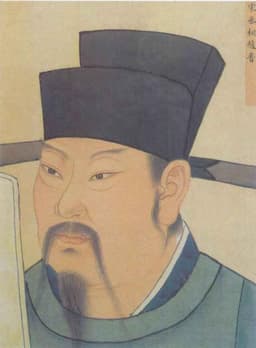
Zhao Pu
Politician · Medieval
57.2Total
Basic Information
Born
650
922
Died
721
992
Era
Medieval
Medieval
Nationality
China
China
Occupation
Politician
Politician
Civilization
Eastern
Eastern
Score Comparison
Military (10%)
24.8
21.4
Political (20%)
85.0
72.0
Influence (20%)
62.0
58.0
Legacy (20%)
56.0
52.0
Leadership (15%)
80.0
78.0
Strategy (15%)
52.3
51.0
TOTAL
62.0
57.2
Yao Chong — Complete Timeline
705 AD
First Appointment as ChancellorPolitical Action◆ Major
Yao Chong was appointed Chancellor under Emperor Zhongzong after the restoration of the Tang dynasty. He served briefly before being demoted due to political infighting, but his administrative skills were already noted.
Tang DynastyChancellorshipZhongzong
Impact: nationalconstructive
713 AD
Implemented the 'Ten Point Policy'Reform
As Chancellor under Emperor Xuanzong, Yao Chong proposed and implemented a ten-point reform program. It included reducing taxes, curbing Buddhist temple influence, promoting frugality, and streamlining the bureaucracy, laying the foundation for the Kaiyuan era prosperity.
Tang DynastyKaiyuan EraReform
Impact: nationalprogressive
714 AD
Suppressed the Buddhist ClergyReform◆ Major
Yao Chong ordered the defrocking of over 12,000 Buddhist monks and nuns who had entered the clergy to evade taxes and corv
Tang DynastyBuddhismEconomic Reform
Impact: nationalconstructive
716 AD
Dismissed as ChancellorPolitical Action◆ Major
Yao Chong was dismissed from the chancellorship after his son and subordinates were implicated in bribery and corruption. Despite his earlier reforms, his inability to control his household led to his downfall, though he remained respected.
Tang DynastyCorruptionPolitical Fall
Impact: nationaldestructive
Zhao Pu — Complete Timeline
960 AD
Advising Emperor Taizu on the unification strategyPolitical Action
Zhao Pu counseled Emperor Taizu of Song to first pacify the south and then attack the north, a strategy that guided the Song conquest of the Ten Kingdoms. This approach prioritized consolidation of core territories before confronting the Liao dynasty.
Song DynastyUnificationStrategy
Impact: nationalconstructive
961 AD
Centralization of military powerReform◆ Major
Zhao Pu advised Emperor Taizu to disband the regional military governors and centralize command under the emperor. This reform reduced the risk of warlordism and strengthened imperial control over the Song military.
Military ReformCentralizationSong Dynasty
Impact: nationalconstructive
965 AD
Implementation of the 'Half the Analects' governanceReform◆ Major
Zhao Pu, as chancellor, promoted a pragmatic governance style based on a simplified reading of Confucian classics, famously stating that half the Analects could govern the empire. This approach emphasized practical administration over scholarly debate.
GovernanceConfucianismSong Dynasty
Impact: nationalconstructive
973 AD
Dismissal from chancellorshipPolitical Action
Zhao Pu was removed from his position as chancellor due to allegations of corruption and abuse of power. This event reflected the political instability of the early Song court and Zhao's fall from favor.
Political FallCorruptionSong Dynasty
Impact: nationaldestructive
Expert Analysis
Origins
Yao Chong (650–721) was born into a prominent official family in Shanzhou (modern Henan). His father, Yao Yi, served as a prefect, providing Yao Chong with a classical Confucian education and early exposure to governance. He passed the imperial examinations and began his career as a low-ranking official, gradually rising through the ranks due to his competence and integrity.
Zhao Pu (922–992) hailed from a less distinguished background in Youzhou (modern Beijing). His father was a minor official, but Zhao Pu was largely self-taught, reportedly relying on a condensed version of the Analects. He started as a secretary to Zhao Kuangyin, the future Emperor Taizu of Song, during the Later Zhou dynasty. His pragmatic intelligence and loyalty earned him a key role in the coup that established the Song dynasty.
Rise to Power
Yao Chong's rise accelerated during the reign of Empress Wu Zetian (690–705), where he served as a censor and later as a vice minister. His big break came in 705 when he helped engineer the restoration of Emperor Zhongzong, earning the chancellorship. However, he was demoted after opposing the powerful Empress Wei. He returned to prominence under Emperor Xuanzong in 713, becoming chancellor and implementing his famous reforms.
Zhao Pu's rise was tied to the founding of the Song dynasty. He was a key advisor to Zhao Kuangyin during the Chenqiao Mutiny in 960, where Zhao Kuangyin was proclaimed emperor. Zhao Pu was appointed deputy chancellor and later chancellor, shaping the early Song policies. He was instrumental in the strategy to unify China, first conquering the southern kingdoms before turning north.
Leadership & Governance
Yao Chong's governance was defined by his 'Ten Point Policy' (713), which aimed to curb corruption, reduce taxes, limit Buddhist influence, and promote meritocracy. He defrocked 12,000 Buddhist monks and nuns to restore the tax base. His leadership was decisive and reform-oriented, but he often clashed with conservative factions. His political score of 85.0 reflects his effectiveness in implementing change, though his military score of 24.8 indicates no direct military command.
Zhao Pu's governance emphasized centralization and pragmatic Confucianism. He advised Emperor Taizu to disband regional military governors, centralize command under the emperor, and promote civil administration. His 'Half the Analects' approach suggested that a simplified understanding of Confucian principles was sufficient for governance. He scored 78.0 in leadership and 72.0 in politics, reflecting his role in building the Song bureaucratic state.
Triumph & Tragedy
Yao Chong's greatest triumph was the successful implementation of the Ten Point Policy, which revitalized the Tang economy and stabilized the empire, contributing to the Kaiyuan Era prosperity. His greatest failure was his dismissal in 716 after his son and subordinates were implicated in bribery. This tarnished his legacy, though he was later rehabilitated.
Zhao Pu's triumph was his role in the Song unification and the centralization of military power, which prevented warlordism for centuries. His tragedy was his dismissal from the chancellorship in 973 due to corruption allegations, reflecting the political instability of early Song. He was later reinstated but his reputation suffered.
Character & Destiny
Yao Chong was known for his integrity and reformist zeal, but also for his inflexibility. His character drove him to challenge entrenched interests, which ultimately led to his downfall. Historians praise his reforms but note his inability to manage his subordinates.
Zhao Pu was pragmatic and loyal, but his reliance on a simplified Confucianism and his involvement in corruption scandals show a more opportunistic side. His destiny was tied to the Song founding, and his centralizing reforms ensured his place in history, though his personal ethics were questioned.
Legacy
Yao Chong's legacy is that of a reformer who strengthened the Tang at its peak. The Ten Point Policy influenced later Chinese administrations. He is remembered as one of the greatest chancellors of the Tang, with a legacy score of 56.0.
Zhao Pu's legacy is foundational to the Song dynasty's civil bureaucracy and military centralization. His policies shaped Song governance for centuries, making him a key architect of the dynasty. His legacy score is 52.0.
Conclusion
Yao Chong had a greater impact on his era, scoring 62.0 overall to Zhao Pu's 57.2. His reforms directly improved the lives of millions and stabilized the Tang during a critical period. Zhao Pu's contributions were more structural, but his corrupt practices and less ambitious reforms place him second. Yao Chong's higher political and leadership scores (85.0 and 80.0 vs. 72.0 and 78.0) underscore his superior governance. Thus, Yao Chong is the more significant figure in Chinese history.
Rankings
🥇
Yao ChongLeader
Mil: 24.8Pol: 85.0Inf: 62.0
62.0
🥈
Zhao Pu
Mil: 21.4Pol: 72.0Inf: 58.0
57.2
+4.8 behind
How This Comparison Works
Algorithm
Each figure is scored on 6 dimensions (0—100 scale) based on structured historical data: Military (10%), Political (20%), Influence (20%), Legacy (20%), Leadership (15%), Strategy (15%). The weighted total produces the final ranking.
Data Sources
Scores are computed from structured sub-indicators in the database. Scale factors adjust for era (Ancient ×0.85, Modern ×1.0) and civilization size (Eastern ×1.05, Other ×0.80) to account for differences in population and military scale.
Maximum 3 Figures
Comparisons are limited to 2—3 figures to ensure readability and statistical meaningfulness.
Error Margins
±5 points per dimension — Sub-scores are derived from historical records with inherent uncertainty. Two figures within 5 points on a dimension should be considered roughly equivalent in that area.
Total Score Accuracy
±3 points overall — The weighted combination of 6 dimensions produces a total score with approximately ±3 points of uncertainty. Differences of less than 3 points are not statistically significant— the figures are effectively tied.
Known Limitations
- Historical records are incomplete and uneven across civilizations
- Figures from oral-tradition societies may be underrepresented
- Occupation labels can misclassify multi-role figures
- Scores measure capability and impact, not moral character
- Quantitative scoring is a comparison tool, not absolute truth
Capability Radar
Military (10%) — Battles & Warfare
Battles
10
5
Win Rate
10
5
Expansion
10
10
Political (20%) — Governance & Reform
Reform
85
75
Diplomacy
80
70
Economy
85
65
Influence (20%) — Cultural & Global Reach
Cultural
60
50
Global
50
30
Legacy (20%) — Historical Impact
Historical
70
60
Longevity
60
50
Leadership (15%) — Power & Stability
Tenure
75
70
Stability
80
70
Strategy (15%) — Tactics & Innovation
Strategy
10
10
Tactics
10
5
Reform
30
10
Similar Comparisons
Comments & Discussion
No comments yet. Be the first to share your thoughts!