Loading...
Boniface VIII vs Zhao Pu
Zhao Pu leads by 2.3 pts · 2 figures compared
…

Boniface VIII
Politician · Medieval
54.9Total
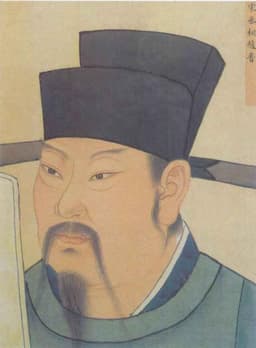
Zhao Pu
Politician · Medieval
57.2Total
Basic Information
Born
1230
922
Died
1303
992
Era
Medieval
Medieval
Nationality
Papal States
China
Occupation
Politician
Politician
Civilization
Western
Eastern
Score Comparison
Military (10%)
28.5
21.4
Political (20%)
53.8
72.0
Influence (20%)
61.0
58.0
Legacy (20%)
56.0
52.0
Leadership (15%)
74.0
78.0
Strategy (15%)
36.5
51.0
TOTAL
54.9
57.2
Boniface VIII — Complete Timeline
1296 AD
Conflict with Philip IV of FrancePolitical Action◆ Major
Boniface VIII issued the bull Clericis Laicos, forbidding clergy from paying taxes to secular rulers without papal consent. King Philip IV of France retaliated by blocking the export of money from France to the papacy. This began a prolonged power struggle between pope and king.
TaxationConflictFrance
Impact: regional
1300 AD
Jubilee of 1300Cultural◆ Major
Boniface VIII proclaimed the first Christian Jubilee year, granting plenary indulgence to pilgrims who visited Rome. The event attracted massive crowds and generated significant revenue for the Church. It established a tradition of jubilee years in Catholicism.
JubileePilgrimageIndulgence
Impact: globalconstructive
1302 AD
Issuance of Unam SanctamPolitical Action◆ Major
Pope Boniface VIII issued the bull Unam Sanctam, asserting that submission to the pope is necessary for salvation. This document claimed papal supremacy over temporal rulers, directly challenging King Philip IV of France. It became a key statement of papal authority.
Papal BullPapal SupremacyConflict with France
Impact: global
1303 AD
Anagni AttackPolitical Action
Agents of King Philip IV of France, led by Guillaume de Nogaret, attacked Boniface VIII at his residence in Anagni. The pope was captured and briefly held prisoner before being freed by local supporters. The assault severely damaged papal prestige and led to Boniface's death shortly after.
AssaultPapal PrestigeFrance
Impact: regionaltragic
Zhao Pu — Complete Timeline
960 AD
Advising Emperor Taizu on the unification strategyPolitical Action
Zhao Pu counseled Emperor Taizu of Song to first pacify the south and then attack the north, a strategy that guided the Song conquest of the Ten Kingdoms. This approach prioritized consolidation of core territories before confronting the Liao dynasty.
Song DynastyUnificationStrategy
Impact: nationalconstructive
961 AD
Centralization of military powerReform◆ Major
Zhao Pu advised Emperor Taizu to disband the regional military governors and centralize command under the emperor. This reform reduced the risk of warlordism and strengthened imperial control over the Song military.
Military ReformCentralizationSong Dynasty
Impact: nationalconstructive
965 AD
Implementation of the 'Half the Analects' governanceReform◆ Major
Zhao Pu, as chancellor, promoted a pragmatic governance style based on a simplified reading of Confucian classics, famously stating that half the Analects could govern the empire. This approach emphasized practical administration over scholarly debate.
GovernanceConfucianismSong Dynasty
Impact: nationalconstructive
973 AD
Dismissal from chancellorshipPolitical Action
Zhao Pu was removed from his position as chancellor due to allegations of corruption and abuse of power. This event reflected the political instability of the early Song court and Zhao's fall from favor.
Political FallCorruptionSong Dynasty
Impact: nationaldestructive
Expert Analysis
Origins
Boniface VIII, born Benedetto Caetani around 1230 in Anagni, Italy, came from a noble family. He studied law at Bologna and entered the papal service under Pope Nicholas III. His legal training and diplomatic skills propelled him through church ranks, becoming a cardinal deacon in 1281 and cardinal priest in 1291. Zhao Pu (922–992) was born in Youzhou (modern Beijing) into a minor official family. He studied Confucian classics but was not a top scholar. He served as a military advisor to Zhao Kuangyin, later Emperor Taizu of Song, and rose through administrative posts.
Rise to Power
Boniface VIII was elected pope in 1294 after the abdication of Celestine V, whom he allegedly pressured to resign. He quickly reversed Celestine's policies, centralizing papal authority. His conflict with Philip IV of France began in 1296 with Clericis Laicos, forbidding clergy to pay taxes without papal consent. Philip retaliated by blocking currency exports from France. In 1300, Boniface proclaimed the Jubilee year, attracting massive crowds and revenues. Zhao Pu rose as a key advisor to Emperor Taizu during the founding of the Song dynasty in 960. He advocated the strategy of first pacifying the south then attacking the north, which guided the conquest of the Ten Kingdoms. In 964, he became chancellor, implementing centralizing reforms.
Leadership & Governance
Boniface VIII asserted papal supremacy over secular rulers. In 1302, he issued Unam Sanctam, declaring that submission to the pope is necessary for salvation, scoring 61.0 influence. He excommunicated Philip IV and placed France under interdict. However, his autocratic style alienated many. Zhao Pu promoted pragmatic governance based on a simplified reading of Confucian classics—"half the Analects"—scoring 72.0 political. He advised disbanding regional military governors to centralize command, reducing warlordism. His reforms strengthened civil administration but faced corruption allegations.
Triumph & Tragedy
Boniface's greatest success was the Jubilee of 1300, which enhanced papal prestige and finances. His Unam Sanctam was a bold statement of papal power. However, his conflict with Philip IV led to the Anagni attack in 1303, where French agents captured and briefly held him. He died soon after, humiliated. Zhao Pu's triumph was his role in unifying China under Song and centralizing military power. He scored 78.0 leadership. His tragedy was dismissal from chancellorship in 973 due to corruption allegations, though he was later reinstated. His methods also contributed to the Song's military weakness against northern nomads.
Character & Destiny
Boniface was proud, learned, and authoritarian. His legal background made him rigid in asserting papal rights. His downfall stemmed from underestimating Philip IV's resolve. Zhao Pu was pragmatic, loyal to Taizu, but opportunistic. His willingness to use corruption for political ends reflected the instability of early Song politics. His character suited the consolidation phase but not the later challenges.
Legacy
Boniface VIII's Unam Sanctam became a symbol of papal claims, but the Anagni attack weakened the papacy's temporal power. His scores: Military 28.5, Influence 61.0, Legacy 56.0. Zhao Pu's centralization of military power shaped Song governance for centuries, but his pragmatic approach limited Confucian orthodoxy. His scores: Military 21.4, Legacy 52.0, Total 57.2 (higher than Boniface's 54.9).
Conclusion
Zhao Pu had greater impact due to his foundational role in the Song dynasty's stability and his pragmatic governance model. Boniface VIII's assertion of papal supremacy ultimately failed, as the papacy's temporal power declined. Zhao Pu's political score (72.0) and leadership (78.0) exceed Boniface's (53.8 and 74.0). While both were influential, Zhao Pu's legacy endured in China's administrative history, whereas Boniface's marked the end of medieval papal supremacy.
Rankings
🥇
Zhao PuLeader
Mil: 21.4Pol: 72.0Inf: 58.0
57.2
🥈
Boniface VIII
Mil: 28.5Pol: 53.8Inf: 61.0
54.9
+2.3 behind
How This Comparison Works
Algorithm
Each figure is scored on 6 dimensions (0—100 scale) based on structured historical data: Military (10%), Political (20%), Influence (20%), Legacy (20%), Leadership (15%), Strategy (15%). The weighted total produces the final ranking.
Data Sources
Scores are computed from structured sub-indicators in the database. Scale factors adjust for era (Ancient ×0.85, Modern ×1.0) and civilization size (Eastern ×1.05, Other ×0.80) to account for differences in population and military scale.
Maximum 3 Figures
Comparisons are limited to 2—3 figures to ensure readability and statistical meaningfulness.
Error Margins
±5 points per dimension — Sub-scores are derived from historical records with inherent uncertainty. Two figures within 5 points on a dimension should be considered roughly equivalent in that area.
Total Score Accuracy
±3 points overall — The weighted combination of 6 dimensions produces a total score with approximately ±3 points of uncertainty. Differences of less than 3 points are not statistically significant— the figures are effectively tied.
Known Limitations
- Historical records are incomplete and uneven across civilizations
- Figures from oral-tradition societies may be underrepresented
- Occupation labels can misclassify multi-role figures
- Scores measure capability and impact, not moral character
- Quantitative scoring is a comparison tool, not absolute truth
Capability Radar
Military (10%) — Battles & Warfare
Battles
36
5
Win Rate
37
5
Expansion
42
10
Political (20%) — Governance & Reform
Reform
55
75
Diplomacy
65
70
Economy
40
65
Influence (20%) — Cultural & Global Reach
Cultural
50
50
Global
55
30
Legacy (20%) — Historical Impact
Historical
70
60
Longevity
60
50
Leadership (15%) — Power & Stability
Tenure
60
70
Stability
30
70
Strategy (15%) — Tactics & Innovation
Strategy
47
10
Tactics
51
5
Reform
54
10
Similar Comparisons
Comments & Discussion
No comments yet. Be the first to share your thoughts!