Loading...
Ibn al-Qayyim vs Zhao Pu
Ibn al-Qayyim leads by 0.8 pts · 2 figures compared
…

Ibn al-Qayyim
Politician · Medieval
58.0Total
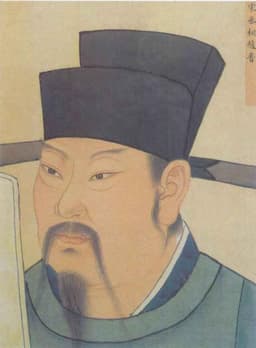
Zhao Pu
Politician · Medieval
57.2Total
Basic Information
Born
1292
922
Died
1350
992
Era
Medieval
Medieval
Nationality
Mamluk Sultanate
China
Occupation
Politician
Politician
Civilization
Middle Eastern
Eastern
Score Comparison
Military (10%)
43.3
21.4
Political (20%)
63.8
72.0
Influence (20%)
58.3
58.0
Legacy (20%)
55.0
52.0
Leadership (15%)
78.0
78.0
Strategy (15%)
40.4
51.0
TOTAL
58.0
57.2
Ibn al-Qayyim — Complete Timeline
1306 AD
Imprisoned alongside Ibn Taymiyyah in CairoPolitical Action
Ibn al-Qayyim was imprisoned with his teacher Ibn Taymiyyah in the Citadel of Cairo for their shared theological views. He remained loyal to Ibn Taymiyyah throughout the imprisonment, continuing to study and write.
ImprisonmentIbn TaymiyyahTheology
destructive
1340 AD
Wrote 'The Provisions of the Hereafter' (Zad al-Ma'ad)Cultural◆ Major
Ibn al-Qayyim completed a comprehensive work on Islamic eschatology and the Prophet Muhammad's life, covering topics from death to the afterlife. The book became a standard reference for Sunni eschatology.
EschatologyProphetic BiographySunni Islam
Impact: regional
Served as a judge (qadi) in DamascusPolitical Action
Ibn al-Qayyim was appointed as a judge in Damascus, where he implemented Hanbali jurisprudence. He was known for his strict rulings and his opposition to Sufi practices, following the teachings of Ibn Taymiyyah.
JudiciaryHanbaliDamascus
1345 AD
Wrote 'The Medicine of the Prophet' (Al-Tibb al-Nabawi)Cultural
Ibn al-Qayyim compiled a treatise on prophetic medicine, combining hadith with Galenic medical theory. He recommended honey, black seed, and cupping as treatments, and criticized unorthodox medical practices.
MedicineHadithProphetic Tradition
Impact: regional
1348 AD
Wrote 'The Soul' (Al-Ruh)Cultural
Ibn al-Qayyim wrote a detailed treatise on the nature of the soul, its survival after death, and the intermediate state (barzakh). He argued for the soul's immortality and its ability to interact with the living.
TheologySoulEschatology
Impact: regional
Zhao Pu — Complete Timeline
960 AD
Advising Emperor Taizu on the unification strategyPolitical Action
Zhao Pu counseled Emperor Taizu of Song to first pacify the south and then attack the north, a strategy that guided the Song conquest of the Ten Kingdoms. This approach prioritized consolidation of core territories before confronting the Liao dynasty.
Song DynastyUnificationStrategy
Impact: nationalconstructive
961 AD
Centralization of military powerReform◆ Major
Zhao Pu advised Emperor Taizu to disband the regional military governors and centralize command under the emperor. This reform reduced the risk of warlordism and strengthened imperial control over the Song military.
Military ReformCentralizationSong Dynasty
Impact: nationalconstructive
965 AD
Implementation of the 'Half the Analects' governanceReform◆ Major
Zhao Pu, as chancellor, promoted a pragmatic governance style based on a simplified reading of Confucian classics, famously stating that half the Analects could govern the empire. This approach emphasized practical administration over scholarly debate.
GovernanceConfucianismSong Dynasty
Impact: nationalconstructive
973 AD
Dismissal from chancellorshipPolitical Action
Zhao Pu was removed from his position as chancellor due to allegations of corruption and abuse of power. This event reflected the political instability of the early Song court and Zhao's fall from favor.
Political FallCorruptionSong Dynasty
Impact: nationaldestructive
Expert Analysis
Origins
Ibn al-Qayyim (1292–1350 CE) was born in Damascus, Mamluk Sultanate, into a family of legal scholars. He studied under the prominent theologian Ibn Taymiyyah, absorbing his strict Hanbali jurisprudence and reformist ideas. His education focused on Islamic law, theology, and medicine, shaping his dual identity as a jurist and healer.
Zhao Pu (922–992 CE) was born in Youzhou (modern Beijing) during the chaotic Five Dynasties period. He came from a modest official family and rose through military and administrative service. Lacking a classical Confucian education, he relied on practical experience and a simplified reading of the Analects, which he famously claimed was sufficient for governance.
Rise to Power
Ibn al-Qayyim rose to prominence as the foremost disciple of Ibn Taymiyyah. He defended his teacher during theological disputes, leading to imprisonment in Cairo in 1326 CE. Despite persecution, he gained respect as a legal scholar and was appointed a judge (qadi) in Damascus. His writings, such as 'Zad al-Ma'ad' (The Provisions of the Hereafter), established him as a leading authority on Islamic eschatology and prophetic tradition.
Zhao Pu's rise began when he served under the Later Zhou dynasty. He became a trusted advisor to the future Emperor Taizu of Song. In 960 CE, he helped orchestrate the coup that established the Song dynasty. As chancellor, he advised Taizu on the strategy of 'pacify the south first, then attack the north,' which guided the unification of China. His political score of 72.0 reflects his effective maneuvering.
Leadership & Governance
Ibn al-Qayyim's leadership was rooted in strict adherence to Hanbali law. As a judge, he issued rulings based on literal interpretations of scripture, opposing innovations (bid'ah). His governance approach was dogmatic: he sought to purify Islamic practice, leading to conflicts with Sufi mystics and rationalist theologians. His leadership score of 78.0 is notable for his unwavering loyalty to his teacher and principles.
Zhao Pu adopted a pragmatic style. He implemented the 'Half the Analects' governance, using only key Confucian principles for administration. He centralized military power by disbanding regional governors, reducing rebellion risk. However, his rule was marred by corruption allegations, leading to his dismissal. His leadership score of 78.0 matches Ibn al-Qayyim's, but his political acumen (72.0) exceeds his rival's (63.8).
Triumph & Tragedy
Ibn al-Qayyim's greatest success was his prolific writing: 'Zad al-Ma'ad', 'Al-Tibb al-Nabawi' (The Medicine of the Prophet), and 'Al-Ruh' (The Soul) remain influential in Islamic scholarship. He successfully defended Ibn Taymiyyah's legacy. His tragedy was persecution: imprisonment in Cairo and ongoing opposition from establishment scholars. His influence score of 58.3 reflects limited reach beyond Hanbali circles.
Zhao Pu's triumph was engineering the Song unification and centralization, which stabilized China for three centuries. He also promoted civil administration over military rule. His downfall came from corruption scandals: he was dismissed in 973 CE. His legacy score of 52.0 is moderate, as his reforms were later overshadowed by Neo-Confucian scholars.
Character & Destiny
Ibn al-Qayyim was resolute and loyal, refusing to compromise his beliefs even under duress. This character led to imprisonment but also to a revered status among followers. His strategic score of 40.4 suggests a lack of political maneuvering; he relied on intellectual consistency rather than alliances.
Zhao Pu was shrewd and ambitious. He used his lack of classical education as a strength, advocating simplicity. However, his greed and corruption tarnished his reputation. His strategy score of 51.0 reflects effective planning but poor ethical judgment.
Legacy
Ibn al-Qayyim's works remain studied in Islamic seminaries, particularly his contributions to prophetic medicine and eschatology. His influence endures in Salafi and Hanbali thought, but his political impact was limited. He scored 55.0 in legacy.
Zhao Pu's centralization of military power became a model for Chinese dynasties. However, his 'Half the Analects' approach was criticized by later Confucians. He is remembered as a capable but flawed administrator. His legacy score of 52.0 is slightly lower.
Conclusion
Ibn al-Qayyim and Zhao Pu represent different paths to impact: one through ideological purity, the other through pragmatic statecraft. Ibn al-Qayyim's total score of 58.0 edges Zhao Pu's 57.2, but the margin is narrow. In terms of lasting influence on governance, Zhao Pu's reforms shaped a dynasty, while Ibn al-Qayyim's influence is confined to religious scholarship. However, for sheer breadth of intellectual legacy, Ibn al-Qayyim's writings have endured for centuries and continue to guide millions. Therefore, Ibn al-Qayyim has the greater overall impact, but Zhao Pu's political achievements were more tangible in his time.
Rankings
🥇
Ibn al-QayyimLeader
Mil: 43.3Pol: 63.8Inf: 58.3
58.0
🥈
Zhao Pu
Mil: 21.4Pol: 72.0Inf: 58.0
57.2
+0.8 behind
How This Comparison Works
Algorithm
Each figure is scored on 6 dimensions (0—100 scale) based on structured historical data: Military (10%), Political (20%), Influence (20%), Legacy (20%), Leadership (15%), Strategy (15%). The weighted total produces the final ranking.
Data Sources
Scores are computed from structured sub-indicators in the database. Scale factors adjust for era (Ancient ×0.85, Modern ×1.0) and civilization size (Eastern ×1.05, Other ×0.80) to account for differences in population and military scale.
Maximum 3 Figures
Comparisons are limited to 2—3 figures to ensure readability and statistical meaningfulness.
Error Margins
±5 points per dimension — Sub-scores are derived from historical records with inherent uncertainty. Two figures within 5 points on a dimension should be considered roughly equivalent in that area.
Total Score Accuracy
±3 points overall — The weighted combination of 6 dimensions produces a total score with approximately ±3 points of uncertainty. Differences of less than 3 points are not statistically significant— the figures are effectively tied.
Known Limitations
- Historical records are incomplete and uneven across civilizations
- Figures from oral-tradition societies may be underrepresented
- Occupation labels can misclassify multi-role figures
- Scores measure capability and impact, not moral character
- Quantitative scoring is a comparison tool, not absolute truth
Capability Radar
Military (10%) — Battles & Warfare
Battles
24
5
Win Rate
31
5
Expansion
30
10
Political (20%) — Governance & Reform
Reform
67
75
Diplomacy
71
70
Economy
74
65
Influence (20%) — Cultural & Global Reach
Cultural
65
50
Global
55
30
Legacy (20%) — Historical Impact
Historical
70
60
Longevity
70
50
Leadership (15%) — Power & Stability
Tenure
63
70
Stability
80
70
Strategy (15%) — Tactics & Innovation
Strategy
36
10
Tactics
37
5
Reform
40
10
Similar Comparisons
Comments & Discussion
No comments yet. Be the first to share your thoughts!