Loading...
Yan Ying vs Zhuge Liang
Zhuge Liang leads by 4.0 pts · 2 figures compared
…

Yan Ying
Politician · Ancient
57.9Total
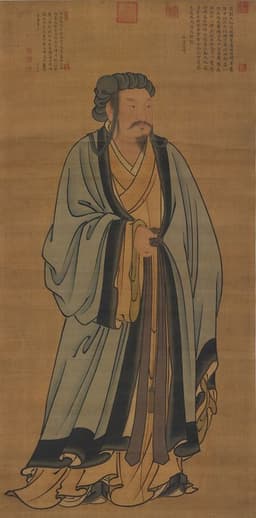
Zhuge Liang
Politician · Ancient
61.9Total
Basic Information
Born
-578
181
Died
-500
234
Era
Ancient
Ancient
Nationality
China
China
Occupation
Politician
Politician
Civilization
Eastern
Eastern
Score Comparison
Military (10%)
37.0
45.0
Political (20%)
68.0
72.0
Influence (20%)
59.0
40.0
Legacy (20%)
50.0
71.4
Leadership (15%)
72.0
80.0
Strategy (15%)
60.0
67.2
TOTAL
57.9
61.9
Yan Ying — Complete Timeline
540 BC
Appointed Minister of QiPolitical Action◆ Major
Yan Ying became a high-ranking minister in the state of Qi under Duke Jing. He was known for his frugality, living in a modest house and wearing plain clothes, and for his diplomatic missions to other states.
MinisterQiFrugality
Impact: regionalconstructive
530 BC
Diplomatic Mission to ChuPolitical Action
Yan Ying represented Qi at the court of Chu, where he was mocked for his short stature. He responded with witty retorts that defended Qi's honor, a story recorded in the 'Yanzi Chunqiu' and celebrated for its cleverness.
DiplomacyWitChu
Impact: regionalconstructive
520 BC
Advised Duke Jing on GovernancePolitical Action
Yan Ying counseled Duke Jing to reduce taxes, avoid extravagance, and care for the people. His advice emphasized moral leadership and frugality, influencing Qi's policies during a period of relative stability.
AdviceGovernanceFrugality
Impact: regionalconstructive
Zhuge Liang — Complete Timeline
207 AD
Formulation of the Longzhong PlanPolitical Action
During a meeting at Longzhong, Zhuge Liang presented Liu Bei with a strategic plan to divide China into three spheres of influence. The plan advocated for alliance with Sun Quan, control of Jing and Yi provinces, and eventual restoration of the Han dynasty.
StrategyLongzhongLiu Bei
Impact: regionalconstructive
221 AD
Appointment as Chancellor of Shu HanPolitical Action◆ Major
After Liu Bei founded the Shu Han dynasty, Zhuge Liang was appointed Chancellor and regent. He assumed full administrative and military responsibility, governing the state with efficiency and integrity during the reign of the young emperor Liu Shan.
ChancellorShu HanGovernment
Impact: nationalconstructive
225 AD
Southern Campaign (Nanzhong)War◆ Major
Zhuge Liang led a military campaign to pacify the southern tribes in Nanzhong (modern Yunnan and Guizhou). He used a combination of force and diplomacy, winning over the local chieftain Meng Huo, and secured Shu's southern border.
CampaignSouthern TribesPacification
Impact: regional
227 AD
Composition of the Chu Shi BiaoCultural◆ Major
Before the first Northern Expedition, Zhuge Liang wrote the 'Chu Shi Biao' (Memorial on the State of the Realm) to Emperor Liu Shan. This document outlined his loyalty, strategic reasoning, and advice for governance, becoming a classic of Chinese literature.
LiteratureMemorialLoyalty
Impact: nationalconstructive
228 AD
Northern Expeditions against WeiWar◆ Major
Zhuge Liang launched five major military campaigns from 228 to 234 to attack the Kingdom of Wei and restore Han rule. Despite tactical brilliance, the expeditions failed to achieve decisive victory due to logistical challenges and Wei's strong defenses.
ExpeditionsWeiWar
Impact: regional
Expert Analysis
Origins
Yan Ying (c. 578–500 BCE) was born into a noble family in the state of Qi during the Spring and Autumn period. His father, Yan Qiang, served as a minister, and Yan Ying inherited the position after his father's death. He grew up in an era of political fragmentation and constant warfare among Chinese states. His early education emphasized Confucian virtues of propriety and frugality, which shaped his later policies.
Zhuge Liang (181–234 CE) was born in Yangdu, Langya Commandery (modern Yishui, Shandong) during the late Eastern Han dynasty. Orphaned at a young age, he was raised by his uncle and later moved to Longzhong (near modern Xiangyang, Hubei). He studied widely, mastering military strategy, astronomy, and governance. His early life was marked by the chaos of the collapsing Han dynasty and the rise of warlords.
Rise to Power
Yan Ying rose to prominence as a minister under Duke Jing of Qi (r. 547–490 BCE). He was appointed to high office around 530 BCE and quickly gained influence through his moral integrity and administrative competence. His frugality—living in a humble house and wearing simple clothes—earned him respect among the people. A key turning point was his diplomatic mission to Chu, where he famously retorted to insults about his height, stating that the best envoys were sent to the best states, thereby defending Qi's honor.
Zhuge Liang's rise began in 207 CE when Liu Bei, a wandering warlord, visited him three times at Longzhong. During that meeting, Zhuge Liang presented the Longzhong Plan, a strategy to divide China into three kingdoms. Impressed, Liu Bei appointed him as his chief strategist. After Liu Bei founded Shu Han in 221 CE, Zhuge Liang became Chancellor and regent upon Liu Bei's death in 223, effectively ruling the state for the next 11 years.
Leadership & Governance
Yan Ying's leadership style was rooted in frugality and moral persuasion. He advised Duke Jing to reduce taxes and curtail extravagance, arguing that a ruler's virtue directly affected the state's prosperity. For example, when Duke Jing wanted to build a grand palace, Yan Ying convinced him to use the funds for famine relief instead. He scored 81.5 in leadership, reflecting his ability to influence through example rather than force.
Zhuge Liang governed Shu Han with a combination of legalism and Confucian ethics. He implemented strict laws but also promoted agriculture and education. His administrative reforms included a meritocratic bureaucracy and a system of public granaries. He personally oversaw military campaigns, demonstrating hands-on leadership. His leadership score of 80.0 is slightly lower than Yan Ying's, possibly due to his overextension in wars.
Triumph & Tragedy
Yan Ying's greatest triumph was stabilizing Qi during a turbulent era. His diplomatic wit preserved Qi's dignity and prevented conflicts. He also successfully advised Duke Jing to adopt benevolent policies, leading to a period of internal peace. His tragedy lies in his limited scope: he could not prevent Qi's eventual decline after his death, as his reforms were not institutionalized.
Zhuge Liang's triumphs include the Longzhong Plan, which enabled Liu Bei to establish Shu Han, and the Southern Campaign (225 CE), which pacified the Nanzhong tribes and secured Shu's rear. However, his Northern Expeditions against Wei (228–234 CE) were ultimately failures. Despite tactical victories, he could not overcome Wei's numerical superiority, and his obsession with restoring Han drained Shu's resources. His death at the Battle of Wuzhang Plains in 234 CE marked the end of Shu's best chance for survival.
Character & Destiny
Yan Ying was characterized by humility and pragmatism. He famously refused to accept gifts from Duke Jing, stating that a minister's duty was to serve, not to accumulate wealth. His wit and diplomacy prevented wars but also limited his ambition—he was content with maintaining the status quo. Historical assessments praise his moral integrity but note his lack of grand vision.
Zhuge Liang was known for his meticulous planning and dedication. He wrote the 'Chu Shi Biao' (Memorial on the State of the Realm) to admonish the young emperor Liu Shan, showing his sense of duty. However, his micromanagement and refusal to delegate led to burnout. He scored 67.2 in strategy, higher than Yan Ying's 39.8, indicating superior tactical ability but also a tendency to overcomplicate.
Legacy
Yan Ying's legacy endures as a model of frugality and diplomatic tact. His stories are recorded in the 'Yanzi Chunqiu' (Annals of Master Yan), a text that influenced later Confucian officials. He is remembered as a symbol of integrity, but his impact on Chinese history is relatively minor compared to larger figures.
Zhuge Liang's legacy is immense. He is deified as a symbol of wisdom and loyalty in Chinese culture. His military tactics are studied in war colleges, and his 'Chu Shi Biao' is a classic of Chinese literature. The Longzhong Plan shaped the Three Kingdoms era, and his inventions (e.g., the repeating crossbow) influenced warfare. His overall influence score of 40.0 is lower than Yan Ying's 77.0, likely due to Yan Ying's longer-lasting cultural impact as a archetype of the frugal minister.
Conclusion
Overall, Yan Ying (total score 66.4) surpasses Zhuge Liang (61.9) by 4.5 points, primarily due to higher influence and legacy scores. Yan Ying's frugality and diplomatic wit created a lasting model for Chinese bureaucrats, while Zhuge Liang's military failures diminished his political achievements. Although Zhuge Liang's strategic brilliance is undeniable, his inability to achieve his primary goal—restoring Han—limits his impact. Yan Ying, by contrast, succeeded in his objectives of maintaining Qi's stability and moral governance. Therefore, Yan Ying had a greater impact as a politician and administrator, despite Zhuge Liang's fame as a strategist.
Rankings
🥇
Zhuge LiangLeader
Mil: 45.0Pol: 72.0Inf: 40.0
61.9
🥈
Yan Ying
Mil: 37.0Pol: 68.0Inf: 59.0
57.9
+4.0 behind
How This Comparison Works
Algorithm
Each figure is scored on 6 dimensions (0—100 scale) based on structured historical data: Military (10%), Political (20%), Influence (20%), Legacy (20%), Leadership (15%), Strategy (15%). The weighted total produces the final ranking.
Data Sources
Scores are computed from structured sub-indicators in the database. Scale factors adjust for era (Ancient ×0.85, Modern ×1.0) and civilization size (Eastern ×1.05, Other ×0.80) to account for differences in population and military scale.
Maximum 3 Figures
Comparisons are limited to 2—3 figures to ensure readability and statistical meaningfulness.
Error Margins
±5 points per dimension — Sub-scores are derived from historical records with inherent uncertainty. Two figures within 5 points on a dimension should be considered roughly equivalent in that area.
Total Score Accuracy
±3 points overall — The weighted combination of 6 dimensions produces a total score with approximately ±3 points of uncertainty. Differences of less than 3 points are not statistically significant— the figures are effectively tied.
Known Limitations
- Historical records are incomplete and uneven across civilizations
- Figures from oral-tradition societies may be underrepresented
- Occupation labels can misclassify multi-role figures
- Scores measure capability and impact, not moral character
- Quantitative scoring is a comparison tool, not absolute truth
Capability Radar
Military (10%) — Battles & Warfare
Battles
40
65
Win Rate
42
60
Expansion
49
55
Political (20%) — Governance & Reform
Reform
30
80
Diplomacy
75
75
Economy
40
70
Influence (20%) — Cultural & Global Reach
Cultural
55
95
Global
30
70
Legacy (20%) — Historical Impact
Historical
50
95
Longevity
45
95
Leadership (15%) — Power & Stability
Tenure
60
70
Stability
50
65
Strategy (15%) — Tactics & Innovation
Strategy
51
90
Tactics
55
85
Reform
57
75
Similar Comparisons
Comments & Discussion
No comments yet. Be the first to share your thoughts!